Flash also plays an important role in nature photography. Although many photographers avoid using a flash, it can help brighten shadows and give subjects more impact, provided it is used judiciously and with good technique.
The final result of your flash photo depends on mastering the proper technique. Be sure to study your flash manual thoroughly. But when should you use flash in nature photography?
Using Flash over Longer Distances (Birds)
In nature photography, we also use flash to brighten shadows and give an image more impact. The subject determines how we use the flash. When photographing birds in the wild, they are often some distance away.
Choose a flash with a high guide number, as it will have a greater range. To extend the flash's range even further, we often use a Better Beamer. This technique is widely used when photographing birds at greater distances, where subtly filling in shadows can make all the difference.
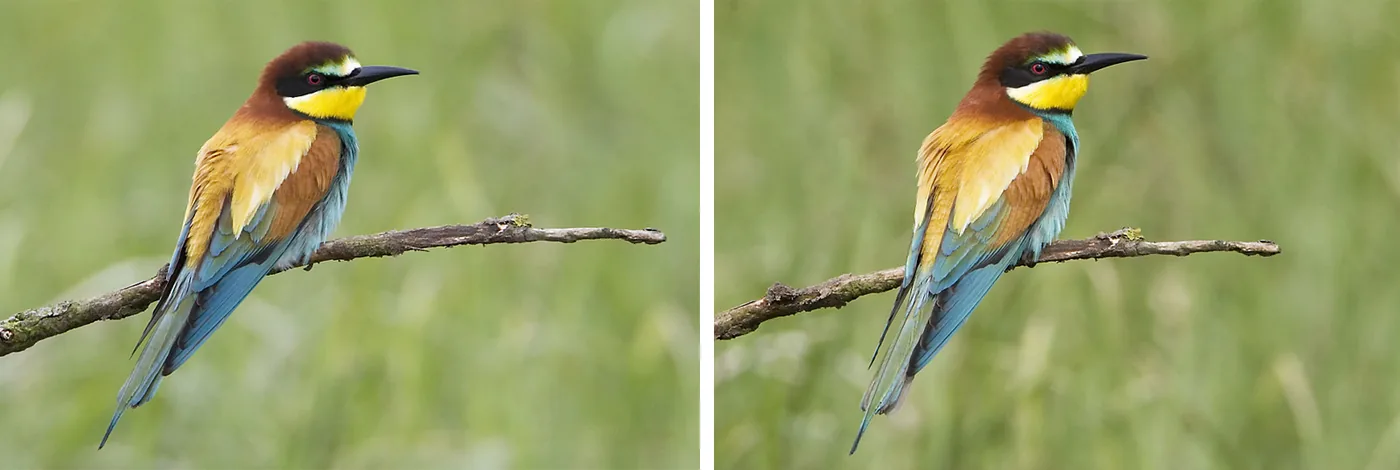
For this type of photography, set the flash to High Speed mode. This means you can use the flash at any shutter speed and do not have to use the standard flash sync speed. Also see the article Bird Photography Part II for an image of the Better Beamer.
Look closely at the difference between the two photos of the bee-eaters. Click the two images to view them at a larger size. In this case, flash was used to add a small catchlight to the eye, giving the photo a more engaging look.
Overdoing it can quickly produce unnatural results
The shot was exposed according to the camera's light meter, without taking the flash into account. Set the flash exposure compensation to between -1 and -2 stops. Otherwise, the flash will emit too much light, making the subject look washed out. Experiment with this, but do not overdo it, as too much flash will ruin the natural effect.
Using the Flash off Camera
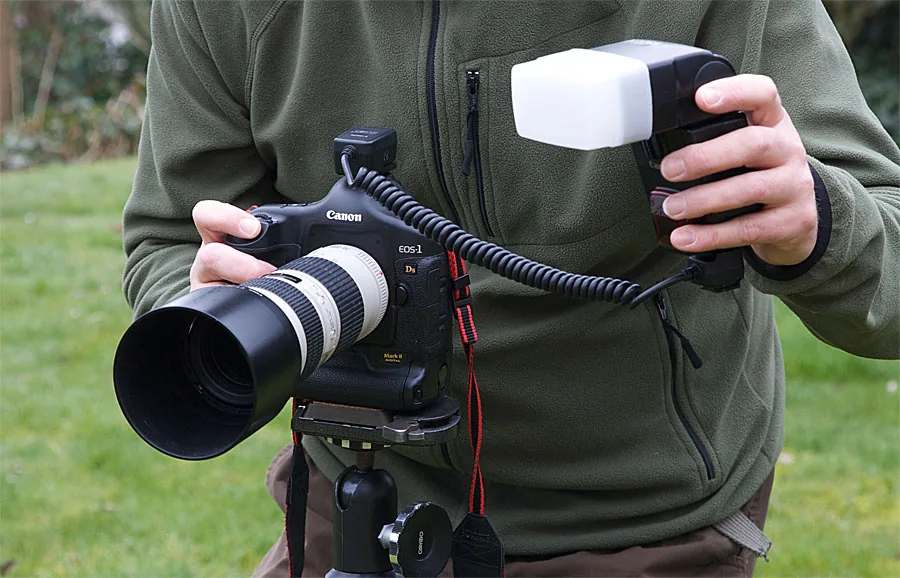
To enhance the impression of natural light, we place the flash off the camera's hot shoe and connect it to the camera with a cable instead. This allows the flash to come from whichever direction looks most natural for the subject.
The flash can also be held by hand. Cables are available for all camera and flash combinations. Combined with the Omnibounce, this makes your flash photography much more flexible at little cost.
Flash photography, especially when working with long focal lengths and supertelephoto lenses requires careful technique and precise control of the light.
Flash for Macro and Close-Up Photography
We also use flash in nature photography to brighten nearby subjects or enhance their color. Using fill flash on subjects close to the camera often produces harsh cast shadows, resulting in an unnatural effect. That is why we prefer to use a softbox or diffuser in this situation.
This softens the direct flash beautifully and produces a more realistic image. Softboxes are generally not only more expensive but also considerably larger. A diffuser such as the Omnibounce, however, is easy to attach and quickly produces results.
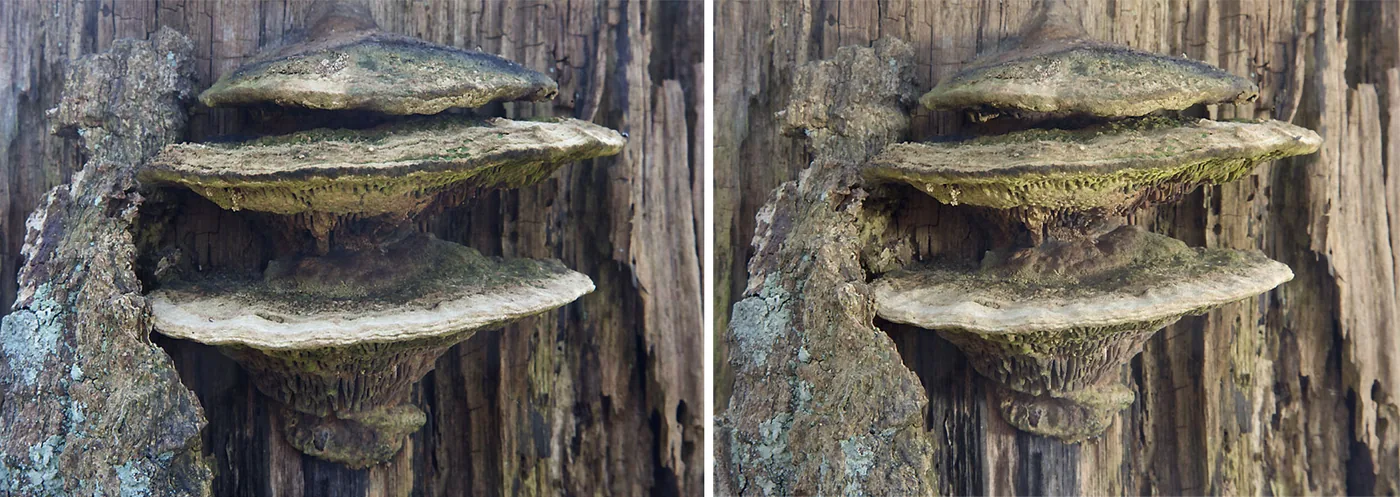
This fungus on an old tree trunk was backlit. The flash was fitted with an Omnibounce and connected to the camera by cable. This allowed the flash to be fired at a 45-degree angle and from the same height as the fungi.
Here, flash exposure compensation was set to make the light look as natural as possible
This creates a natural accent of light from the right. The Omnibounce produces softer lighting, retaining enough detail and gentle shadow areas in the image. Flash exposure compensation was set to -2/3 stop.
Of course, we can also use flash for macro and close-up photography. In these situations, we are only a few centimeters or decimeters away from the subject. Here too, the light must be controlled carefully. Overdoing it can quickly produce unnatural results.
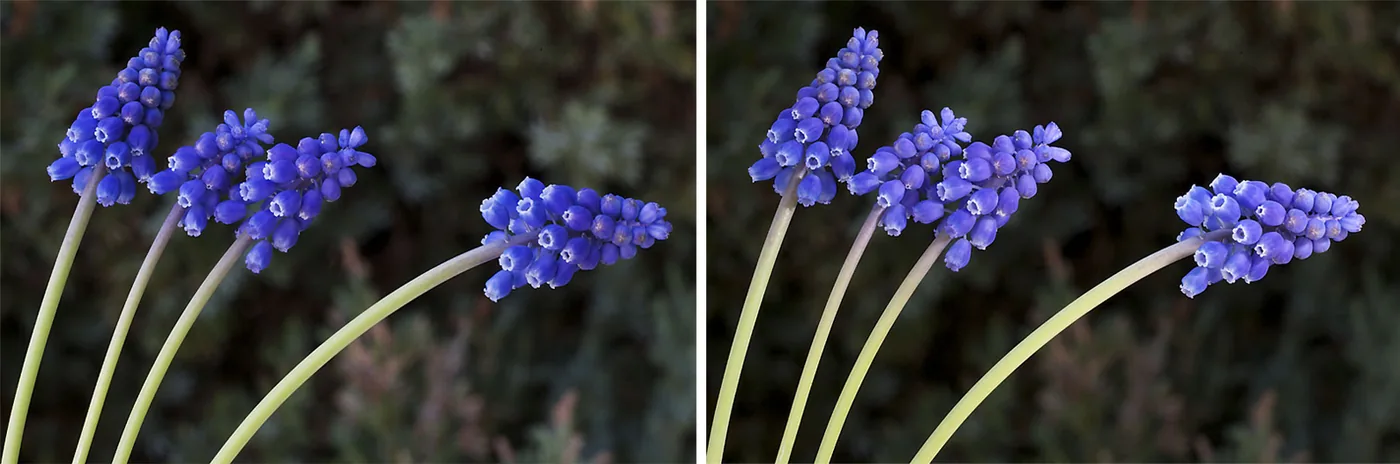
For this shot, the flash with Omnibounce was aimed at the flowers at a 45-degree angle and slightly from above to mimic sunlight. Here, flash exposure compensation was set to -1 stop to make the light look as natural as possible.
Otherwise, flowers in particular can quickly look washed out. The subtle illumination of the flowers is easier to see as a result. You can also see that the additional light on the flowers in the foreground has made the background darker and less distracting. This is another benefit of using flash.
Summary
Flash works well in nature photography, provided you use it judiciously. Try to keep the effect as natural as possible. Overdoing it can quickly lead to disappointing results. Experiment with different variables, such as the amount of flash and the angle from which you light the subject. You will soon discover that a flash is an important part of your photography gear when you head out into nature.