Few people will wonder why they should use an external flash on their camera. It simply produces more light than the built-in flash. True, of course, but an external flash has much more to offer.
The built-in flash is still useful
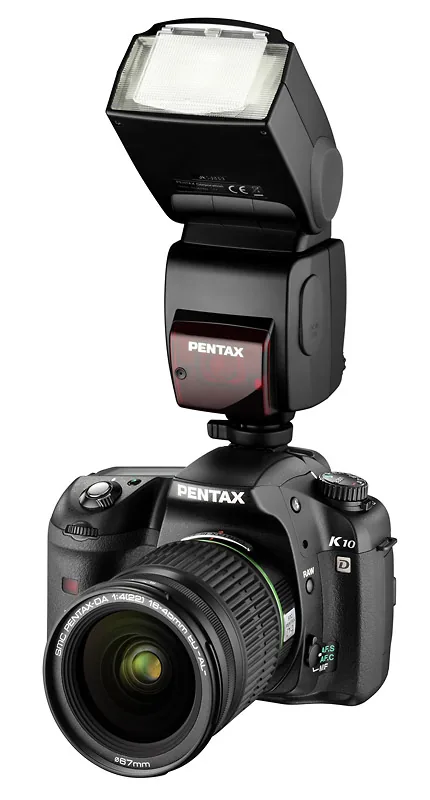
It is always great to have extra light with you, so a DSLR's built-in flash is never superfluous. If nothing else, it can provide fill flash when shooting against the light, or add just a little color and brightness to an available-light scene with a heavily reduced flash output.
Do not underestimate the built-in flash! We live in the digital age, when you can use a DSLR at ISO 800 without too many image-quality issues. A guide number of 12 at ISO 100 becomes a guide number of 34 at ISO 800! In other words, with your kit zoom lens at f/3.5, at ISO 800 you theoretically still have a range of around 10 meters! In practice, it may be 7 to 8 m, but that is not bad, is it?
But do not get carried away: we are already assuming ISO 800 here. Decide for yourself whether you find the image noise your camera produces at that setting acceptable. And when you zoom in, the maximum aperture of most zoom lenses becomes smaller, reducing your range.
But perhaps the most important question is: do you like the light from a built-in flash? It produces narrow but sharply defined shadows, and because the light comes from just above your lens, it creates a very flat effect
Bounced light is better
Point the head of an external flash upward at an angle and your subject will be illuminated by a mass of diffused light coming down diagonally from the ceiling. This closely mimics nature: sunlight almost always comes from above at an angle. Another advantage is that the ceiling now spreads the flash's hard, directional light. The subject is illuminated by diffused light, making the shadows less sharply defined. The difference from direct flash is substantial.
The best results come when some of the light also reaches the subject directly. Those white Omni-Bounce flash diffusers are useful for this.
Caught out!
You sometimes see them at press conferences and presentations: photographers decked out like professionals, with a beast of a DSLR and an enormous flash mounted on top. No matter how high the ceiling is, the flash head is neatly pointed upward for bounced light. Naturally, that light disappears into the room without contributing anything to the photograph.

Space
Ceilings that are too low are not ideal for bounced flash either. A very tall photographer in a newly built home or modern office does not have much room to achieve attractive light spread. They would be better off holding the camera a little lower. The Omni-Bounce is also an important accessory in situations like these.
When bouncing flash, watch out for colored ceilings and mirrors. They can produce unwanted lighting effects.
Using fill flash in bright sunlight can also require a great deal of flash power
Power
Bounced flash is the main advantage of an external flash. The extra power matters too, because with bounced flash, much of the light does not reach the subject. So you simply need a lot of light!
The high flash output of an external flash is also important when photographing subjects at greater distances.
Another advantage of the powerful flash on top of your camera is its short recycling time. Only when the flash has fired at full power do you have to wait a few seconds for it to be ready for the next photograph. Most of the time it can use less power, allowing you to continue shooting almost immediately. Some flashes can be fitted with additional power packs to shorten the recycling time.
Less red-eye
Because an external flash is farther from the lens, red-eye is less likely than when using the built-in flash.
Better autofocus included!
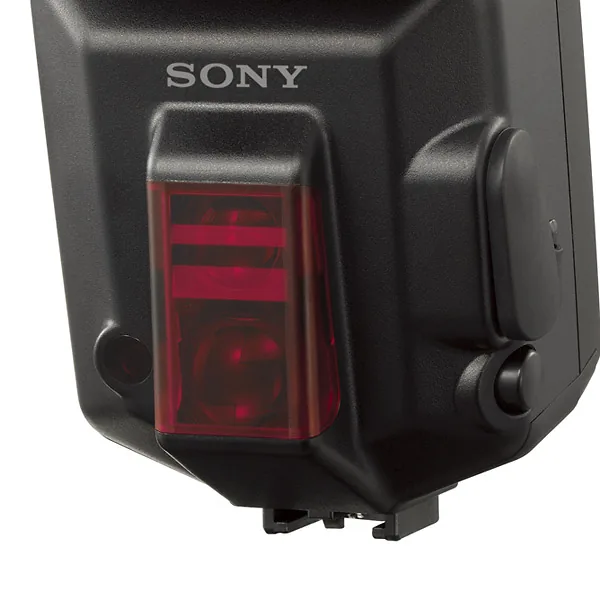
In low-light conditions, DSLRs use an AF-assist light. This gives the subject some extra illumination so the camera can focus on it more effectively. It is often a bright beam of light that the camera directs at the subject. Some cameras use their flash for this, emitting a series of rapid flash pulses. This briefly floods the subject with light, significantly delays the moment of exposure, and eliminates any possibility of surprise. It is unusable for serious photography. Built-in AF-assist systems are often far from sophisticated.
It is a very different story when using an external flash (apart from the simplest models). These have their own fast AF-assist light, which projects a contrast pattern onto the subject: brief and effective, so it is as unobtrusive as possible while still doing its job. This lets the camera focus quickly and accurately even in very unfavorable conditions—even in the dark—so you do not miss anything.

Off-camera flash
An external flash can also be used away from the camera. This offers fantastic creative possibilities. Lighting from the side brings out textures and lets you create dramatic light-and-shadow effects. With just one flash and a reflector, you can create a simple, effective portrait setup. And with flashes positioned out of sight, you can illuminate a large space effectively as well.
The camera's electronics do need to keep communicating with the flash. This can be done with special cables and hot-shoe adapters, and with a few camera brands it can even be done wirelessly. This communication does not use radio signals, but imperceptible flash pulses. When the camera has measured that it has received enough flash light, it sends a command to cut off the flash output.
You can generally control as many flashes wirelessly as you like. The control pulses may be emitted by the built-in flash, or by an external flash mounted on the camera. It is often also possible to control different groups of flashes and set them to operate at a specific power ratio.
Fluorescent-light killer
Flash produces light with the color of daylight, making it a useful way to eliminate the green cast caused by fluorescent lighting. At the very least, the subject will then be rendered in neutral colors. Flash is therefore an effective fluorescent-light killer. If the subject is far away, an external flash is definitely needed to achieve this effect.
If ambient light is allowed to contribute to the exposure, the background may still retain that characteristic green cast. An additional wirelessly controlled flash, aimed at the background and placed outside the frame, may help.
An essential accessory
In summary, the built-in flash is quite capable, but an external flash greatly expands your options and delivers a significant improvement in quality.