Pets are rewarding subjects to photograph. But make no mistake: you need a great deal of patience, for the simple reason that animals do not always do what we want them to do—such as pose. It often takes several attempts before you finally capture the picture you had in mind. And that time-consuming aspect is precisely the great advantage of working with a digital camera.
To make things easier, we have compiled a number of tips and useful pointers that will help you achieve good photographic results with your pet.
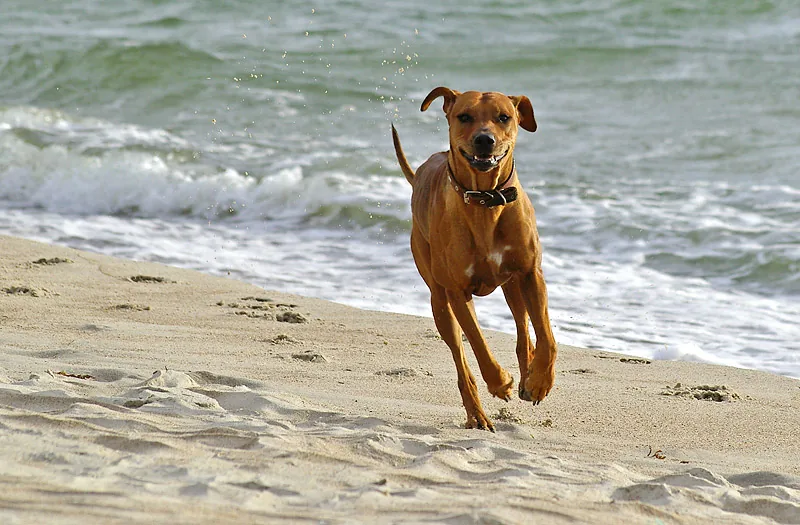
Cats and dogs
Photograph your pet while it is in action—for example, when your dog is enthusiastically chasing a thrown ball or stick at full speed, or energetically playing with a toy. Dogs in particular—especially young dogs have an incredible amount of energy. A dog bursting with energy and clearly showing it to the world will give you fantastic action and moments to photograph.
After all, that is how sports photographers do it too
If you own a telephoto lens (200 or 300 mm), it can be extremely helpful in getting a good shot. After all, that is also how sports photographers work with their actively moving subjects
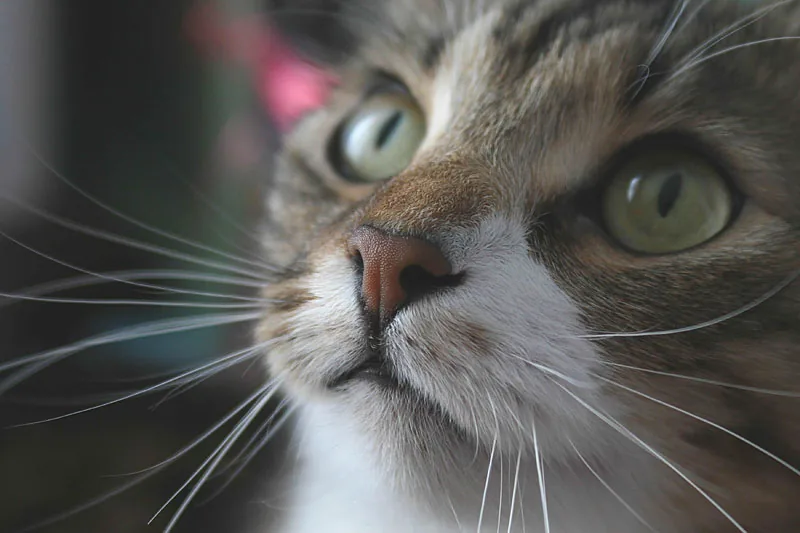
A close-up of a cat.
Cats, on the other hand—although they too are often energetic and playful—can concentrate very well on one particular thing. Get as close to your cat as possible with your camera lens, attract its attention, and hold it. Use the optical zoom so that the lens does not distract your cat as you move the camera closer. Find a place your pet enjoys, such as an outdoor play area, and take it there. If your pet is especially fond of a particular playmate, try bringing that person along. Let them play and romp around, keep your camera ready, and wait for that fun or special moment.
As noted at the beginning of this article, pets do not always do what we want. If you are about to take photographs and your pet is uncooperative, ask someone you know—and who also knows your pet—to help. Another thing that usually works well is bringing a treat for your animal to the place where you will be photographing. A snack, a new toy... anything that can help win your pet over.
A toy that makes a sound often works wonders too. You can use it to attract the animal’s attention and make it look toward the camera. This works especially well if you plan to make a traditional portrait photograph (for dogs, we call this a head study). By making a sound, you draw the animal’s attention—and therefore its head—toward the sound, allowing you to take your photographs easily.
Especially when your animal is nervous, playful, energetic, or excited, it is best to choose a fast shutter speed. After all, you do not want a blurred photograph, and the more active the animal is at that moment, the more you will benefit from a fast shutter speed.
Smaller pets
The background of the photograph you are about to take is also very important. Find a neutral background for your picture, preferably in a single color, so that your pet—the focal point of your photograph—does not blend into the background and become difficult or even impossible to see.

Avoid using your flash whenever possible, because the shiny eyes of many pets reflect a green color, producing the familiar red-eye effect—but in green.
And once you start taking pictures, do not forget your small or smaller pets. A hamster, a marmot, a guinea pig... these little animals are rewarding subjects too. Try to get as close to them as possible, and make sure you photograph the animal rather than the bars of a cage or enclosure. You could try taking the photograph while the cage or enclosure door is open. Photographing a tortoise is even easier. You can place it wherever you want and then have all the time you need to take your photographs.
Make the most of your pet’s natural curiosity. Give your cat or dog a new toy, or place it in a new play environment. Then let the animal explore at its own pace. All you need to do is wait for the right moments to press the shutter.
Take your time when photographing animals. As mentioned earlier, it can take a while to get the photographs you want. Take a number of pictures so you can select the best or most suitable ones later. Do not give up; be patient, patient, and patient again... eventually, you will certainly achieve the result you had in mind.
One more tip for attractive photographs: put several animals together. Watch them play and romp around, and make the most of it. But do not lose your patience; try to attract their attention. Sometimes an image gains even more charm when printed in black and white or duotone.
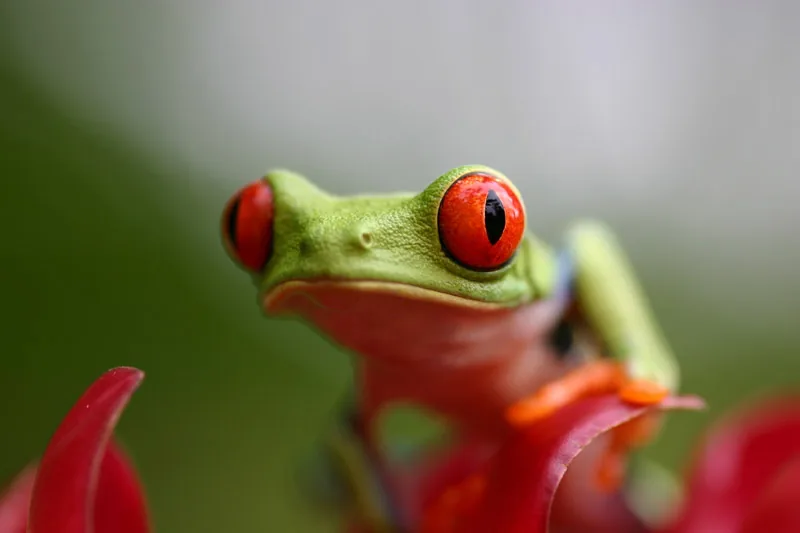
At the zoo
Nowhere will you find more beautiful and unusual animal species to photograph than at the zoo, with an abundance of species, sizes, and colors. By taking photographs at the zoo, you can also use your pictures to teach your children about animals other than their own pet. The photographs are also great for school projects, presentations, posters, or postcards. Naturally, this type of photography also involves points that require close attention if you want to achieve the right result. The most important ones are listed below.
Many animals in a zoo are, of course, behind glass or plastic windows. Take that carefully into account when you begin, especially if you plan to use your flash. If there is glass or plastic between the camera and the animal, position your camera at an angle that prevents the flash from reflecting back and spoiling your photograph. Remember that a flash has a limited range, so in most cases it is better not to use it at all.
Instead, in low or insufficient light, use a tripod—either a three-legged tripod or a one-legged monopod—so that you can choose a somewhat slower shutter speed on your camera. If you are photographing outdoors and still plan to use your flash, use it primarily to fill in or eliminate distracting shadows.
Whenever possible, keep your camera at the eye level of the animal you are photographing.
Scan the surroundings for distractions; keep it simple
Before you begin, take a good look at the background. Scan the background and surroundings for distractions in shape, movement, and color. Keep it simple.
Do not forget to fill the frame with your subject. Zoom in as far as possible using your optical zoom... the result will show the difference. But do not make this a rigid rule. When the setting allows, sometimes try a less obvious composition. Including some of the surroundings can add excitement and enhance the atmosphere of the photograph.
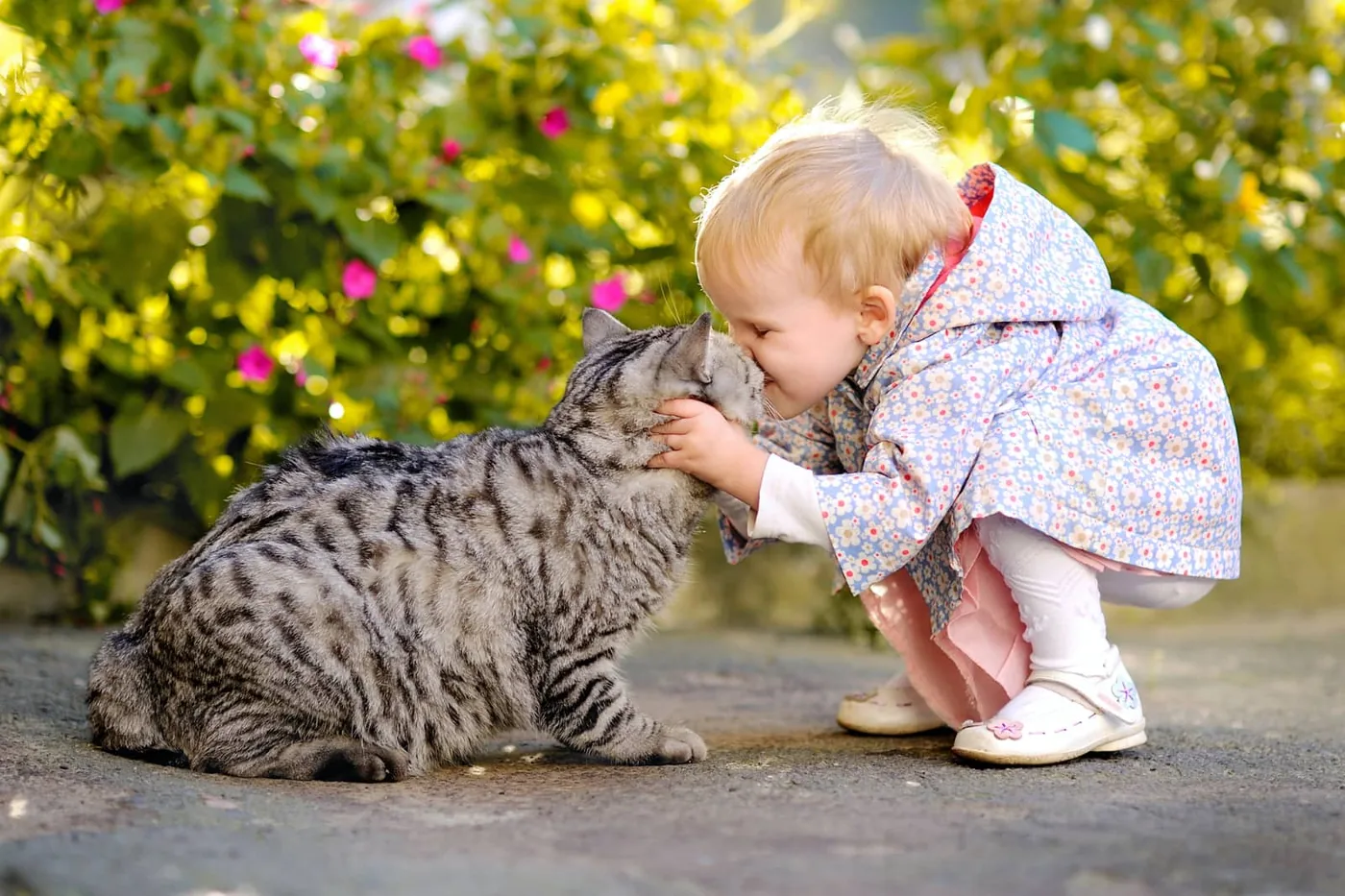
Finally, here is one small photo idea: place your child and the animal you want to photograph together in the same camera frame—for example, your child’s back while they look at the animal, or a picture taken from the side. Give it a try.