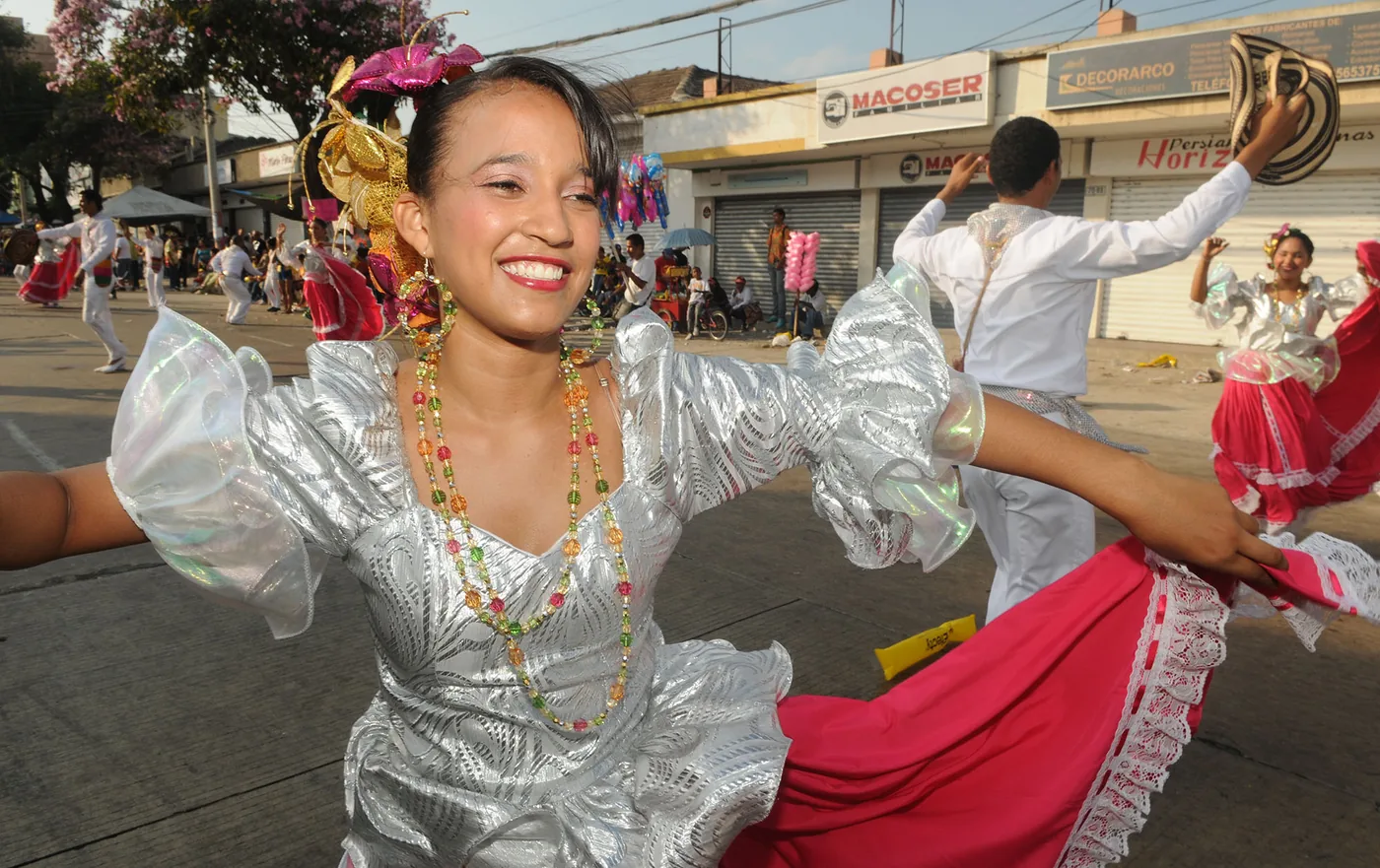
Photographer Tom van der Leij travels the world, encountering all kinds of subjects along the way. In Colombia, he discovered just how much fun celebrating Carnival can be.
A while ago, Sasha, a friend of mine, called. She lives in Bogota and asked if I wanted to celebrate Carnival in Barranquilla, in the north of Colombia, with her and a bunch of friends. “After Rio, the carnival in Barranquilla is the largest on the continent,” she said.
Now she knew that I had always wanted to experience this folk festival in Latin America. Rio de Janeiro seemed the most obvious choice to me, although I had also heard that Carnival is celebrated exuberantly in other parts of the continent.
The images I see every year always appeal to me: so much color and movement, and so many different people. What photographer wouldn't want to capture that? I booked a ticket and headed to Colombia in late February, with no idea what celebrating Carnival there would be like.
When the whole city parties it is an even bigger mess than usual
Carnival and I never really clicked in the Netherlands, perhaps because of my down-to-earth Dutch nature or the weather, which always seems to interfere. But Carnival among the Caribbean's Latino communities is on a different level.
The whole of Colombia traveled en masse to Barranquilla during Carnival. Upon arrival at the airport of the Caribbean city, I am welcomed by cheerfully dressed and wildly dancing ladies who hand out free cans of beer.
The tone for the next few days is set. When the whole city celebrates, it is an even bigger mess than usual, Wies Ubags tells me. This Dutch journalist has lived in Colombia for years and recently moved to the Carnival city.
It is a wonderful mess, with trash, music, and people everywhere. Costumed revelers weave among vendors' stalls as the merchants try to earn a year's revenue in a single weekend.
Then there is the constant cacophony. Music is everywhere: pouring from apartment windows, passing cars and buses, and boomboxes in the street. Everyone plays a different CD or tunes in to a favorite station; the only constants are the salsa beat and the volume—turned all the way up!
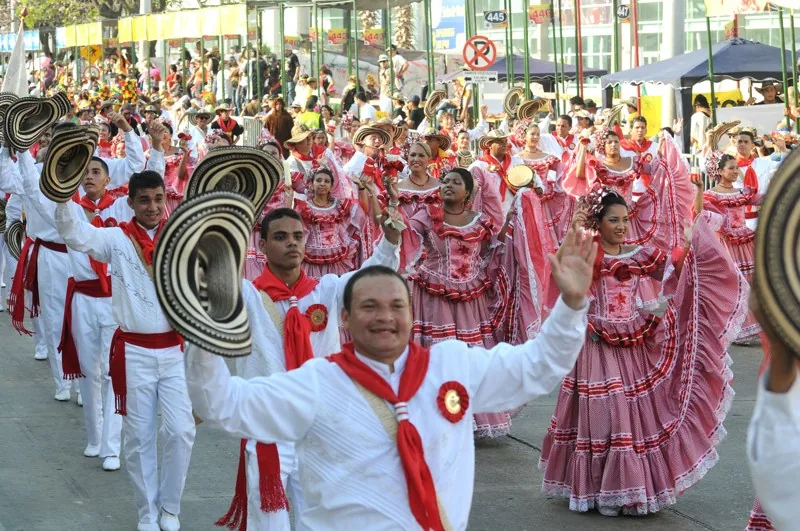
During these wild days, anything goes. A large Carnival parade passes through downtown every day, and the entire city joins the celebration. Since 2003, the Carnival of Barranquilla has even been on the UNESCO World Heritage List.
The regular parade is very busy and if you want a good view of the procession, you are forced to take a seat in one of the many stands.
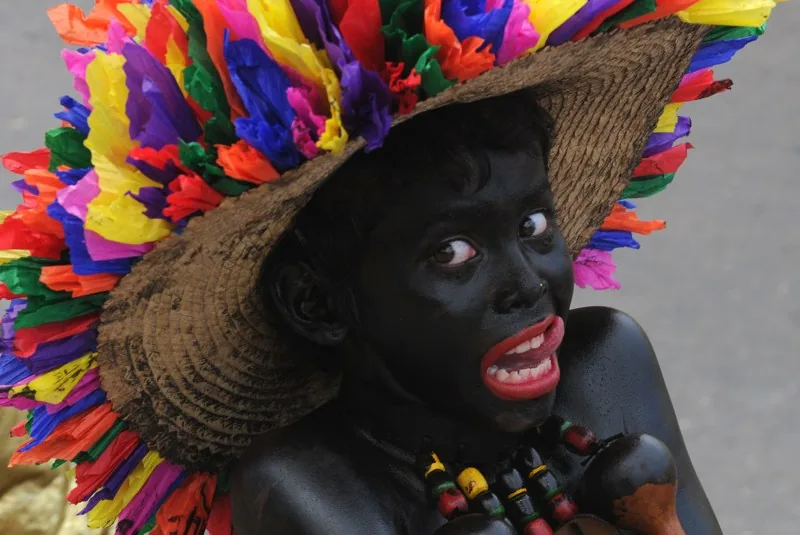
After paying admission, I watch the procession from the stands. The participants are mostly groups in traditional dress, dancing past as the crowd cheers them on. Some groups include children painted black who pull funny faces.
I'm told that as long as you pay, you can just join the procession. Wies says that the parade was created in 1903 by an important general to celebrate the end of the War of the Thousand Days, under the name of the Battle of the Flowers. The Carnival had already existed for about fifteen years.
I'm told that as long as you pay, you can just join the procession
“The folklore groups formed around a theme are characteristic of the Barranquilla Carnival—for example, slavery and Africa, but also nature. Life in the Magdalena River, where Barranquilla originated, is an important theme. Osama bin Laden and President Chávez of neighboring Venezuela have also become recurring figures,” Wies says.
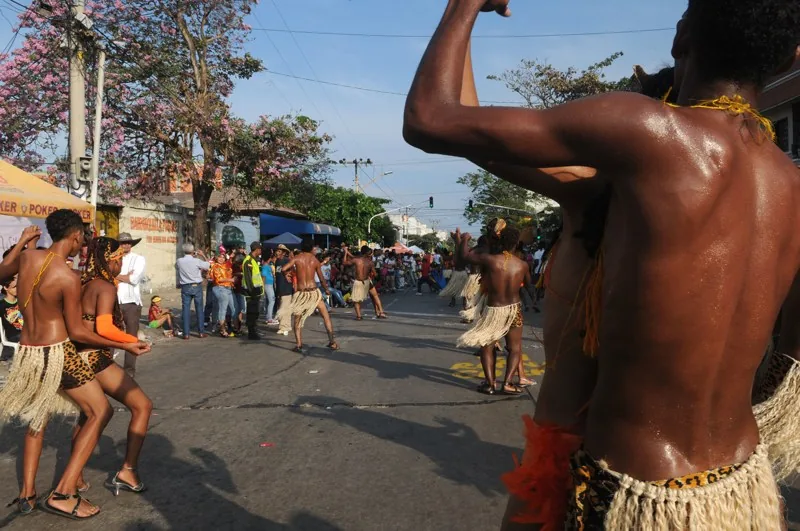
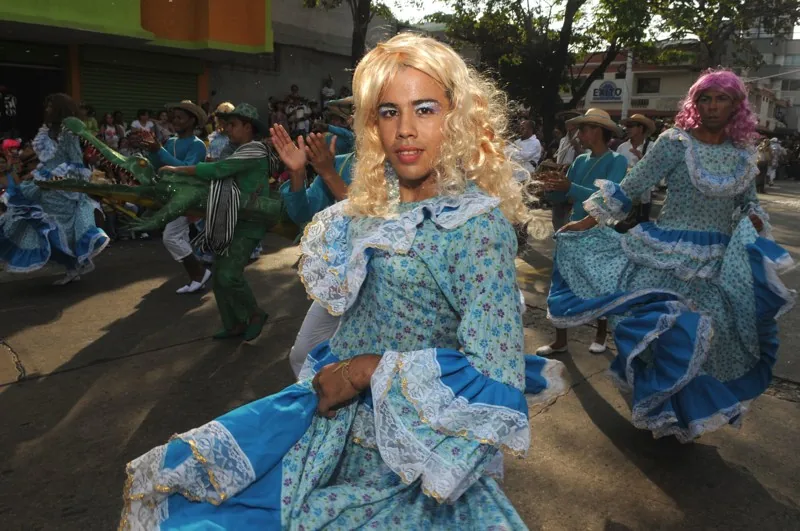
And indeed, occasionally there are caricatures of world leaders and also men who dress up as women and cause a lot of commotion. I position myself on the side of the fence that separates the stands from the parade and take photos of the procession.
I'm standing in a nice spot, but I can't move forward or backward, so the photos are always taken from the same point. I'm used to moving a lot and walking around my subject. That's not possible now and seeing all that beauty makes my limited freedom of movement quite frustrating.
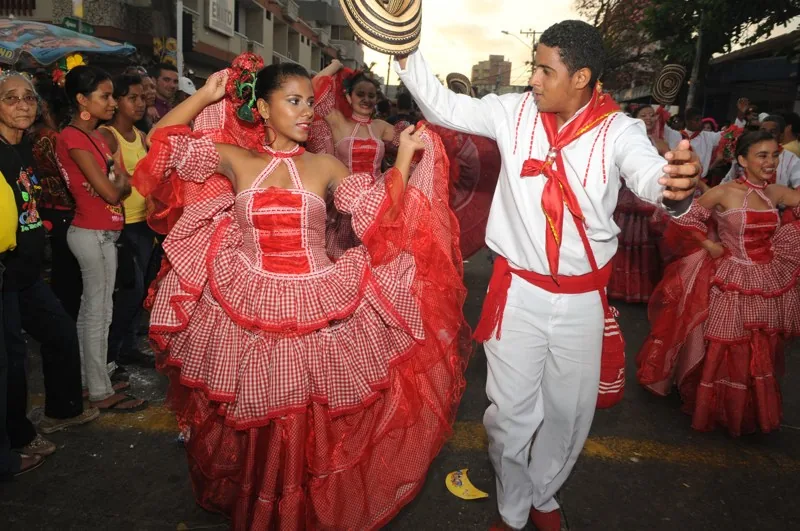
The next day, Wies takes me to a parade that passes close to her home. “Smaller alternative parades are organized throughout the city, and they are much more grassroots,” she says.
The Battle of the Flowers along Carrera 44 is characterized more by chaos and entertainment among the crowd than by close attention to what passes by.
The spectators spray each other with foam and cover each other with cornstarch. My camera is covered in foam and I have to constantly wipe my lens clean with my sleeve. I decide not to worry about it.
It is an enormous street party stretching for miles. Spectators stand beside and on the road as the Carnival procession moves straight through them. Every now and then, a sweaty police officer calls for the crowd to make way, but the celebration manages itself perfectly well.
My camera is covered in foam and I have to constantly wipe my lens clean with my sleeve
The people lining the route are genuinely excited. Some have brought full picnic hampers and even furniture. I decide to follow the procession for a while and join the crowd.
Participants and spectators alike respond enthusiastically to the camera. Excited people pull me in every direction, eager to have their group photographed too.
I use fill flash on some people because of the harsh light and deep shadows. Everyone wants to teach the white guy some rhythm, which naturally causes plenty of laughter among the spectators.
I return to my hotel in the evening, exhausted and satisfied. This is how I imagined Carnival, for and by the people!
With thanks to: Wies Ubags, Robert-Jan Friele and Sasha and Claartje Ter Hoeven.
Want to learn more about this author and photographer? Visit the Tom van der Leij page.