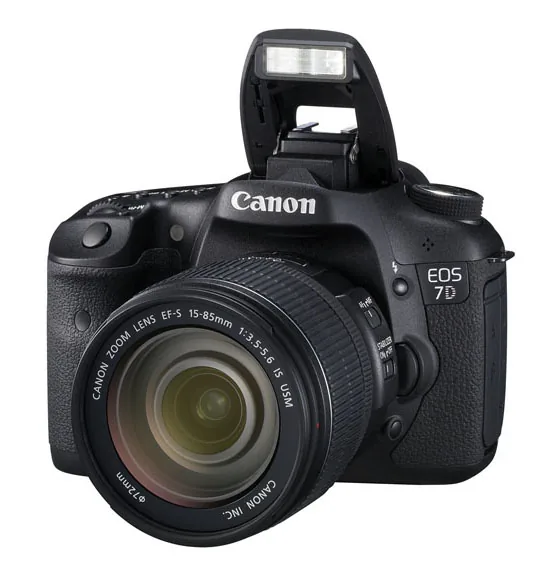
The Canon EOS 7D is clearly designed to claim the top spot in the high-end APS-C sector. Will it succeed?
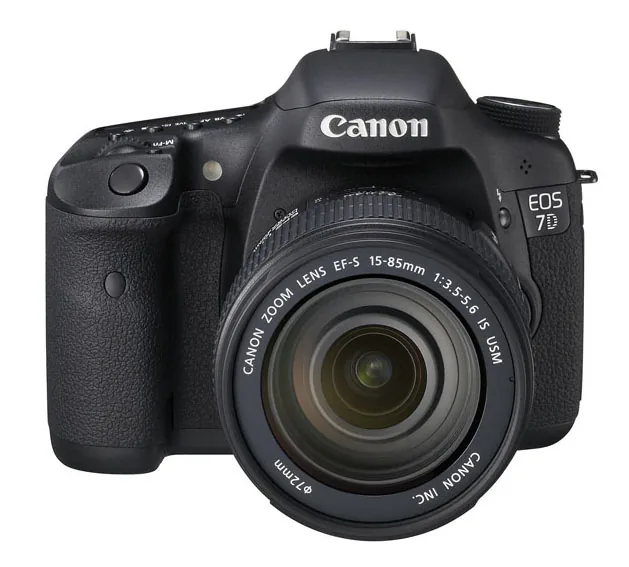
Since the introduction of Nikon's D3 and D700, there has been a little less white in the ranks of professional photographers. You really do see more Nikon gear along the sidelines and in the press areas. Nikon also earned the highest ratings with the D300 and D90. It was time for Canon to strike back. With the EOS 7D, Canon aims to beat the competition on points. It is meant to lead the APS-C class.
18 MP
The previous jump in pixel count in this class was not entirely successful: moving from 10 MP (40D) to 15 MP (50D) amounted to a net gain of about 2 million pixels. The rest was lost to the extra-strong noise reduction that became necessary.
With the EOS 7D, Canon does much more than add pixels and adapt the processing: it adds a second processor. This is not only for speed, but also to provide the computing power that could enable more intelligent noise reduction. That matters greatly given the tiny pixels.
It worked. The previous leader, the Nikon D300s, is surpassed in detail, sharpness, and freedom from noise. But not in every respect. There are also situations in which the use of smaller pixels comes at a cost.
The differences between the D300s and this camera are small
In large, even areas, the camera produces more noise at ISO 1600 (with standard noise reduction). If you look very closely, the difference begins as early as ISO 400. This is the typical Achilles' heel of such extremely high resolutions. A great deal of intelligence is expected from the noise reduction, and it almost inevitably gets things wrong occasionally.
In the same ISO range, the Nikon also renders detail a little more sharply. For clarity, the comparison was made at the same presentation size, so the 7D images were viewed at a slightly lower magnification.
Set the 7D's noise reduction to its strongest setting and it removes noise fairly effectively, at the expense of fine detail. If you shoot RAW, all these 'problems' (this is still pixel peeping) disappear. Above ISO 1600, the 7D's images are decidedly cleaner.
The differences between the D300s and this camera are small, far smaller than the 50 percent increase in pixels would suggest. They will often not determine the choice because the differences are generally not large enough.
The 7D's new imaging technology demands the best optics.
New Autofocus
Canon gave the 7D an entirely new AF system with 19 focus points (up from 9), creating a finely branched network of sensors across a substantial central portion of the image area.
The EOS 7D offers many AF choices: you can meter very precisely, let the camera control the entire area, or activate groups of sensors within the overall AF frame. It is extremely fast and versatile, with extensive options for tailoring its behavior to the subject, situation, and way you work
Viewfinder with LCD
The 7D's focusing screen is not interchangeable, but in return it has a transparent LCD layer that can display a grid. You can choose between a coarse and a finer grid, and you can also illuminate it in red (for shooting in low light).
Ergonomically perfect, ideal proportions
The viewfinder itself is superb: clearly larger than the 50D's and smaller than the 5D Mark II's. It is a pleasure to use and shows 100 percent of what the camera captures.
Controls
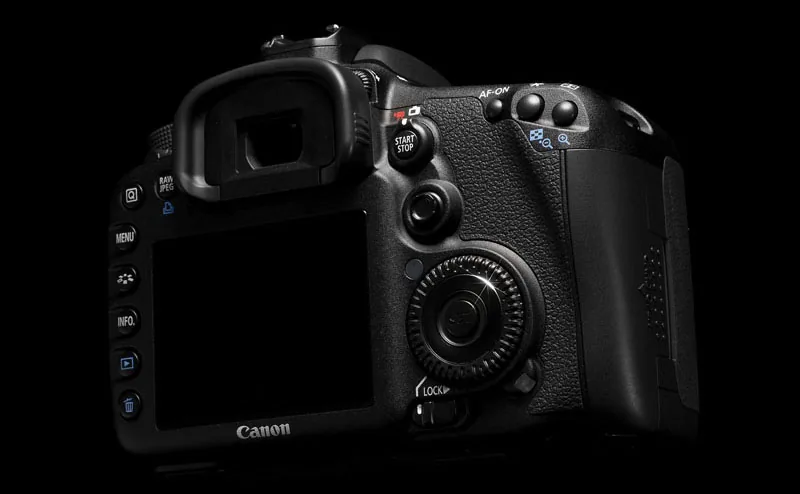
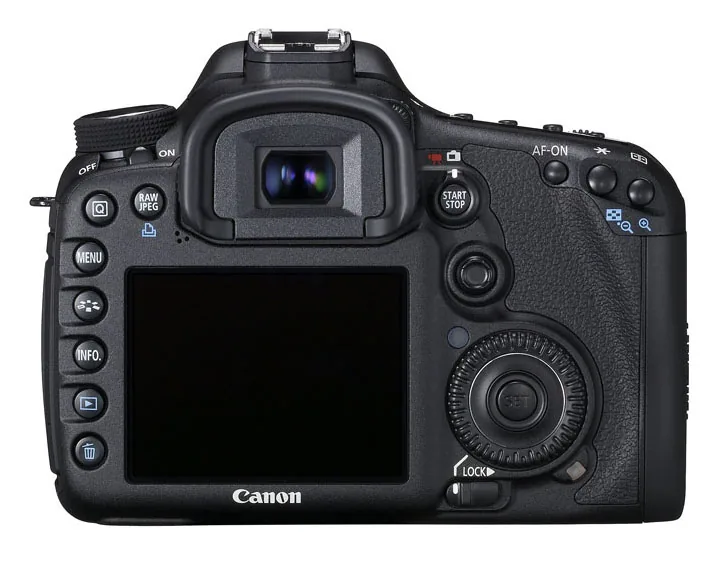
The 7D is an absolute pleasure to use. Ergonomically perfect, with ideal proportions, everything works quickly and directly. Using it gives you a warm sense of command. Because it can achieve a very high shooting rate (8 fps), all the mechanisms operate very quickly. Viewfinder blackout during exposure is extremely brief.
The Q button is new and displays an overview of the main settings on the screen. You can quickly navigate to one of them and change it, either directly on that screen or by taking one extra step to open the setting itself and make the adjustment. If you use the Q button in live view, the last-used setting appears along the edge of the image—white balance, for example. Very convenient.
It is also helpful that settings adjusted via the top LCD (using the familiar row of buttons together with the two control dials) are displayed on the rear LCD as well, where they are much easier and clearer to read.
You can genuinely see the effect of depth of field, even at the smallest aperture
LV
As for live view, it is very useful in combination with the excellent LCD: you get a good preview of how the photo will look and can experiment 'live' with settings such as white balance and exposure compensation. Contrast-detection AF is another step faster, although it still has a regular tendency to hunt at length.
Another nice feature is that you can zoom in for extra-precise focusing, automatically or manually. In live view, remember to use depth-of-field preview. It works much better than through the viewfinder because the LCD image is automatically amplified.
You can genuinely see the effect of depth of field, even at the smallest aperture. And you can use the electronic magnifier at the same time!
Together with live view, the camera offers two additional quiet modes, made possible because the mirror is already raised. You can then shoot almost silently. The 7D is not noisy during normal shooting either, with its dry, controlled click.
Fans of wireless flash photography are finally no longer forced to use an additional flash or commander unit; the built-in flash can control off-camera Speedlites while retaining automatic flash metering.
Fast
More and more photographers are recognizing the value of fast bursts, especially in tricky conditions—for example, shooting handheld in low light—or for portraits, to capture exactly the right pose. 8 fps plus 18 MP requires considerable processing power from a camera, which is another reason for the dual processors. The camera indicates how many consecutive shots you can take. In the best case, it manages 15 consecutive RAW images before needing a little extra time to write data, 94 images in JPEG (126 with a UDMA card), and 6 consecutive images in RAW + JPEG. Respectable figures!
Especially if you often use telephoto lenses, shooting in APS-C format is an advantage
Good
The EOS 7D is very comprehensively equipped, including extensive video options. There are a few criticisms, and they are not new: you still cannot tailor the automatic ISO range to your own preferences, and 'Auto Lighting Optimizer' still works much more subtly than Nikon's widely praised D-Lighting. At least you can say that Canon stands by its own convictions. Beyond that, there is almost nothing to complain about.
The EOS 7D is an absolute photographic powerhouse that can meet the needs of any demanding photographer. Especially if you often use telephoto lenses, shooting in APS-C format is an advantage. It is a good thing, then, that the 7D exists!