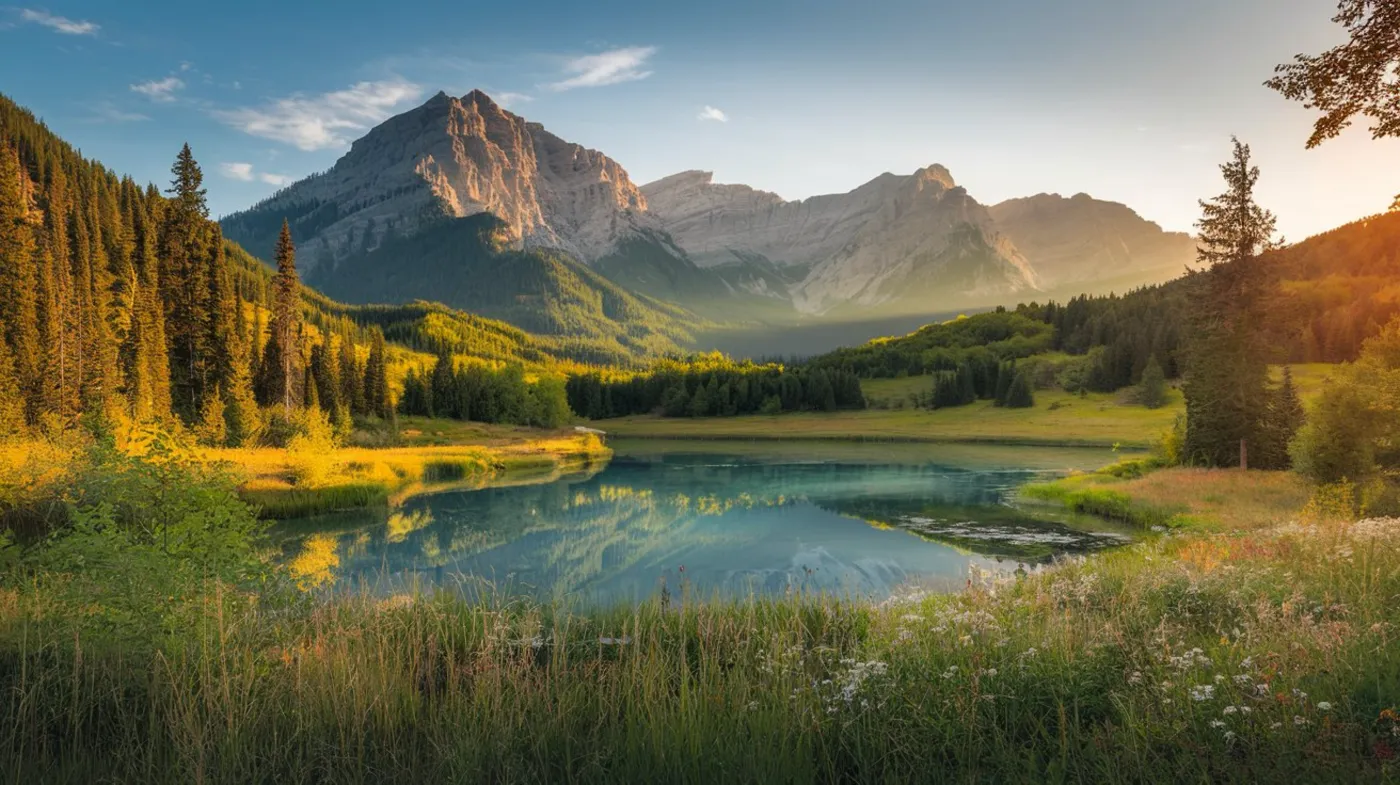
What is the best lens for landscape photography? A wide-angle lens may be the obvious choice, but a telephoto lens can also produce surprisingly powerful landscape images. The right choice depends on the landscape, your composition, and how you want the scene to feel. This article explains what to consider when choosing a lens for landscape photography.
Why the lens matters
A lens determines how a landscape is rendered. It changes not only the angle of view, but also how distances and proportions appear in the frame.
A wide-angle lens often creates a sense of space and depth. Foreground objects appear larger, while background elements seem farther away. This effect is often used to draw viewers into a photograph.
A telephoto lens does the opposite. Distances appear smaller, and elements in the landscape are visually brought closer together. This often produces calm, minimalist compositions.
The choice of lens therefore affects not only what enters the frame, but also how a landscape is experienced.
Wide-angle lenses: the classic choice
When people think of landscape photography, they often immediately think of wide-angle lenses. That makes sense, because these lenses make it possible to capture a large part of a landscape.
Focal lengths between approximately 14 and 24 millimeters are commonly used for expansive views, coastal landscapes, mountain regions, and broad natural areas. Photographing close to an interesting foreground element creates a strong sense of depth.
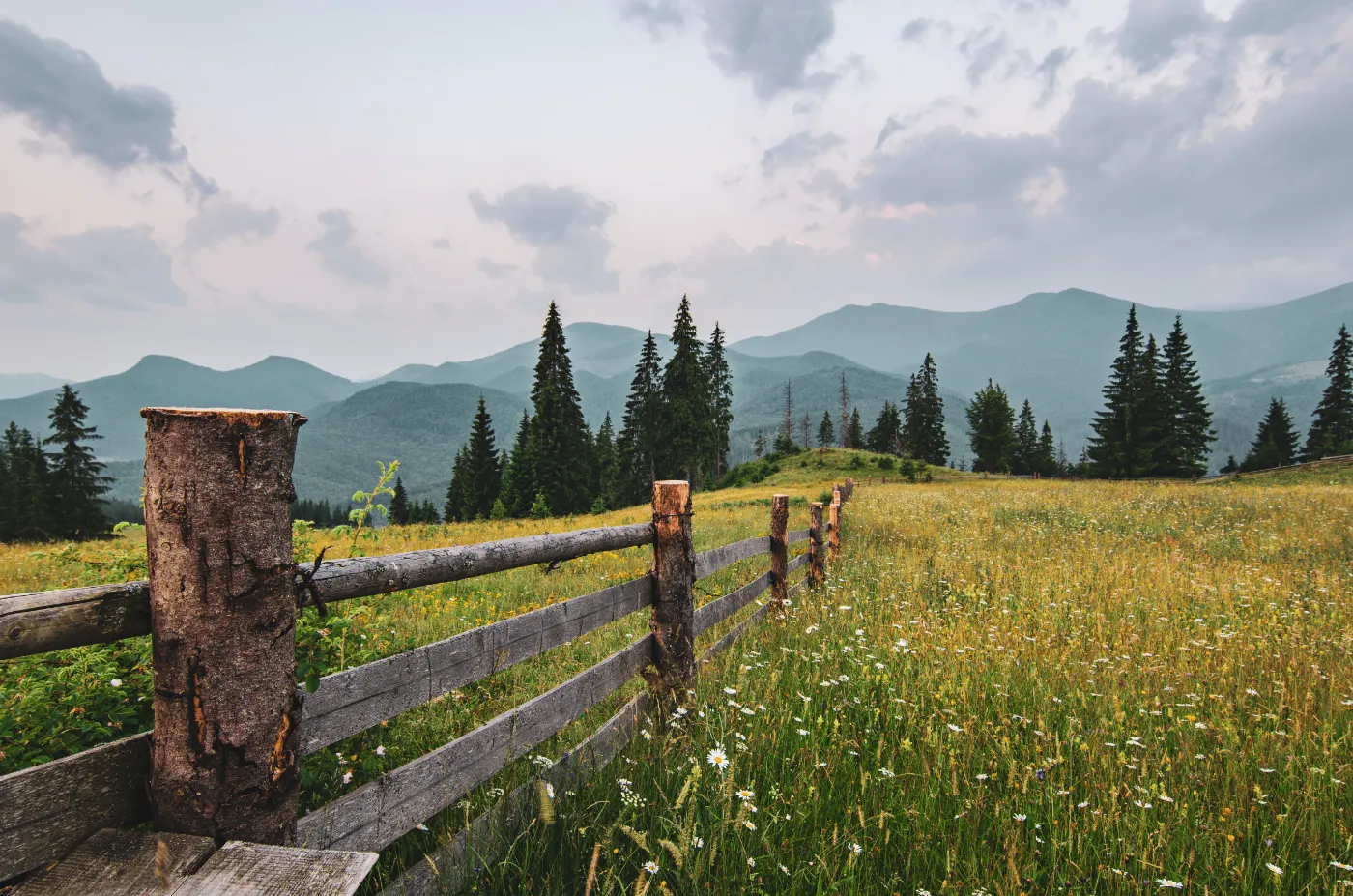
A wide-angle lens works especially well when the foreground contains something interesting. Consider flowers, rocks, a winding path, or driftwood on the beach. These elements add depth to a photograph and guide the viewer’s eye through the frame.
A common mistake is using a wide-angle lens without a clear foreground. The result can look flat and distant, even when the location itself was impressive.
The power of a telephoto lens
Although wide-angle lenses are popular, many experienced landscape photographers use telephoto lenses surprisingly often. These allow specific parts of a landscape to be isolated.
Layers of mist between hills, patterns in sand dunes, a solitary tree in a vast landscape, or light on a distant mountain peak are all subjects well suited to longer focal lengths.
Telephoto lenses make different layers in the landscape appear closer together. This is known as perspective compression and can produce a powerful image.
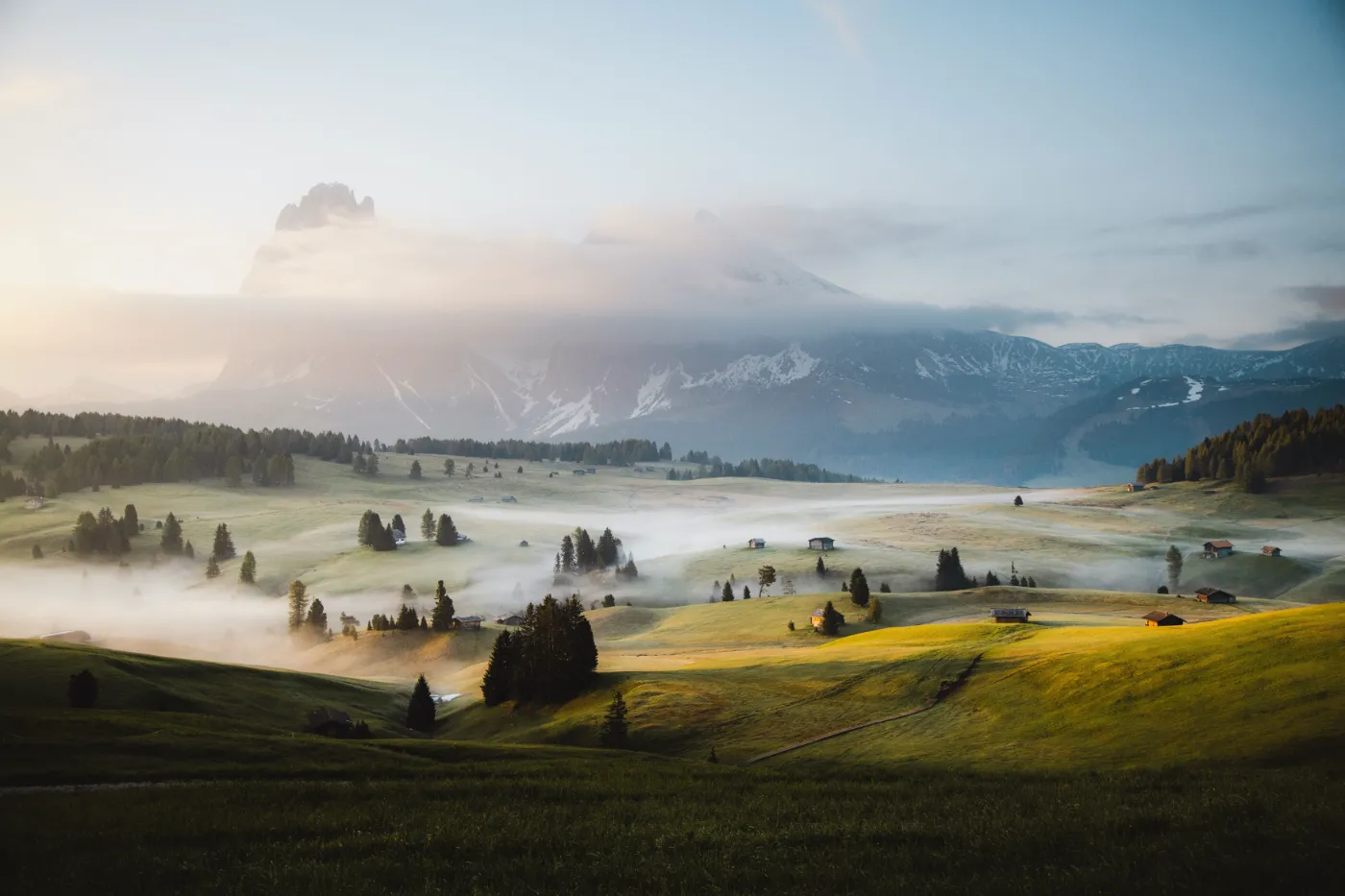
Over time, many photographers discover that a telephoto lens helps them create calmer compositions. Instead of capturing an entire landscape, you focus on one specific element that draws attention.
Prime or zoom?
A common question is whether a prime or zoom lens is better suited to landscape photography.
Prime lenses have a fixed focal length. They are known for high image quality, compact size, and often a wider maximum aperture. Because they contain fewer moving parts, these lenses can be extremely sharp.
Zoom lenses offer greater flexibility. During a hike or sunrise shoot, you do not need to keep changing lenses to create a different composition. A single turn of the zoom ring lets you switch quickly between angles of view.
A single turn of the zoom ring lets you switch quickly between angles of view.
For many landscape photographers, zoom lenses are therefore a practical choice. They offer versatility without necessarily compromising image quality.
Full frame or APS-C
The type of camera also matters when choosing a lens. Many cameras have an APS-C sensor, while other models use a full-frame sensor.
On an APS-C camera, the same lens produces a narrower angle of view. A 16-millimeter lens therefore does not provide the same view as it does on a full-frame camera.
That does not mean APS-C is less suitable for landscape photography. On the contrary, modern APS-C cameras deliver excellent image quality and often provide good value for money.

More important than sensor size is understanding how your equipment works and what angle of view to expect at different focal lengths.
Which focal length suits which landscape?
Different landscapes often call for different lenses.
Wide-angle lenses are popular for coastal landscapes and mountain regions. They make it possible to emphasize a location’s scale and capture much of the surrounding environment.
Forests are often more challenging. With so many trees and branches, an extremely wide angle can quickly produce a cluttered image. In these situations, many photographers choose a slightly longer focal length to create calmer compositions.
The best results often come when photographers learn to see what a landscape needs.
For details in the landscape, such as patterns in snow, light on a mountainside, or mist between trees, a telephoto lens can be an excellent choice.
There is therefore no universal focal length that always works. The best results often come when photographers learn to see what a landscape needs.
If you are not yet sure what focal length, maximum aperture, and the different types of lenses mean, start by reading about lenses for beginners.
Combining filters with lenses
Filters remain an important tool in landscape photography. Although image editing offers many possibilities, certain effects are best captured at the time of shooting.
A polarizing filter is often used to reduce reflections on water, leaves, and wet surfaces. It can also help render colors a little richer and strengthen contrast in the sky.
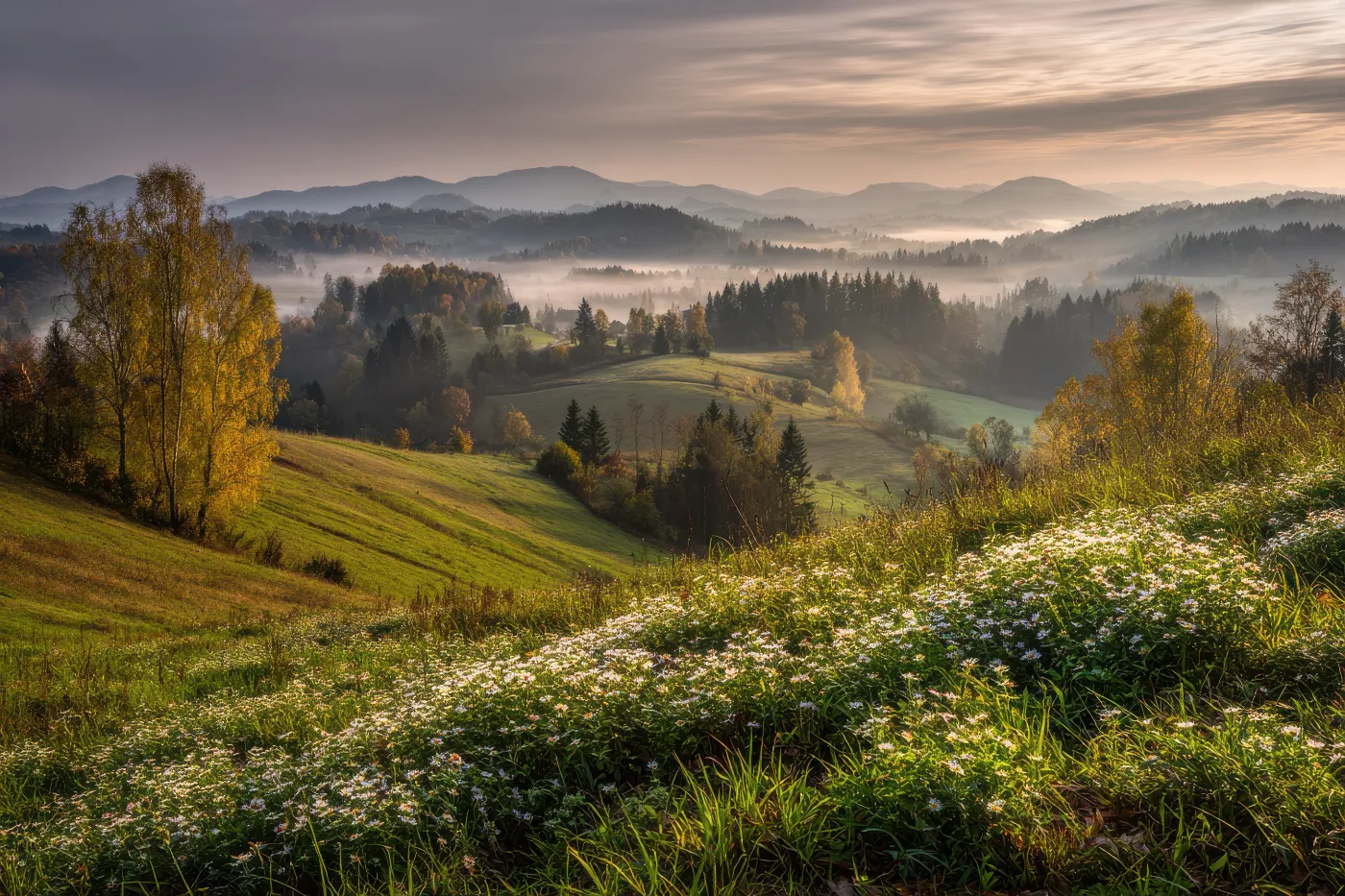
ND filters, also known as neutral-density filters, reduce the amount of light reaching the camera. This enables longer shutter speeds, making it possible to render flowing water smoothly or show moving clouds as streaks across the frame.
When buying a lens, it is wise to consider the filter size as well. Not every lens uses the same diameter. Some extreme wide-angle lenses also cannot accept standard screw-in filters because of their bulbous front element.
Anyone who wants to explore different lenses and their applications in greater depth can read this comprehensive guide to lenses for landscape photography.
Common mistakes when choosing a lens
Beginning photographers sometimes believe that a larger or more expensive lens automatically produces better photographs. In reality, knowledge of light, composition, and timing often has a much greater effect on the final result.
Another common mistake is using only a wide-angle lens. Although wide angles are excellent in many situations, photographs can begin to look alike over time. Using a telephoto lens as well often opens up new creative possibilities.

Sharpness is also frequently overestimated. Almost all modern lenses now produce excellent results. The difference between a technically perfect photograph and a strong landscape image is usually determined by the subject and composition, not by a small difference in sharpness.
Continued practice matters more than new equipment
Many photographers spend a great deal of time comparing lenses, even though practical experience often delivers greater benefits. Going out regularly teaches you which focal lengths you use most and which compositions best suit your style.
Over time, every photographer develops personal preferences. Some work almost exclusively with wide-angle lenses, while others prefer telephoto lenses and minimalist compositions.
The Mkphotograph website features various examples of landscape photography using a range of techniques, focal lengths, and weather conditions.
Conclusion
There is no single best lens for landscape photography. Each focal length has its own strengths and applications. Wide-angle lenses are ideal for expansive landscapes and powerful foregrounds, while telephoto lenses help isolate details and patterns.
By trying different lenses, you will naturally discover which ones best suit the way you photograph. Ultimately, it is not a lens’s specifications that make a photograph special, but the combination of light, composition, timing, and creativity.