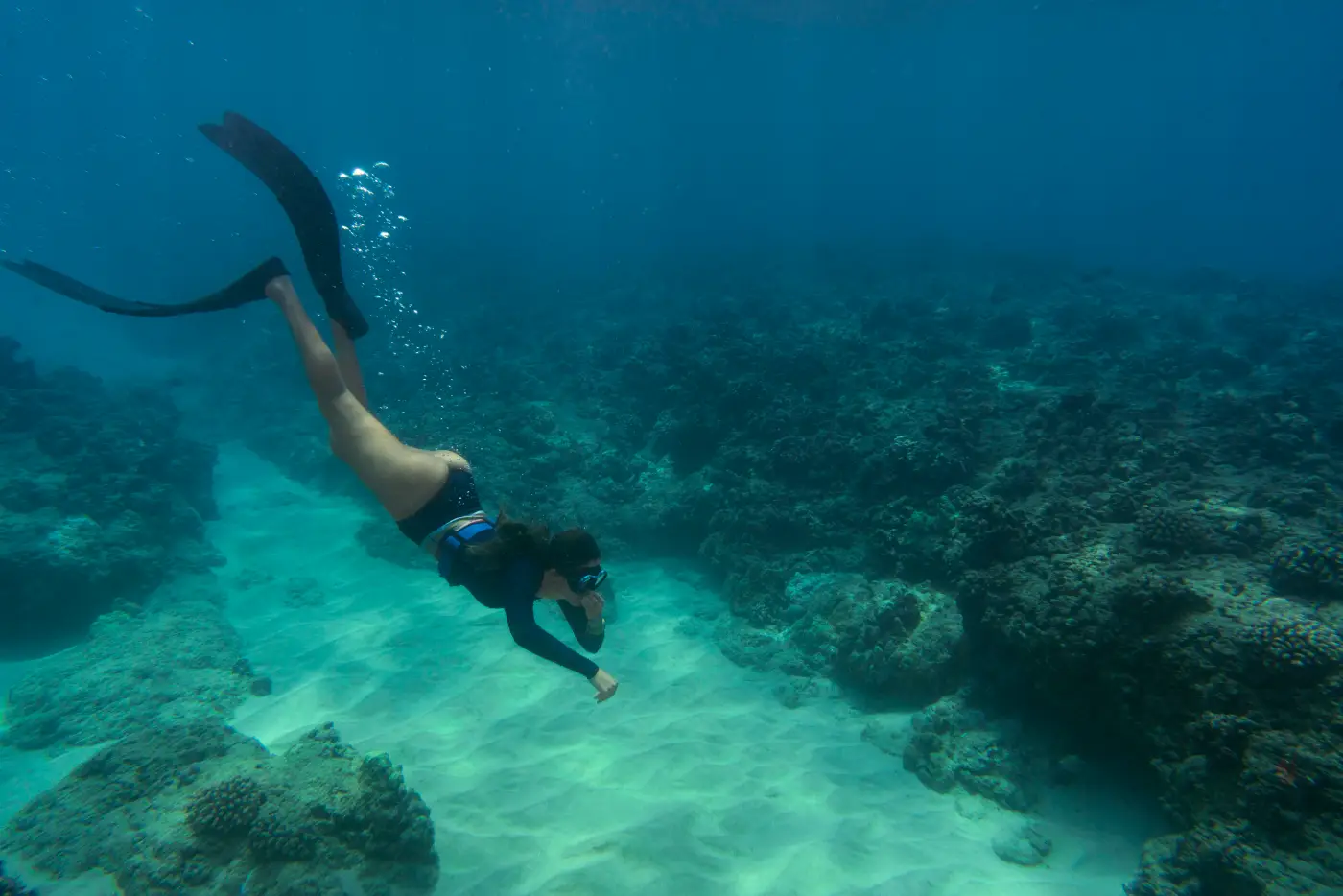
Water and cameras are usually not an ideal combination. Yet taking photos in the pool, while snorkeling, or even at depths of dozens of meters is easier today than ever before. You can choose a waterproof compact camera or action camera, or take your smartphone or mirrorless camera with you in a dedicated underwater housing. The best solution depends mainly on what you want to photograph and how deep you plan to go.
A waterproof compact camera
For vacations, the pool, kayaking, and snorkeling, a waterproof compact camera is still one of the simplest solutions. You do not need to bring a separate underwater housing, and the controls remain virtually the same as they are above water.
One well-known example is the OM SYSTEM Tough TG-7. This camera is waterproof to 15 meters without an additional housing and can capture RAW files. The PENTAX WG-1000 is also waterproof to 15 meters. That makes cameras like these particularly appealing for use around the pool, at the beach, and on snorkeling trips.

The main advantage is convenience. One drawback is that the relatively small image sensor and compact lens have their limitations when little light is available. That quickly becomes relevant underwater.
An action camera underwater
Action cameras have largely taken over the role once held by the basic “pool camera.” They are small and rugged, usually have an ultra-wide-angle lens, and can often go quite deep underwater without an additional housing.
The exact depth varies greatly by model. The DJI Osmo Action 6, for example, is rated to 20 meters without a housing; with its matching underwater housing, that increases to 60 meters. The Insta360 Ace Pro 2 is waterproof to 12 meters without a housing and to 60 meters with a Dive Case. Housings that enable diving to about 60 meters are also available for various GoPro models. So always check the specifications for your exact camera and housing before entering the water.
The GoPro HERO13 is waterproof to 10 meters without an additional housing. With the dedicated Protective Housing, the camera can be used at depths of up to 60 meters.
Action cameras are particularly appealing for video. For photographers who primarily want to create high-quality photos and value full control over the lens, exposure, and flash, a mirrorless camera in a good underwater housing offers more possibilities.
Can you simply take your smartphone underwater?
The fact that a modern smartphone is water-resistant does not automatically mean you should use it as an underwater camera.
Apple, for example, explicitly warns that an iPhone’s water resistance is not permanent and may diminish as a result of normal wear. The company also advises against swimming with an iPhone or intentionally submerging it. Liquid damage is not necessarily covered by the limited warranty, either.
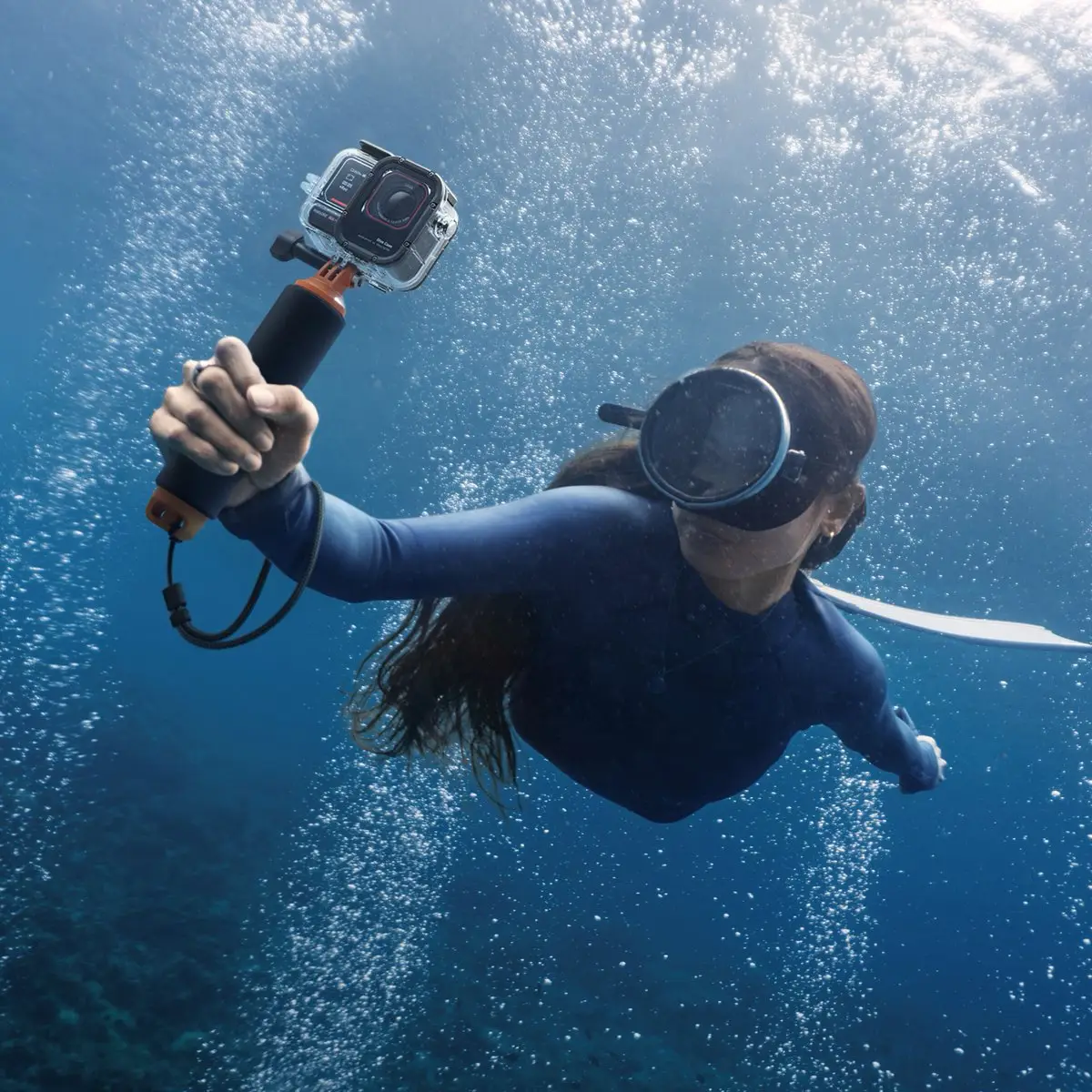
If you seriously want to take underwater photos with your smartphone, use a dedicated underwater housing designed for your phone. It not only provides additional protection but often makes the phone easier to operate underwater as well.
Taking your mirrorless camera with you
If you want the same image quality and creative possibilities underwater as you have above water, you will need a proper underwater housing for your mirrorless or DSLR camera. If a rugged waterproof compact is a better fit, consider the OM SYSTEM Tough TG-7.
Such a housing is made specifically for a particular camera model. The buttons and dials on the outside operate the camera inside through mechanical linkages. Different lenses also require different lens ports.

This makes the solution considerably more expensive and bulky, but it gives you a lot in return: a larger sensor, RAW capture, interchangeable lenses, better low-light performance, and the ability to use external underwater strobes.
Professional underwater housings can also go much deeper than a standalone waterproof camera. The maximum depth varies by brand and model and should always be checked with the manufacturer.
What about a flexible underwater bag?
There are also flexible waterproof housings that can hold a regular camera. Ewa-Marine, for example, still makes several models for cameras and lenses. Different maximum depths are specified depending on the version.
A flexible housing can be appealing for snorkeling, canoeing, taking photos from a boat, or working in rain, sand, and splashing water. The controls are generally less direct than those of a hard underwater housing, and the optical possibilities are more limited as well. For regular diving with an expensive camera, a dedicated hard underwater housing is therefore the more logical choice.
Light behaves differently underwater
Even with the best camera, underwater photography is technically different from taking photos on land. Water absorbs light, and red wavelengths in particular disappear relatively quickly. As you go deeper, this makes photos more likely to take on a bluish or greenish cast.
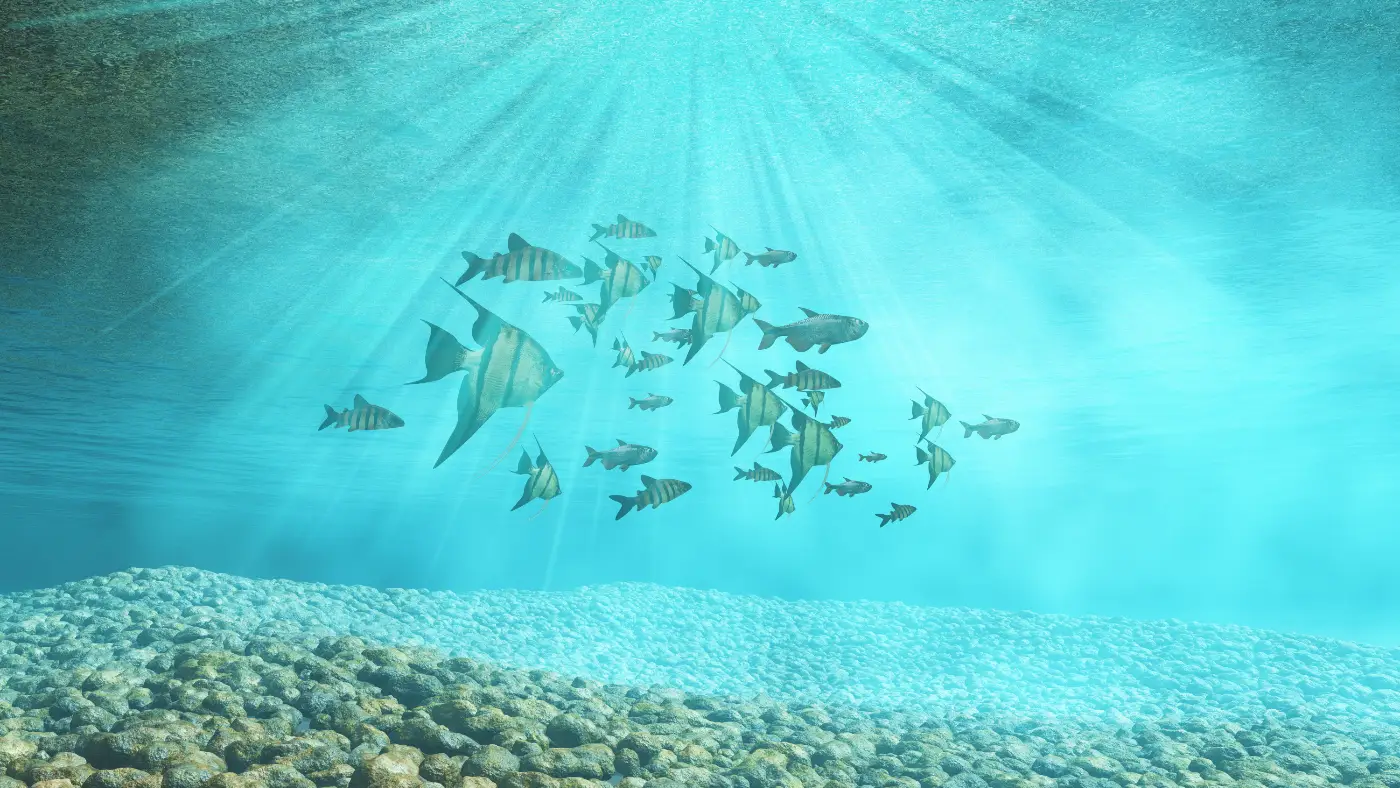
Near the surface, you can often work very well with available light when the water is clear. At greater depths, artificial light becomes more important if you want to restore natural colors.
If you shoot with a camera that supports RAW, you also have more options for correcting white balance and colors in post-processing.
Get closer than you think
Underwater, the rule is often: the less water there is between the camera and the subject, the better. Suspended particles, sediment, and plankton reduce contrast and can give the photo a milky appearance. Adobe also recommends moving closer to the subject in low light or when there is a lot of sediment.
An ultra-wide-angle lens is therefore particularly useful underwater. It allows you to stay close to your subject while still including a large part of the surroundings in the frame.
That is also why many impressive underwater photos are taken from surprisingly short distances.
Watch out for the “snowstorm”
Using flash underwater presents an additional challenge. Suspended particles can reflect the flash directly back toward the camera. This produces lots of bright specks in the photo: the familiar backscatter effect.
For more serious underwater photography, strobes are therefore often mounted on arms beside the camera. This lights the subject more from the side, so fewer suspended particles reflect directly back into the lens.
This is harder to prevent when using a compact camera’s built-in flash.
Check the seal
With an underwater housing, the seal is at least as important as the camera itself. A grain of sand, a hair, or an incorrectly seated O-ring can be enough to cause problems.
Before use, always check that the seal is clean and correctly seated. Use lubricant only if and as the manufacturer specifies; using too much or the wrong product can actually cause problems. Manufacturer Ikelite, for example, explicitly warns that different O-rings have different maintenance instructions.
Ideally, test an unfamiliar or recently serviced housing without an expensive camera inside it first.
Which solution should you choose?
For casual play and photography in and around the pool, a waterproof compact camera or action camera is usually the easiest solution. If you are going snorkeling, those same cameras are often still more than sufficient, as long as you stay within the specified maximum depth.
If you primarily want to shoot video, an action camera is the obvious choice. If you want to retain the image quality and creative possibilities of your regular camera, a suitable underwater housing is more appealing. And anyone who gets truly serious about diving and photography will ultimately need a sturdy hard underwater housing with suitable lenses, lens ports, and, potentially, external lighting.
One rule remains the same for all of these solutions: never rely solely on the term “waterproof.” Before every dive, check the maximum depth, permitted duration of use, seal, and instructions for your specific camera or housing.
After all, you rarely get a second chance underwater when the seal fails.
(This article was originally published in 2008 and has been updated several times since then. In August 2026, it was completely updated again to replace outdated cameras and underwater solutions with current information.)