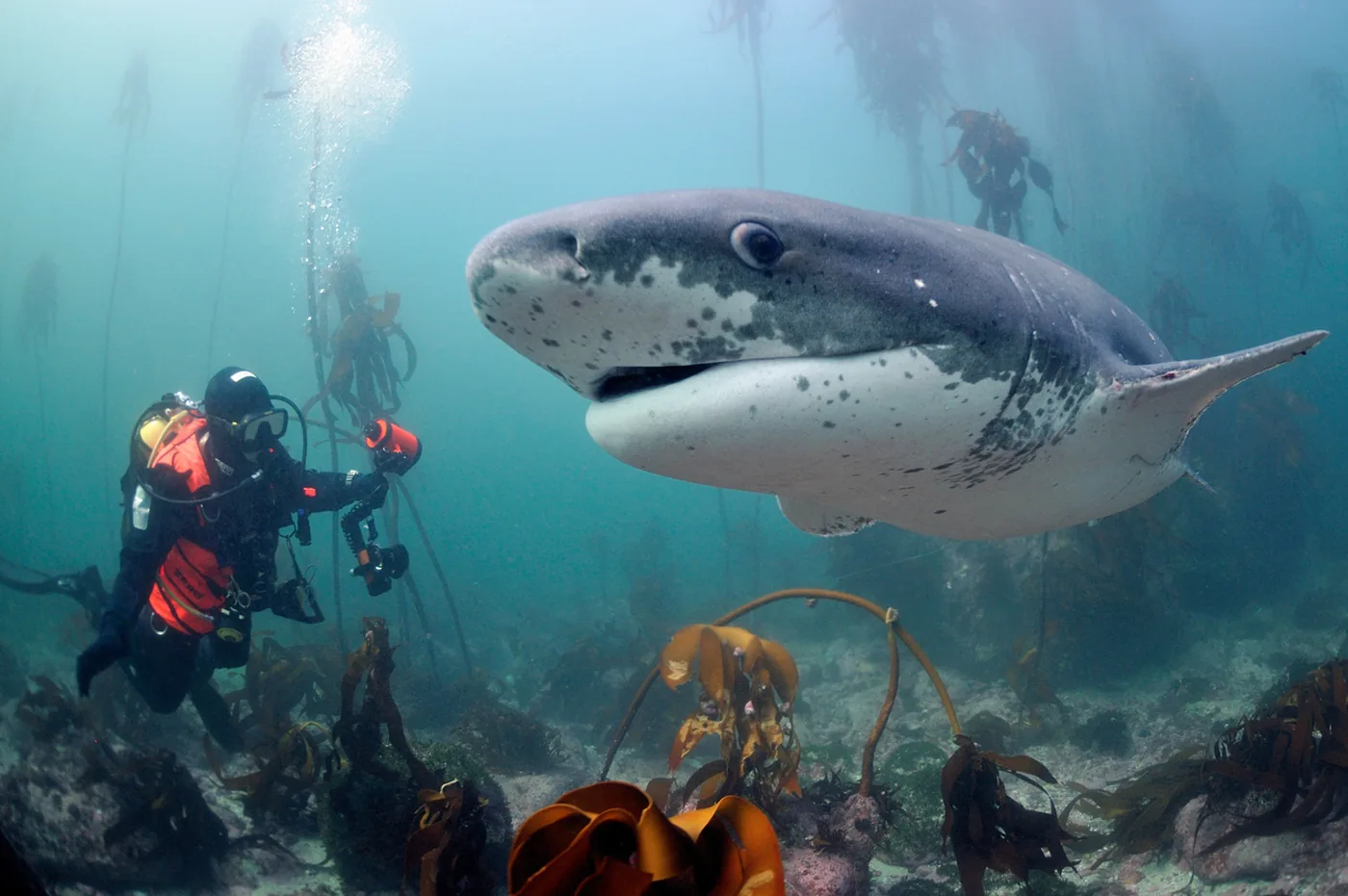
photo: Jean Tresfon
Photographer and travel editor Tom van der Leij travels the world, encountering everything from wildlife to compelling cultures through his lens. This is the fourth and final installment: the ocean safari.
South Africa has an abundance of natural wonders. In addition to the countless safaris available on land, you can also head out on the water for an ocean safari.
The options on and around the water depend on your location: the cold Atlantic current along the southwest coast or the warm Indian Ocean current along the east coast.
Sharks in particular can make for a great adventure. Photographing wildlife in the water certainly dispelled one of my illusions.
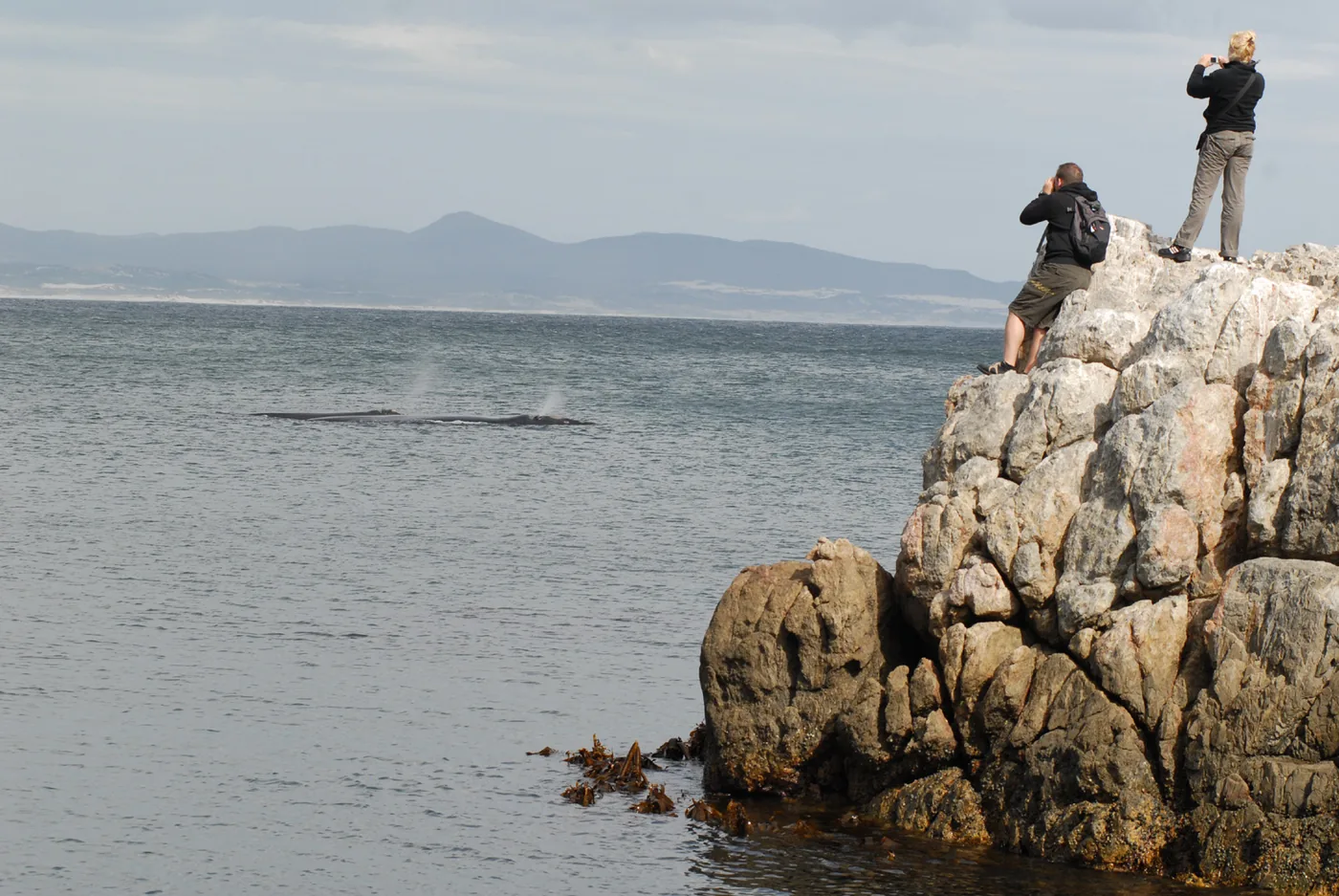
The first time I went out on the ocean to spot wildlife was at Plettenberg Bay. Two weeks earlier, I had earned my diving certification at Sodwana Bay in the northeast, and a week later I spotted my first whales near Hermanus. Between August and December, the world’s largest animals come close to shore there.
Enormous humpback whales sometimes come within just a few dozen meters—so close you can hear them. Whale watchers arrive with expensive binoculars and huge telephoto lenses. From the rocky outcrops above the water, they capture the spectacle in fine detail.
Whale watchers come with expensive binoculars and gigantic telephoto lenses
At Plettenberg Bay, things are different. You can head out by boat or kayak. The whales swimming off the coast may be approached only to within a specified distance—fifty meters at the time. The aim is not to disturb or obstruct them; doing so can result in a hefty fine. Experiencing them from the water is entirely different. It feels as though you become one with the setting.
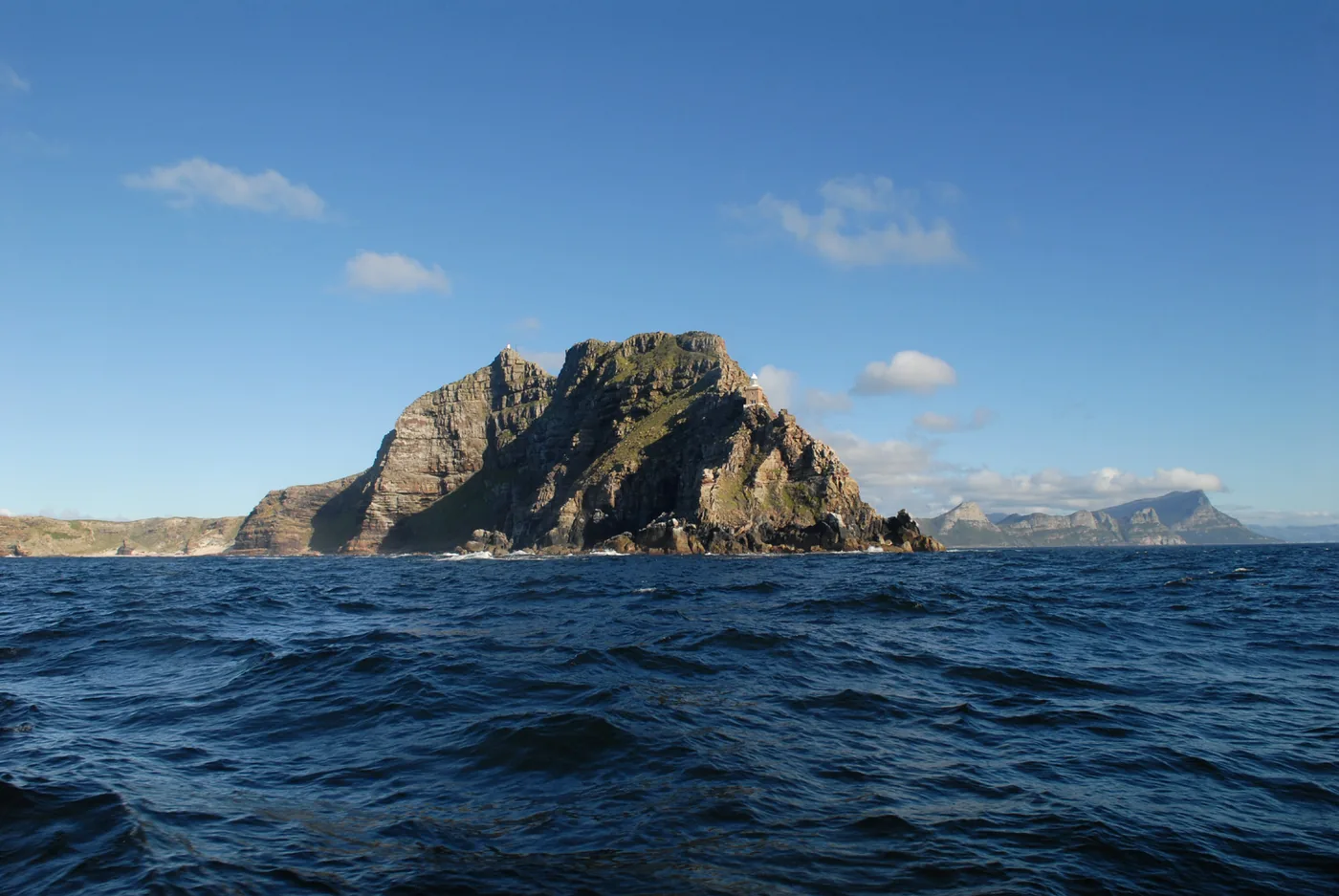
Every so often, a whale breaches and slaps its tail against the surface. I have seen this several times, and I am terribly frustrated that I do not own a good lens—such as a 600 mm lens—to capture the details properly. The boat then passes the fur seal colony before heading back.
A few years later, I met a ‘shark whisperer.’ Trevor Krull could attract sharks by making sounds underwater. I joined him in the Indian Ocean off Umkomaas. We descended directly to a depth of forty meters and hovered behind him in a V formation. After a while, a school of hammerhead sharks passed overhead. Watching those graceful sharks move was exhilarating.
South Africa has a lot to offer when it comes to sharks. I thought I should try cage diving first.
That left me wanting more. South Africa has a lot to offer when it comes to sharks. I thought I should try cage diving first. You enter the water in a steel cage attached to a boat. The top of the cage is open, the bottom is closed and the sides consist of bars.
In 2005, I had bought an inexpensive underwater camera—with a roll of film!—more for the experience than the results. After half an hour at sea, with the boat leaving a scent trail behind it from a bag of rotting fish heads, the first sharks were sighted.
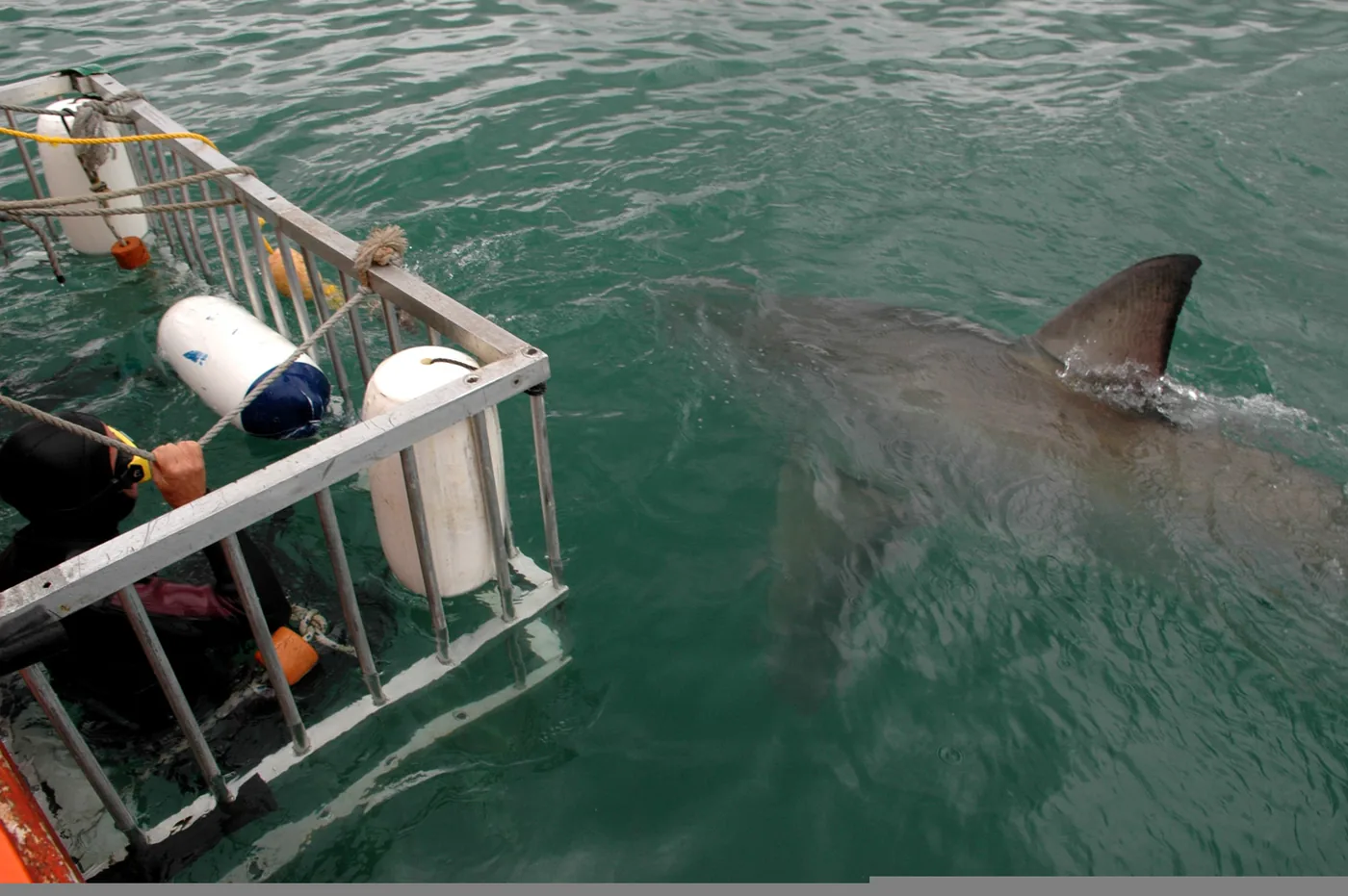
Wearing a wetsuit, mask, and snorkel, I entered the cold water at Gansbaai, habitat of the world’s largest predatory fish: the great white shark. The water was extremely murky, with visibility of only a few meters. A piece of tuna on a rope lured the shark past the cage, and it was over in a flash. It was intense but nearly impossible to photograph: I used the entire roll, and only 1 photo showed anything resembling a shark—a gray blur. I switched to taking photos from the deck with my SLR, which worked much better.
Intense but impossible to photograph!
A year later, I joined Chris Fallows, the world-renowned great white shark photographer, to snorkel with mako and blue sharks (www.sharkbookings.com). Unlike great whites, these sharks live offshore in the open ocean. Lines were set to catch tuna, which would serve partly as bait and partly as dinner. We sailed for two hours from the Cape of Good Hope into the open ocean. The swell was enormous. We towed a bag of fish heads behind the boat to create a scent trail.
After a while, the first curious sharks appeared. Armed with a long plastic pole to keep them at a distance, I jumped into the water and held on to a rope. Sharks several meters long repeatedly shot past me. Once again, I did not have a suitable underwater camera, and because I was practically lying on top of the bait bag, I soon climbed back out.
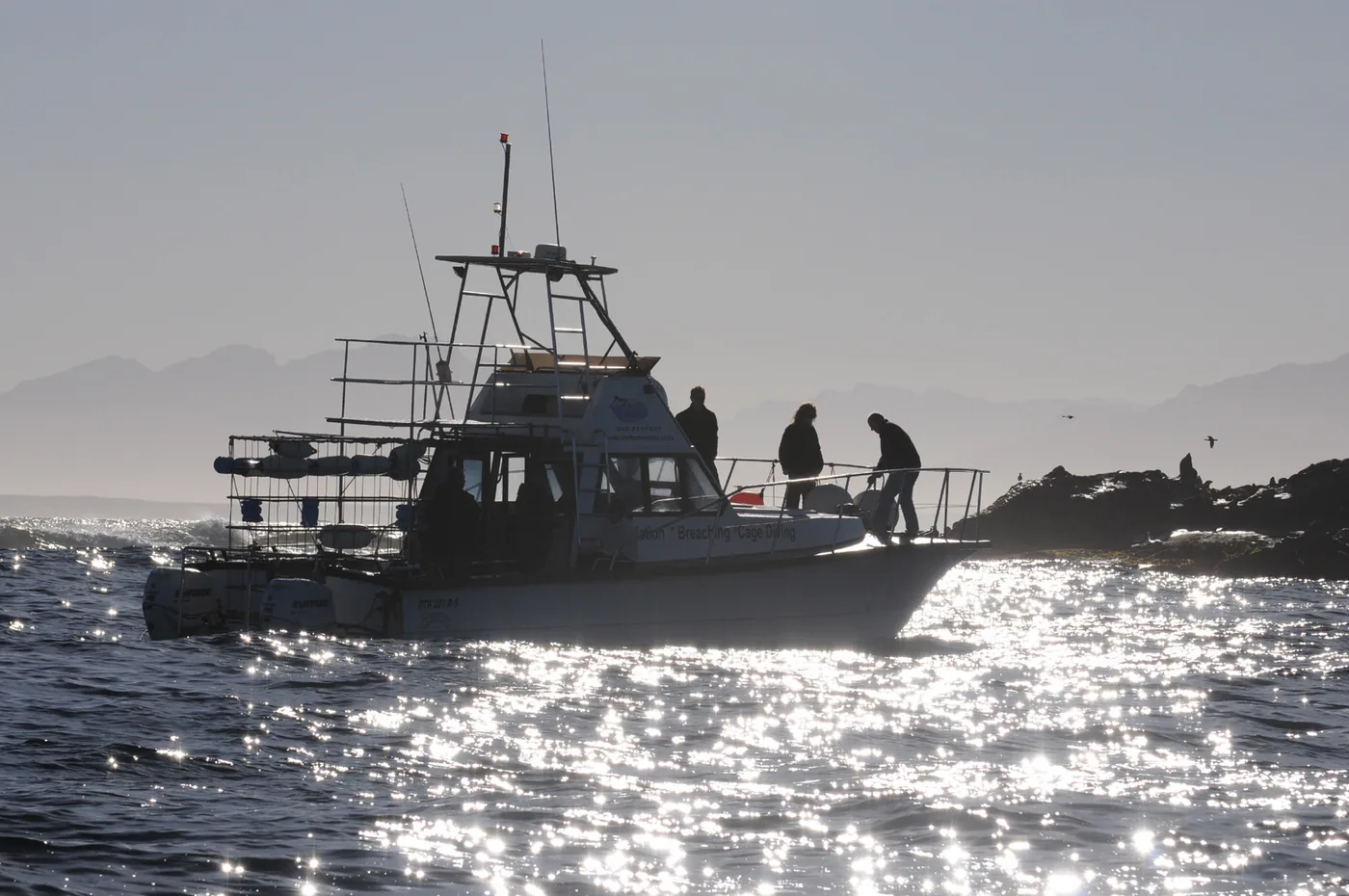
On the way back, albatrosses flew alongside us and we nearly collided with a humpback whale. To complete the experience, a pod of dolphins flanked us for a while, leaping ahead of the bow. I had my camera ready but kept pressing the shutter too late. They were incredibly fast and surfaced everywhere. Most of my photos showed only tail fins or splashing water where a dolphin had just submerged.
I decided to join Rob Lawrence of African Shark Eco-Charters for a shark-breaching excursion. It is a form of fishing for great whites using dummy rubber seals. It takes place around Seal Island in False Bay, near Cape Town.
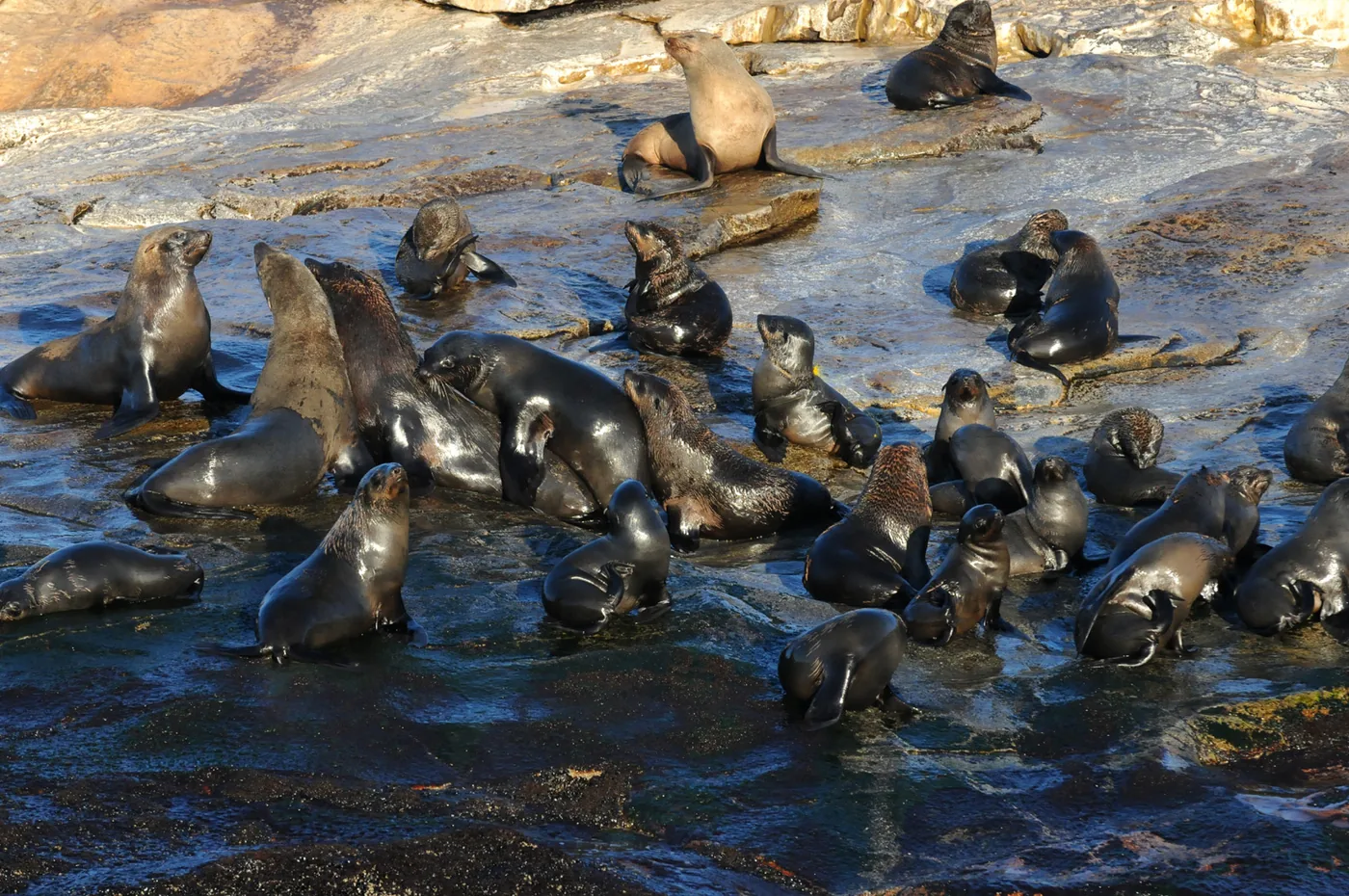
There is a colony of sixty thousand seals here. When the young seals take their first swimming lesson, the white sharks are quick to feast on this high-calorie snack. They attack their prey from below with such speed that the sharks sometimes come completely out of the water.
I am focused and fully prepared. My right index finger is on the shutter button
I sat on top of the deck with my camera ready, aimed at the dummy seal being towed about ten meters behind the boat. My camera was set correctly: a fast shutter speed, ISO 800, and continuous shooting at several frames per second. I was focused and fully prepared, with my right index finger on the shutter button. But after two hours, we had seen no action—not a single shark, nothing, nada.
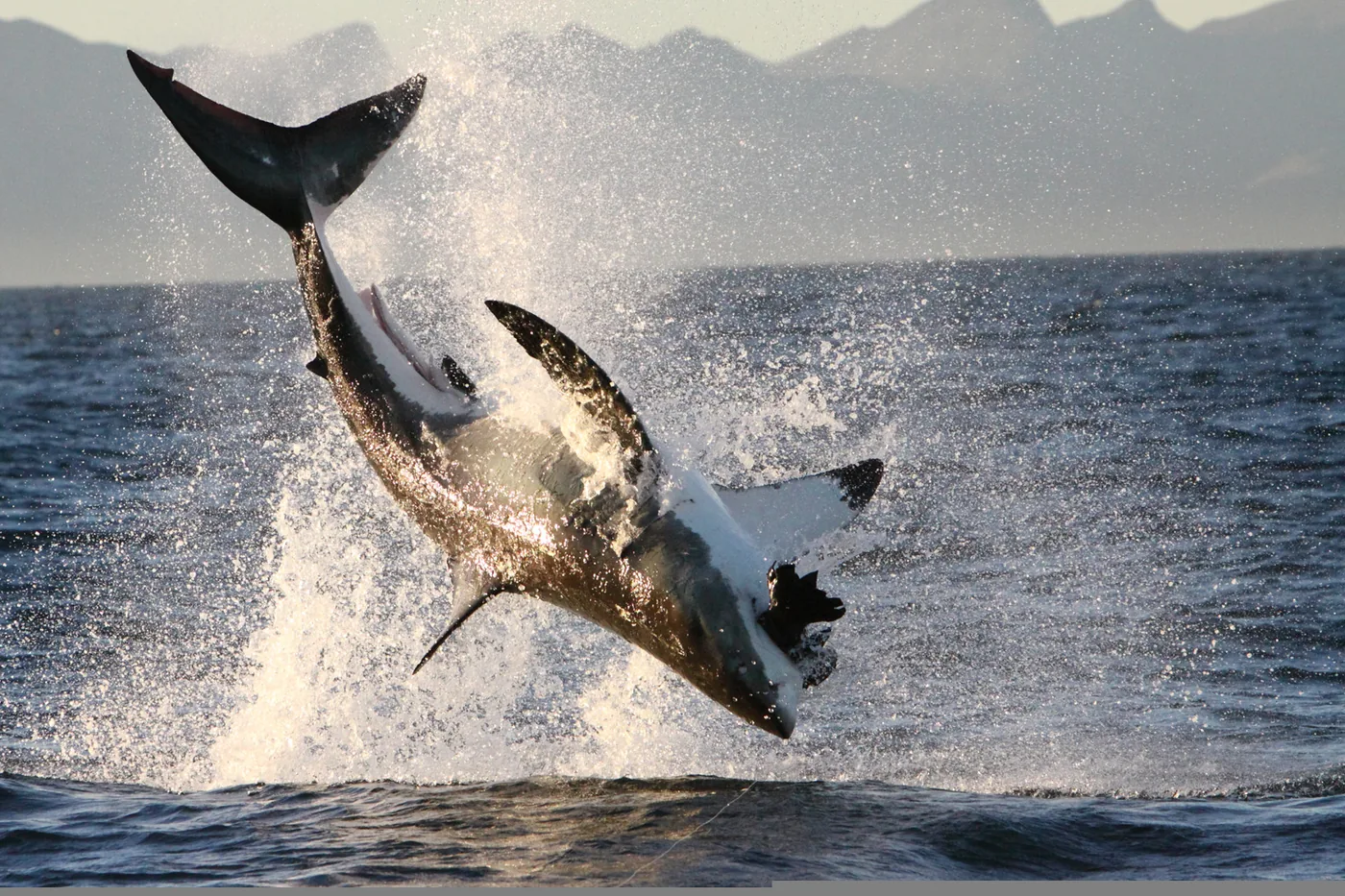
Rob saw my frustration and offered to let me use his photos. I would normally be strongly opposed to that, but circumstances beyond my control left me happy to accept his offer (www.ultimate-animals.com).
Tip: Take a waterproof bag and dry cloths with you
Last December, I went diving near Cape Town. In the kelp forest near Simon’s Town, you can dive with broadnose sevengill sharks. Wearing thick wetsuits, you descend to a depth of ten meters. Before long, the ten- to thirteen-foot sharks cruise past, and sometimes you have to move aside for them. Fantastic. They look more dangerous than they really are.
The shallow water provides beautiful light, and the kelp forest makes a perfect backdrop. I dived with Jean Tresfon, who used a D300 without a flash but with a color-correction filter. The results were beautiful (www.underwaterimages.co.za).
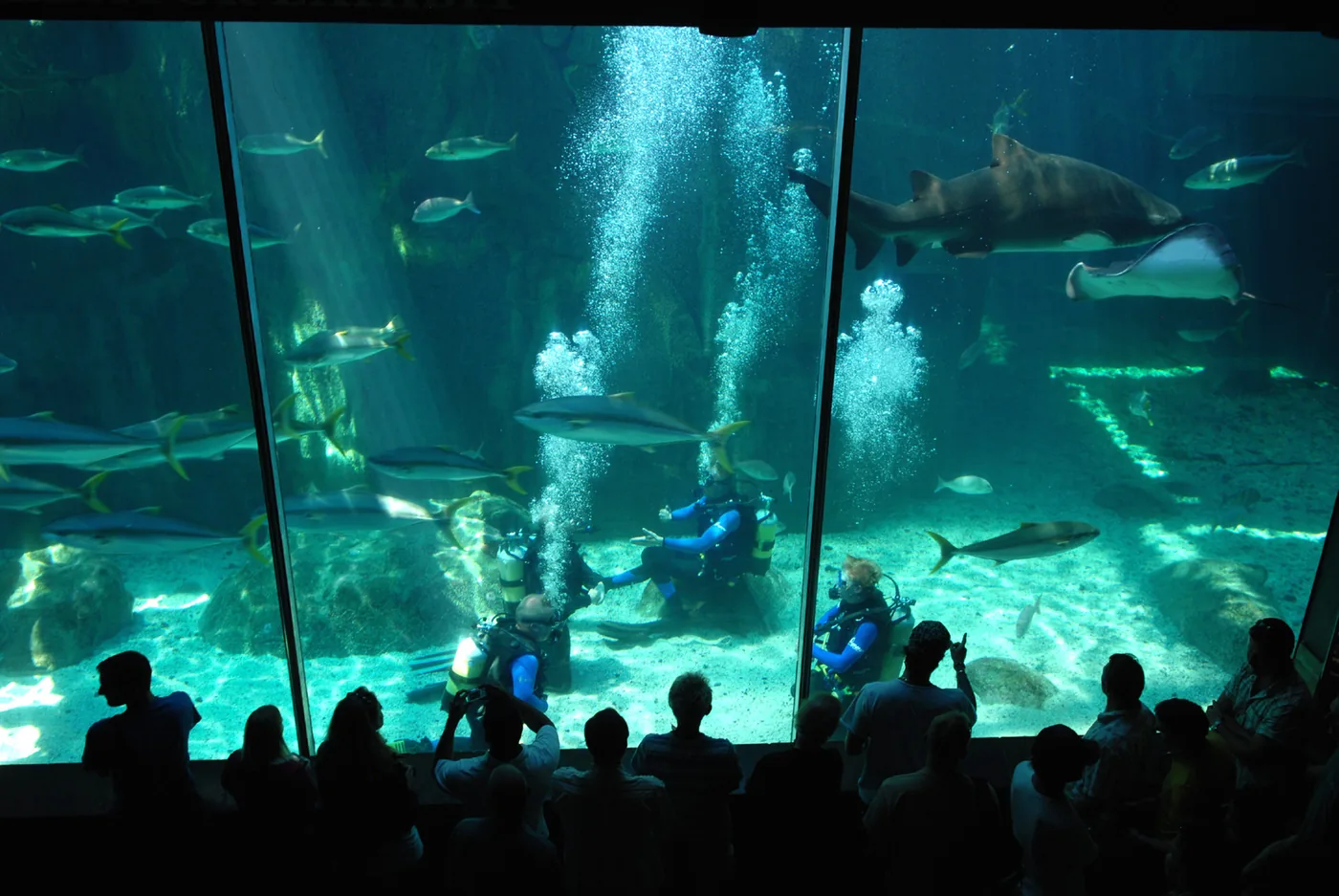
There are many other ways to see sharks, whales, or fur seals—up close, among them, or from afar. For a safer option, you can even dive among rays and sharks at the Cape Town aquarium under the public’s watchful eye. South Africa offers all of this, partly because stretches of its coast have been designated as marine protected areas.
And where in the world can you see the Big Seven? Right, in South Africa
South Africa was also the first country in the world to grant protected status to the great white shark. And where can you see the Big Seven? In South Africa. Addo Elephant National Park calls itself the world’s only Big Seven park: in addition to the lion, elephant, rhinoceros, buffalo, and leopard, there are also whales and great white sharks!
Best shark season: May–September.
www.sealife-cameras.eu, Alison Kock www.saveourseas.com, Rob Lawrence of African Shark Eco-Charters: www.ultimate-animals.com, Chris Fallows: www.sharkbookings.com, Jean Tresfon: www.underwaterimages.co.za.