Photographer and travel editor Tom van der Leij travels the world, capturing everything from wildlife to breathtaking scenery. Part three: the nature of South Africa.
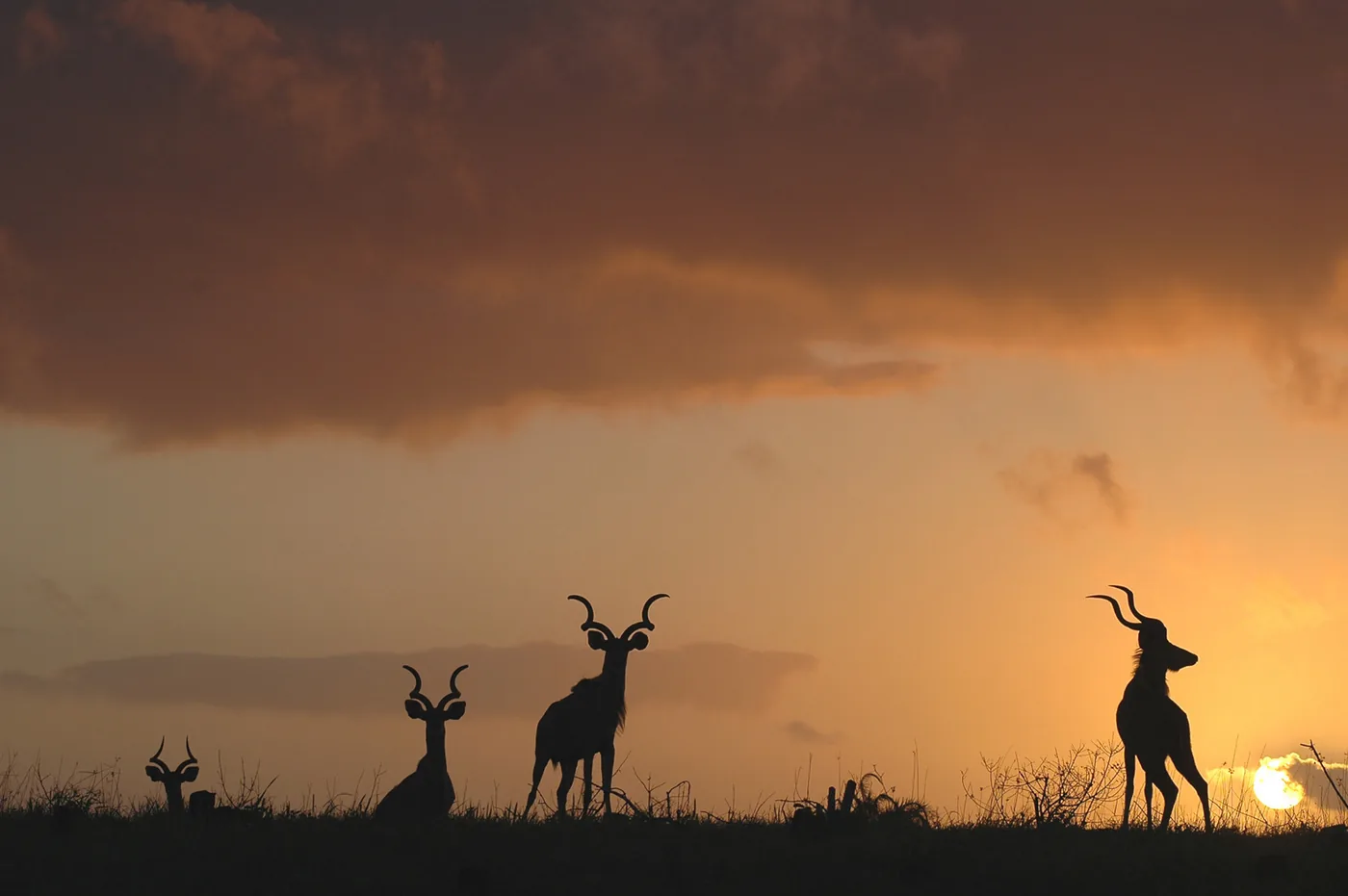
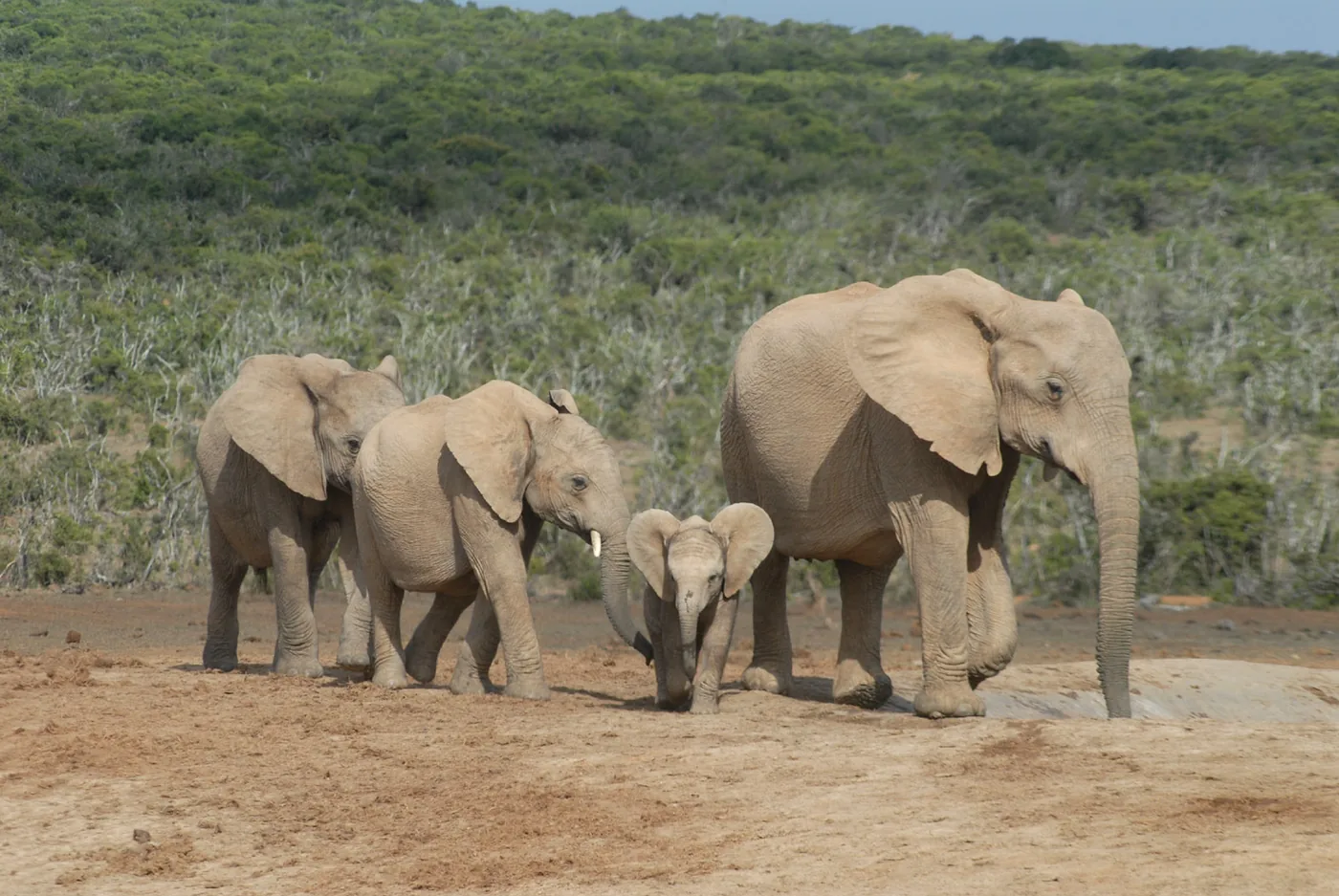
South Africa is an ideal country for photographing vast landscapes and going on safari to capture wildlife in its natural habitat. You may encounter a herd of elephants drinking at a lake, a lion sleeping under a tree, or a crocodile lying motionless at the water’s edge and warming itself in the sun.
Then there are enormous vultures soaring on thermals as they scan the ground for carcasses, or whales nursing their calves off the coast of Mossel Bay.
You can take day or night safaris on foot, horseback, or by car, boat, or hot-air balloon. Although most wild animals live in national parks and reserves and can be approached quite closely, a good zoom lens adds a great deal of enjoyment. A teleconverter is another option, although it costs some light.
Nature Photography
Nature photography is a discipline in its own right. I would love to make the ultimate nature photograph, but besides lacking some fundamentals, I also lack the equipment and patience. Still, whenever I have the opportunity to visit a nature reserve in South Africa, I mount my modest 70-200 mm 1:2.8 VR lens and photograph animals the sporting way.
Wear camouflage, stay quiet, be patient, determine the wind direction and move into it, follow tracks...
A telephoto lens is highly recommended for photographing animals. You can achieve satisfying results fairly quickly by keeping a few things in mind.
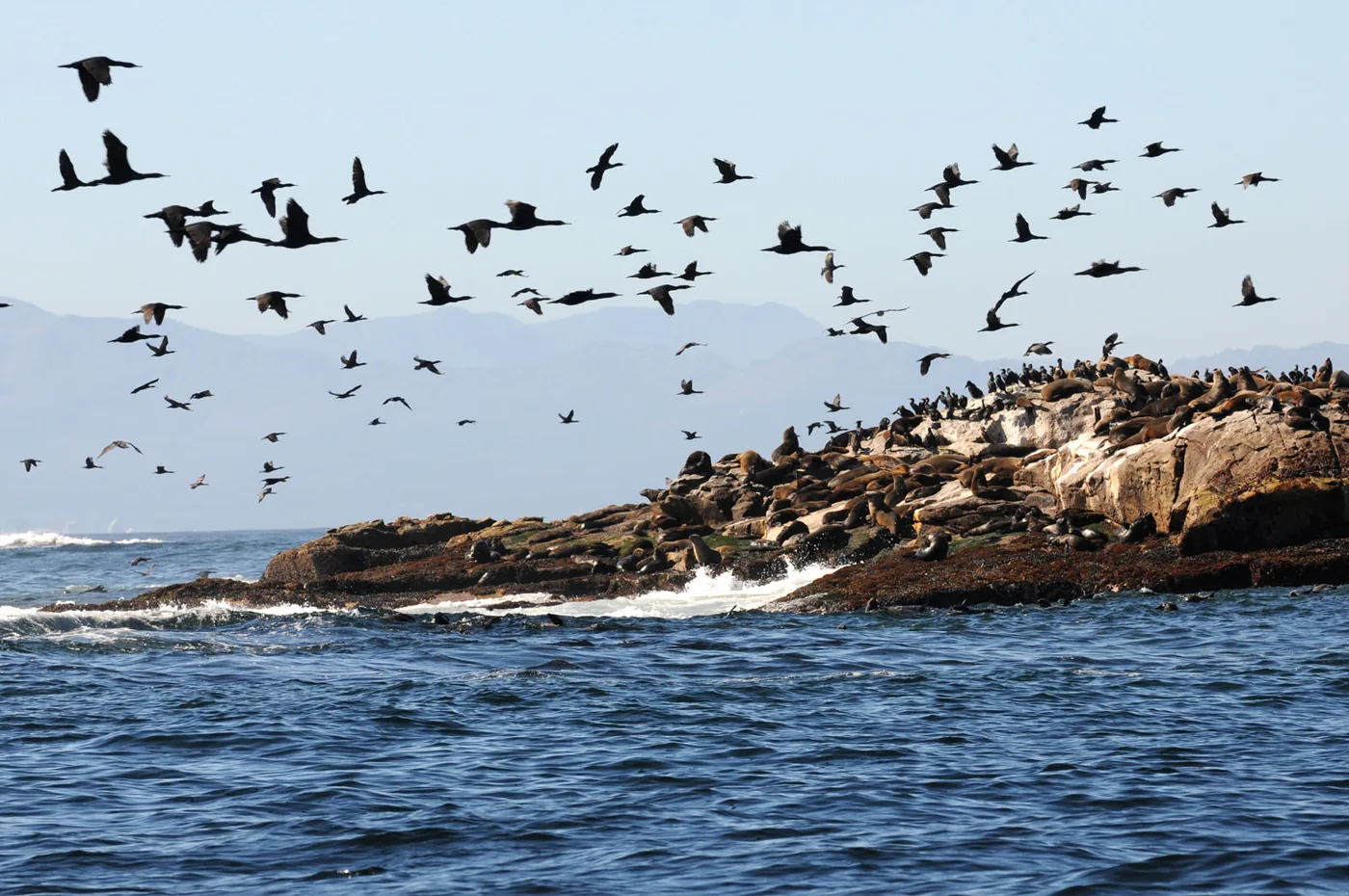
Landscapes are fairly easy to photograph. Wild animals are more difficult because you cannot direct them. Fortunately, there are ways to improve your chances of getting animals in front of the lens. Consider sunrise and sunset, when many animals are active and the light can be beautiful. Also consider the tides, when seabirds return from the ocean or whales mate or give birth in a particular bay.
Preparation also matters: wear camouflage, stay quiet and patient, determine the wind direction and move into it, follow tracks, and consider your own safety. If you spot an animal, do not approach it in a straight line; use a wide, indirect path. Hiring a good guide who knows the park is highly recommended.
Large nature parks in South Africa have artificial waterholes, often illuminated by powerful spotlights. Especially during the dry season from July through September, all kinds of animals come looking for water: impalas, wildebeest, zebras, rhinos, elephant herds, and—if you are lucky—the larger cats. Take a tripod because you will be using a telephoto lens and much of the activity occurs around twilight.
More plant species grow here than in the entire Northern Hemisphere combined!
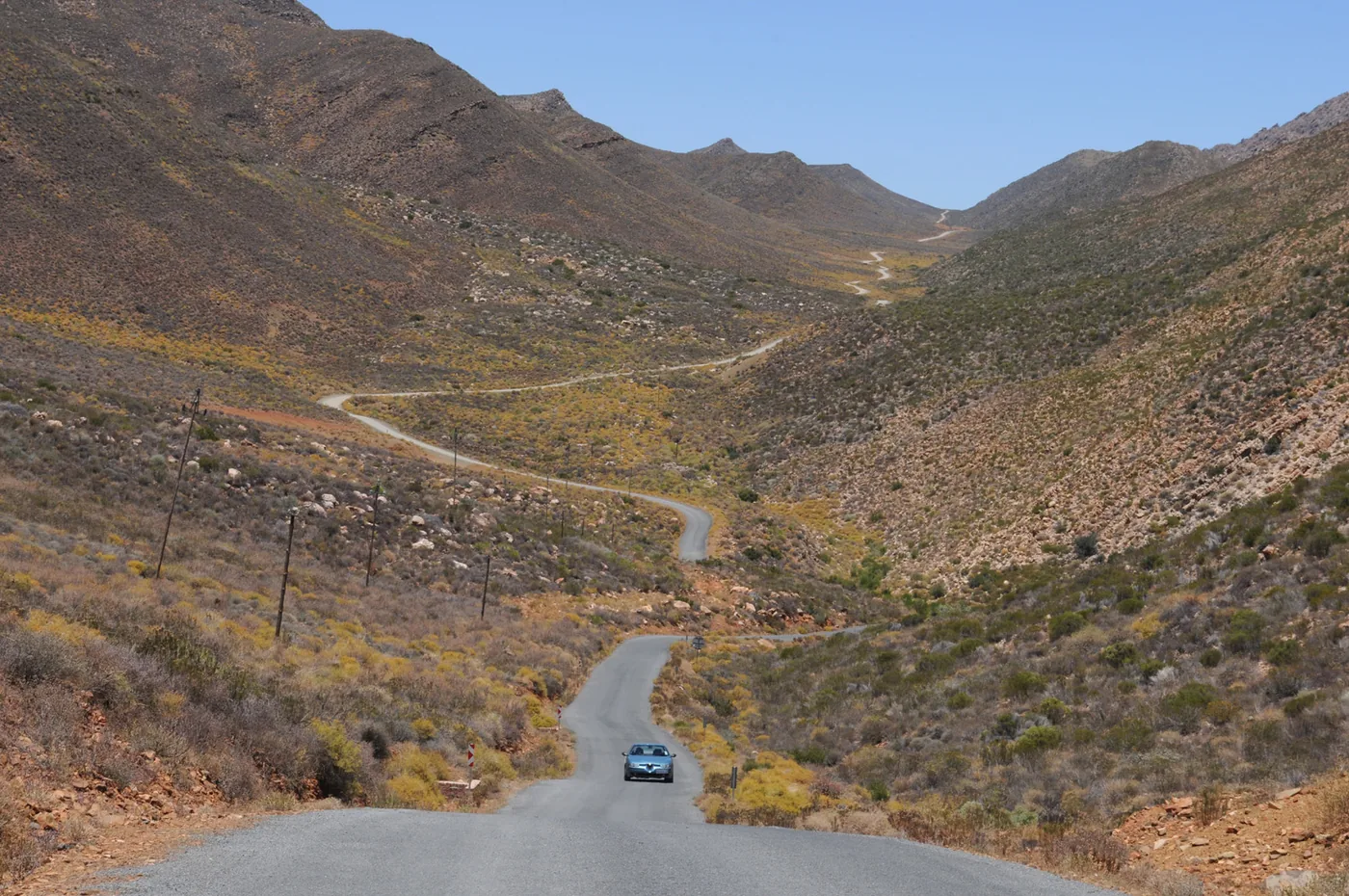
It does depend on where you go in South Africa; the choices are enormous. You can hike and spot dolphins in rugged Tsitsikamma Park at the end of the Garden Route, or cage-dive with great white sharks in Gansbaai.
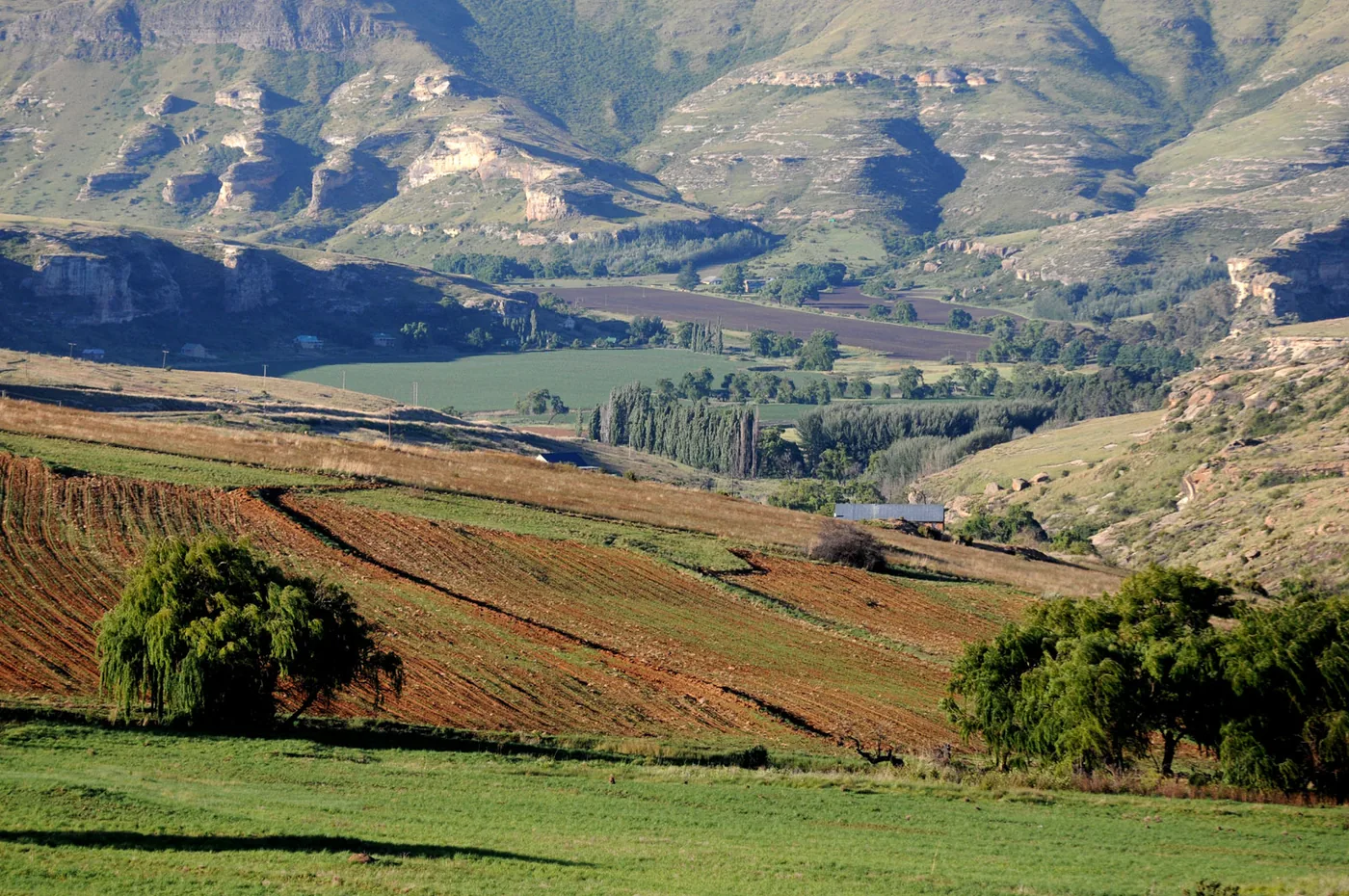
Will you visit Kruger National Park or Addo Elephant Park? Are you more drawn to expansive views with the occasional antelope in the Great Karoo and Drakensberg, or dense bush with gazelles, rhinos, and countless other animals in Kruger or Hluhluwe–iMfolozi? The country ranges from desert climate in the Kalahari Gemsbok area to subtropical wetlands around St Lucia, home to crocodiles and hippos.
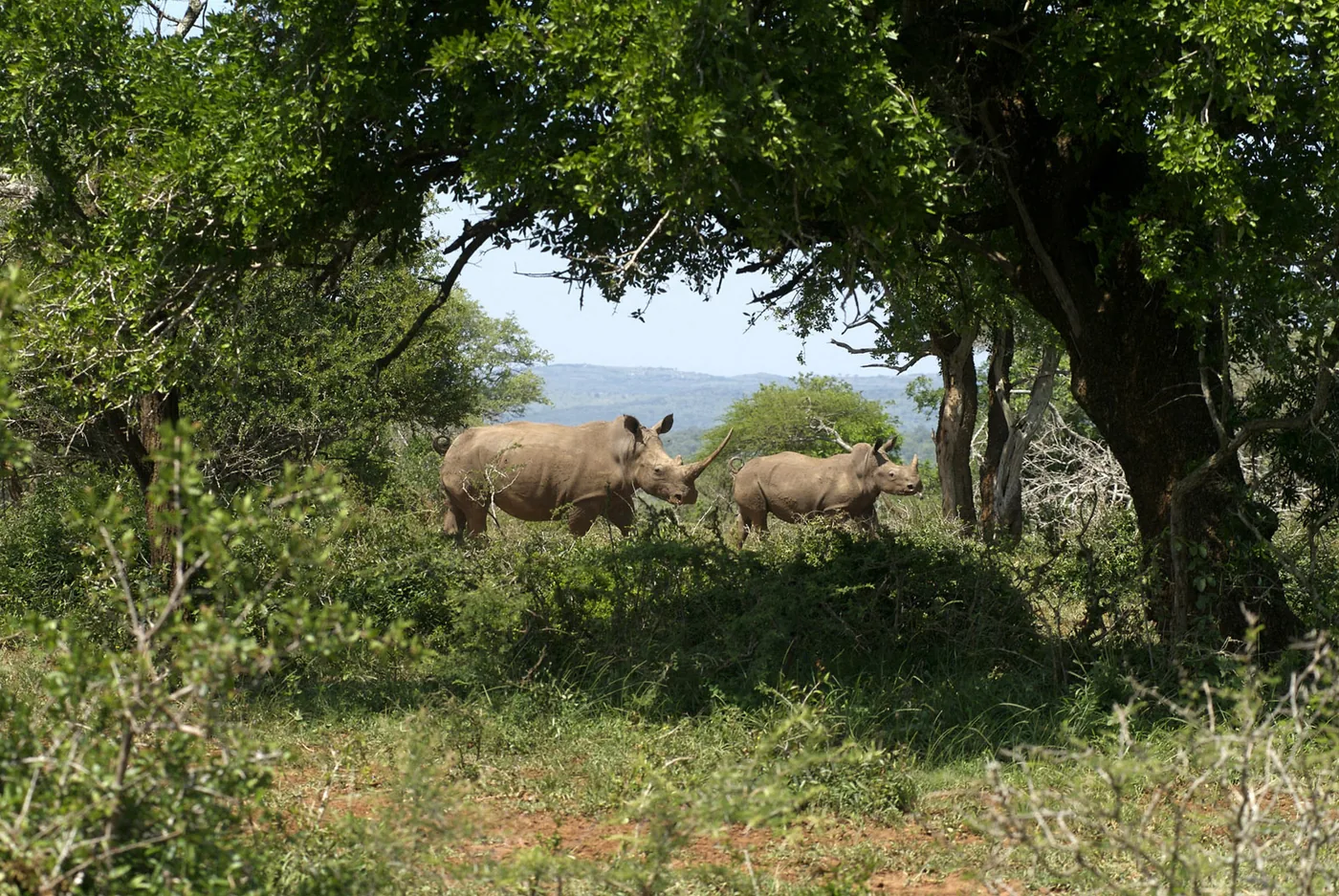
The cold Atlantic current on the west coast and the warm Indian Ocean current also support unique flora and fauna. One of the world’s six floral kingdoms, the Cape Floristic Region—with fynbos, ericas, and proteas—is found mainly in the Western Cape. More plant species grow here than across the entire Northern Hemisphere!
We looked at each other again and then realized that we had seen a leopard.
Every safari photographer wants one particular animal in the frame: the leopard. These shy, solitary animals are most active between sunset and sunrise. Their hunting technique relies on caution, camouflage, and surprise.
In Kenya I once met an American who was making his sixteenth unsuccessful attempt to spot a leopard. A measure of luck naturally plays a part as well.
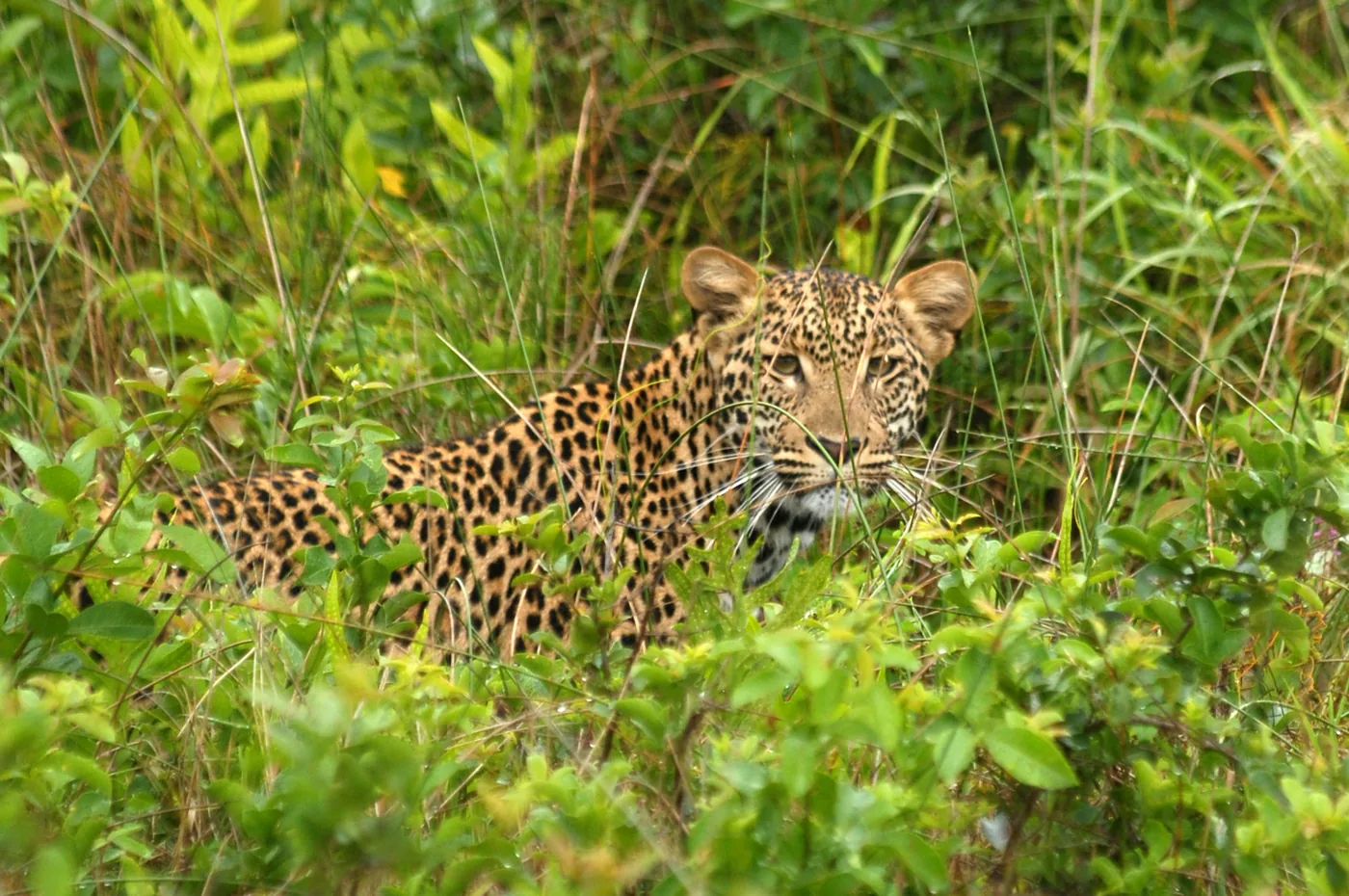
My first encounter with a leopard was in 2005 in Pilanesberg National Park, a small park northwest of Johannesburg. I was driving around with my friend Olmo when an animal suddenly rolled out of the bushes, ran across the road, and disappeared into the scrub on the other side.
We looked at each other and said, “A lion? No, it is too spotted. A cheetah? No, it was too stocky.” We looked at each other again and realized that we had seen a leopard.
I managed to capture little more than a tuft of its tail before it disappeared.
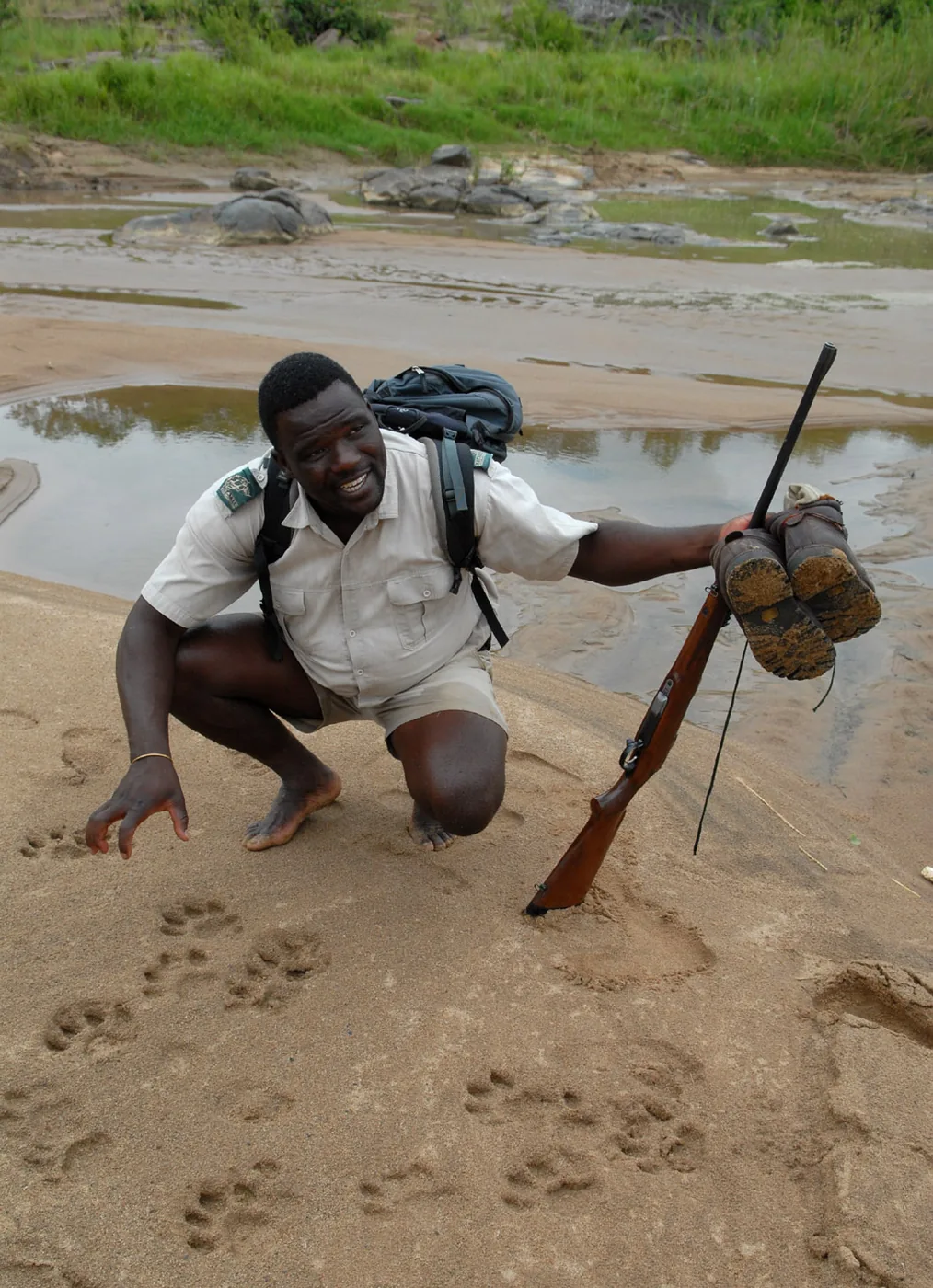
The second time I encountered a leopard, I saw two at once. This was in northeastern South Africa in December 2007, in the beautiful wetlands of St Lucia. Earlier that day, I had found the cat’s pawprints during a walking safari through a quiet part of the park.
At the end of the day I joined a so-called turtle tour, driving along the beach in a 4x4 in hopes of encountering female turtles laying eggs.
After an hour, a shape appeared in the car’s headlights. For a moment I thought it was a hyena, until the animal ran off and the guide cried ecstatically, “A leopard!” Its magnificent long tail curved high into the air.
Tip—animals: use a tripod, teleconverter, and fast shutter speed with a telephoto lens. Set the camera properly in advance—ISO, aperture, and shutter speed. Whenever conditions change, take a few photos and check their exposure and the space remaining on the memory card. I always carry a spare card and battery loose in my pocket.
A little farther away, a second leopard ran over the dunes and into the dense vegetation. Once again I was speechless, and once again I had captured only a fleeting shadow.
The next morning, as the sky grew light, I drove through the park again on my way to snorkel at Cape Vidal. We stopped by a tree where a colorful little bird was perched in a bush. I took a few photos, and just as we prepared to continue, a leopard jumped from the bushes in front and to the right of the vehicle and onto the road.
The imposing animal looked back, stared directly at me, and ran into the bushes on the other side of the road. I fired off a few photos as quickly as I could while my South African friend Howard kept his eye on the animal.
We slowly moved the car alongside the spot where the animal had entered the bushes, and Howard pointed to its hiding place. It pressed itself against the ground in hopes of remaining unseen, but it was a young, inexperienced male and stood out clearly from its surroundings. The leopard must have reached the same conclusion: it rose and quietly walked away without paying us any further attention.
Because I had already configured the camera and telephoto lens correctly while photographing the bird, I could start shooting immediately. The leopard gave me only a few seconds, but they were enough to make an acceptable photograph. My journey was a success.