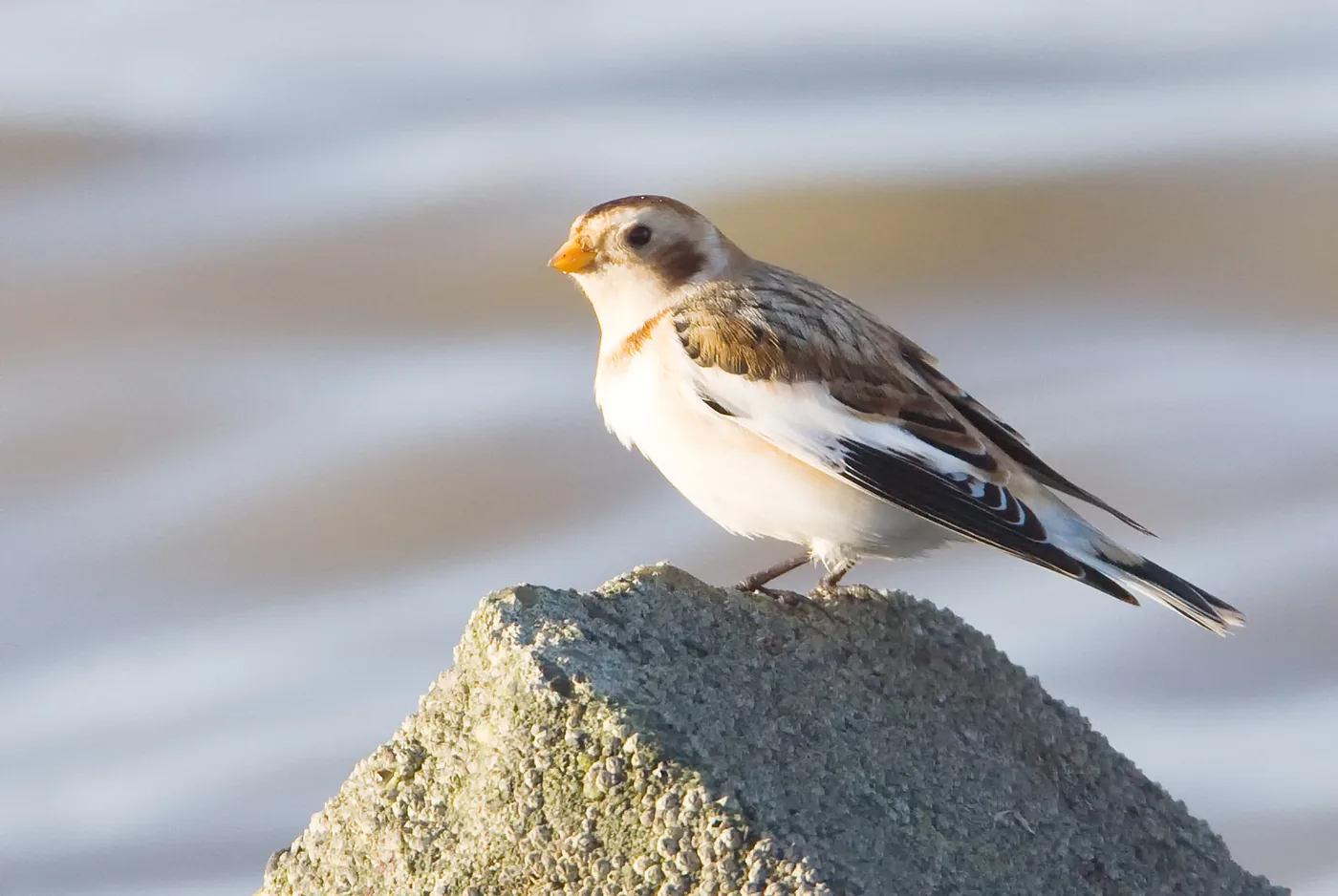
photo: Jan Duker | Snow bunting
Parts I and II of this series cover composition and technique. In this third and final part, we head outdoors to look for birds in practice. We visit a nature reserve and discover all kinds of birds as we roam, trying to photograph them as well as possible.
Out in the field
Although winter has not officially begun, an icy wind is already cutting through my thick coat. I am standing on a small dike in Lauwersmeer harbor in the first light of morning. One advantage of this time of year is that the sun rises later.
An advantage? Well, in a way. Although I have a reputation for being an early bird, in winter I sometimes prefer a lie-in. But duty calls: today we are going to photograph birds. So I got out of bed in the dark after all, made coffee and sandwiches, and packed my camera bag.
Snow bunting
My camera bag is a Lowepro backpack that holds everything I think I might need for the day. I often bring lenses for landscape photography too, so I pack the following Canon lenses: 17-35mm, 28-70mm, 70-200mm, 300mm, and 500mm. I also bring two Canon bodies, the 1D Mark II N and the 5D, plus 1.4 and 2.0 teleconverters.
Then there are batteries, filters, lens cloths, and a few other small items. The bag is packed—but where exactly are we going?
Know your area
The Lauwersmeer area is one of my favorite places to photograph. I know it like the back of my hand, so I know what I am likely to encounter in each season. That matters: it prevents endless searching or aimless wandering in the hope of stumbling across something.
Snow buntings
I know that snow buntings can be found on this dike every fall and winter. I scan it through my binoculars and have to look carefully: the birds are almost invisible among the moss-covered stones and other material washed ashore. Fortunately, I soon spot a small group foraging. Carrying my telephoto lens, I slowly walk toward them. They seem largely unconcerned by my presence.
When they begin raising their heads more often, I slowly lower myself and sit down on the stones, with my camera and telephoto lens on the tripod in front of me. Snow buntings often forage along the foot of the dike, and if you are patient they sometimes come toward you on their own. After half an hour, the entire group takes flight. It looks as though I have missed my chance.
After a while, a curious walker passes by. ‘Taken any nice pictures?’ the man calls out enthusiastically.
Before long, calm returns and the entire group decides to land again, now about 25 meters away. I carefully take the first shots. They soon get used to the sound of my camera shutter and the movement of the lens. I can now photograph freely and even shift my position without disturbing them. They come so close that they are within my lens’s minimum focusing distance of five meters. I can now observe the birds beautifully with the naked eye.
After a while, a curious walker passes by. “Taken any nice pictures?” the man calls out enthusiastically. Startled, the entire group of snow buntings takes flight and lands again fifty meters away. Well, that is part of the experience sometimes. I walk back to my car because I feel like a hot cup of coffee, then decide to drive on to a nearby bird hide.
On the way
You can also photograph effectively from a car. I use a beanbag placed on the door of the fully opened car window. I rest my camera and telephoto lens on it, giving me enough stability for sharp, shake-free photographs.
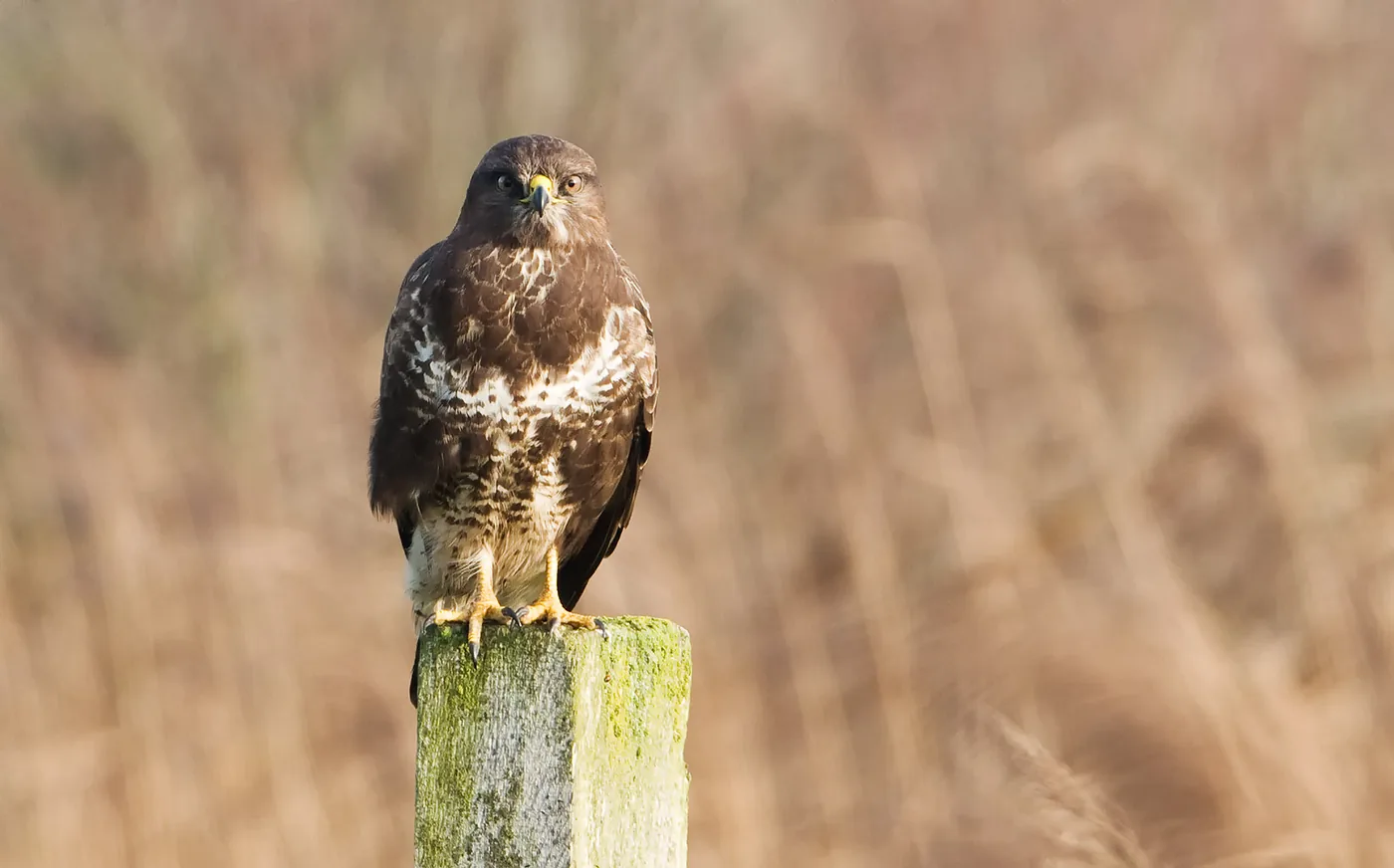
Common buzzard
On the way, I spot a common buzzard perched on a fence post in the distance. It looks magnificent. Photographing a buzzard is not easy because they are very wary. I make the initial preparations: window down, beanbag on the door, camera and telephoto lens on top. I meter the light and set the aperture and shutter speed. I start driving slowly, with one hand on the wheel while the other steadies the equipment.
Tip: be extremely careful when doing this and pay close attention to other traffic!
I drive toward the buzzard at walking pace. I stop while still a reasonable distance away and take a few photographs. Fortunately, it stays put. I start moving again, approaching until I no longer dare go any closer for fear of disturbing the bird. Through the viewfinder, the buzzard stares directly at me. I position it just off-center for a stronger composition. After several shots, I drive on calmly. Fortunately, the buzzard remains beautifully perched.
Among the reeds
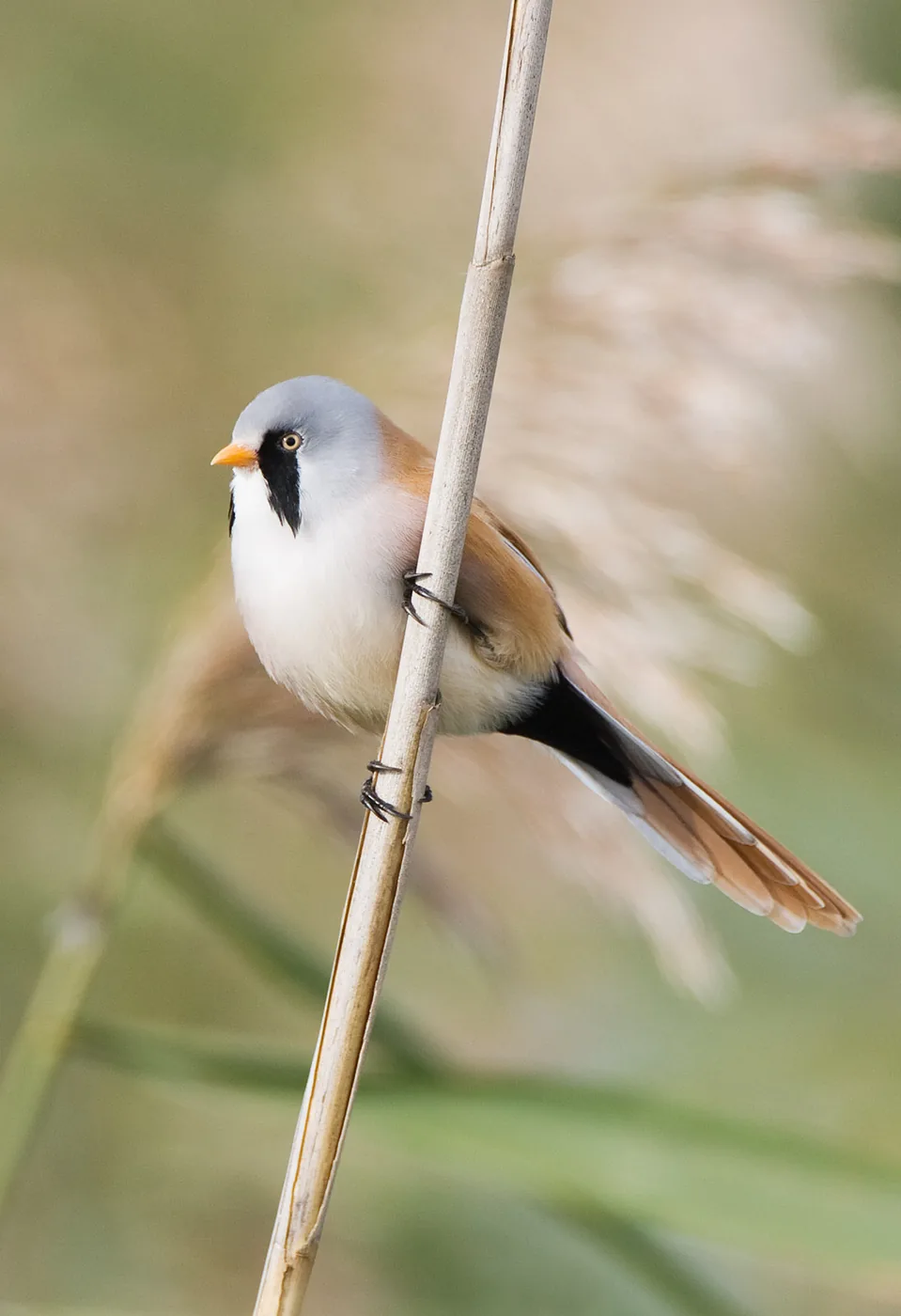
After arriving near the hide, I cover the final 200 meters on foot. Suddenly, a sound in the reeds catches my attention, best described as ‘ching, ching, ching.’ I recognize the call of bearded reedlings, among the most beautiful small birds you can encounter in reed beds. I quickly set up my camera and lens on the tripod.
I peer intently into the reeds, hoping to catch a glimpse of the birds. I can hear them but cannot see them; they are hidden deep among the reeds. I wait patiently.
After about fifteen minutes, the first birds climb the reed stems and appear in my camera’s viewfinder. One is positioned perfectly, with a beautiful reed plume in the background. I quickly take several shots, then check the image on my camera’s screen. Are the focus and exposure right? Fortunately, they are. The birds have already disappeared back into the reeds.
Heading home
I spend another hour in the bird hide, scanning the area with my binoculars in search of birds. Little happens during the rest of the morning. I chat with another visitor to the hide. Noon approaches, and more day-trippers arrive to enjoy the reserve. It soon becomes too busy for me, so I pack my gear and head home satisfied.
View more photos by Jan Duker.
Also read Bird Photography, Part 1 and Bird Photography, Part 2.