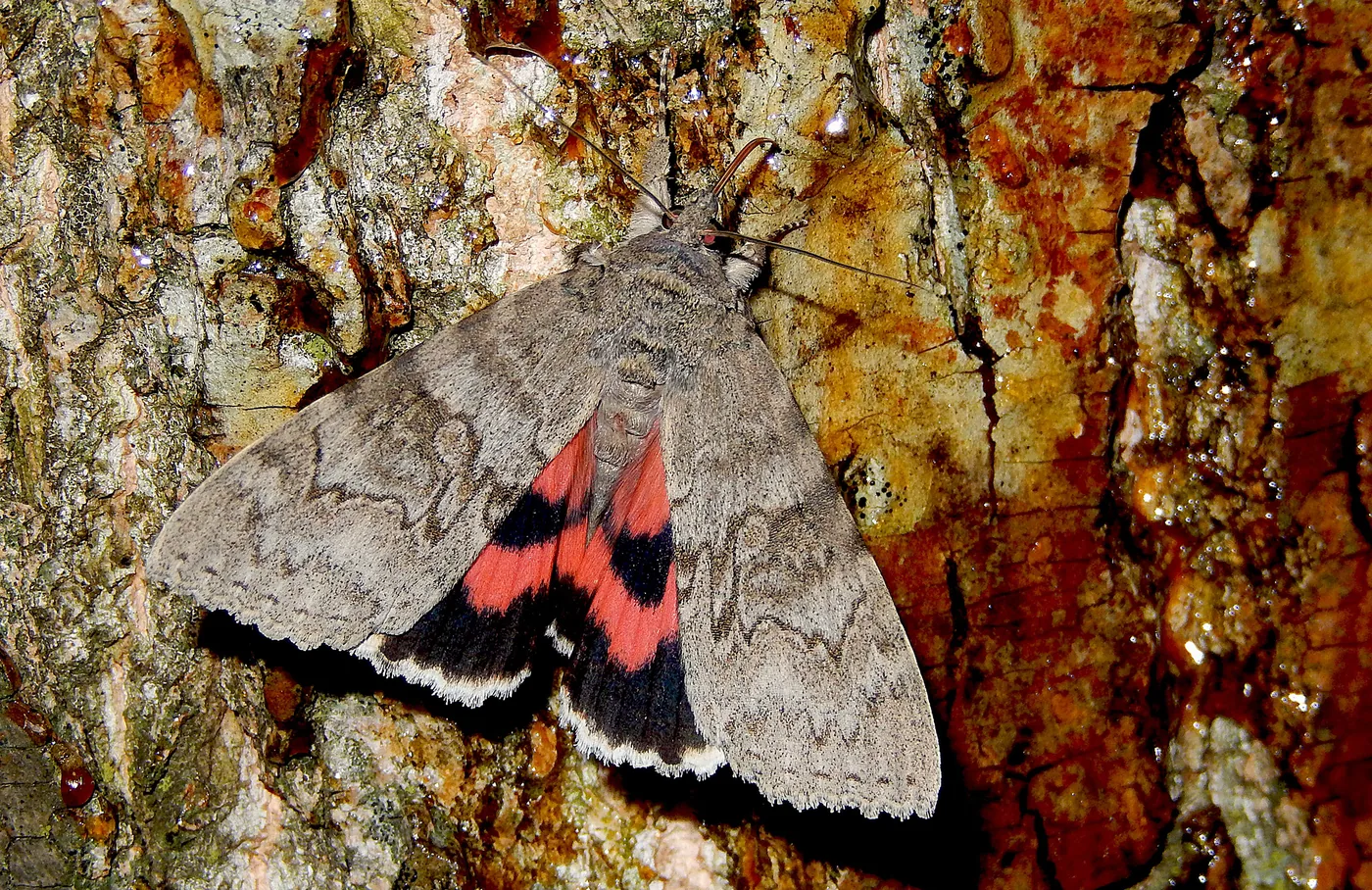
photo: © Kars Veling | Jaca
It is a familiar sight: moths in the sinks and toilets at a campground. In Southern Europe, where the nights are warm, large numbers of moths fly at night. The lights left on in these facilities all night confuse and attract them.
If they land in a wet sink, they become stuck and cannot escape. They soon die. Many living moths can also be found in the morning, resting on a wall or ceiling. It is not unusual to encounter twenty to thirty different species this way. Most are smaller geometer moths, but occasionally you may also find larger, spectacularly colored moths.
Another way to see moths is by sugaring. In the weeks before publication, this method produced some good results at several campgrounds in northern Spain. In this context, sugaring means spreading a sweet, alcoholic, strongly scented mixture on a tree at dusk, then checking the spot several times during the evening.
The syrup used consisted of apple butter, sugar, applesauce, sediment from Trappist beer, some anisado (45%), and ratafia, an herbal liqueur, to finish the mixture. Moths are attracted by the sweetness and use their long proboscises to feed on the syrup.
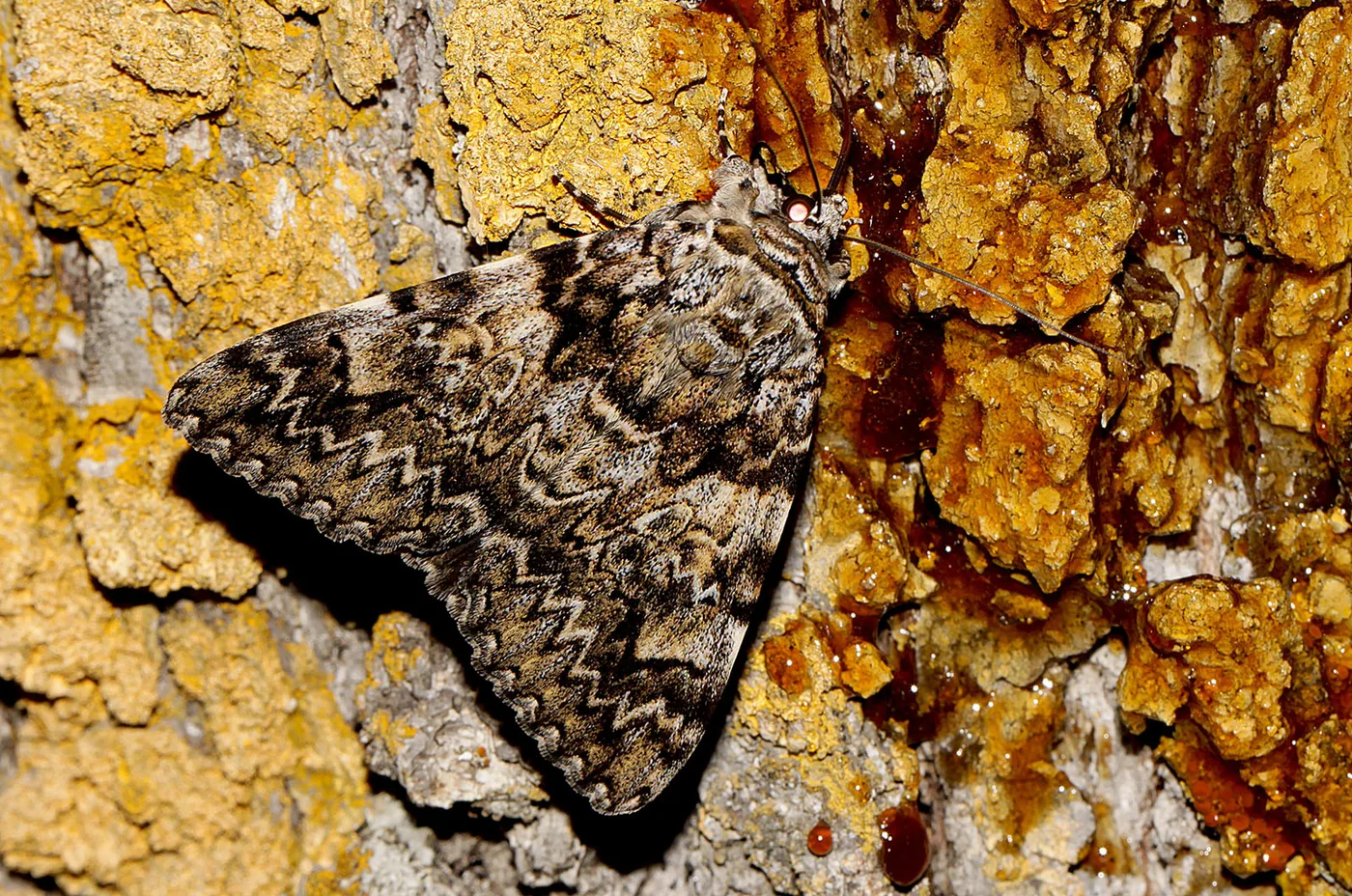
Approach the tree carefully and slowly move the flashlight upward from below toward the baited spot. The moths will usually remain in place, making them easy to observe and photograph.
The alcohol in the syrup also makes the moths less skittish, so they remain in place longer. It mainly attracts larger species, some of which are rarely seen at lights.
Dutch Butterfly Conservation
Dutch Butterfly Conservation is a nonprofit organization. Some of our work depends on support from donors. Would you like to help protect butterflies, moths, and dragonflies? Visit our website and support us!