Once you have decided to make the leap from amateur to professional photographer, the quality of your photos will most likely meet the necessary standards. To be seen as a professional, however, you first need to build name recognition. As a professional photographer, you will also want to attract clients. This article explains how to reach potential clients—in other words, how to bring more attention to your work.
Online Promotion
Long ago, before the internet, even a good photographer had difficulty getting noticed nationally or internationally. Today, that is much easier.
In the past , if you wanted others to see your work, you could contact local galleries and ask whether they had space for it. But you had to be very good, and usually already known in the photography community, before a gallery would even consider exhibiting your work. If that did not work, you could approach smaller local businesses, such as cafés, and ask them to display it.
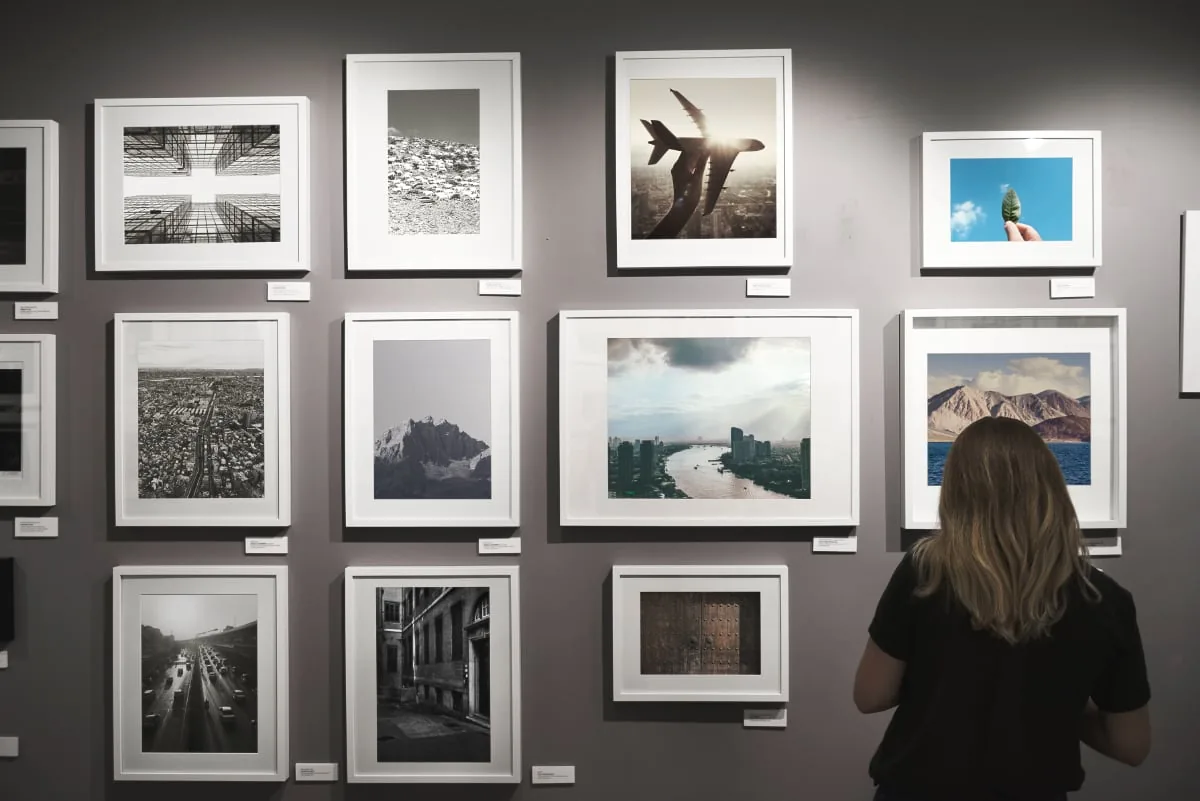
Another way to get noticed at the time was to enter your work in local competitions or even national magazine competitions.
Beyond that, there were not many ways to put your work before the public unless you paid to self-publish and promote a photo book or opened your own photography studio or gallery. Most hobby photographers did not have the resources, so their audience was usually limited to friends and family.
Today , an enthusiastic photographer can show work to the rest of the world more easily by posting photos online. Having your own website is not the only important step. Many well-known websites are used for sharing photos, where photography enthusiasts can view them.
Some websites require photos to be made available royalty-free, while others let you offer them for sale. To reach an even larger online audience, you can also promote your photos on social media platforms such as Instagram, Pinterest, or Facebook.
Of course, the internet is both a blessing and a curse. Anyone who has ever picked up a camera can show work to thousands or even millions of people. Not everything is truly worth admiring, but that does not stop people from trying.
The internet is also full of bloggers, commentators, and others presenting themselves as experts who can post almost anything on any subject, so finding the work that genuinely deserves attention can sometimes be difficult.
That means becoming known as a photographer is not as simple as posting something. To bring your work to a large audience, you need to know where to post it.
Stock Photo Sites
Stock photo sites are less a way to gain recognition than a way to earn money and enjoy the anonymous satisfaction of knowing that others are using and seeing your work. These sites pay a fee in exchange for royalty-free use of your work by paying customers. They can provide some extra income and help many people see your photos, even if you receive little recognition in return.
Keep in mind that stock photos must meet fairly strict quality standards, so even slightly missed focus, noise, or other quality problems can lead to rejection. You will probably need to edit all your photos before submitting them, and even then, most may ultimately be rejected.
Photography Competitions
Photography competitions remain an easy way to put your work out into the world, and in the digital era they are more accessible than ever. Instead of mailing prints of a specified size on a particular type of paper in a stamped envelope, you can now submit everything online.
That does not necessarily mean you can ignore the formatting rules: your photos generally need to meet a certain quality standard and may not exceed specified pixel dimensions. You will naturally face more competition, but that is no reason not to try. It takes courage to submit your work for judgment, and the experience can be good for you.
Offline Promotion
To make a strong start as a new professional, use offline promotion alongside your online efforts. Not everyone who might hire a photographer knows the websites where you display your photos, and not everyone searches actively on social media. Printed materials may be more effective for this audience. Consider flyers, brochures, business cards, posters, and stickers.

Local Newspapers
Traditional routes to exposure are still worth exploring. You can contact a local newspaper or print magazine and ask about submission guidelines and opportunities. This can be a smart way to earn money while also gaining recognition.
Local newspapers are always looking for photos. If you manage to be the only professional photographer at a local event—or at least the best one—you may be able to sell your photos and gain both income and recognition in your community.
Major Magazines
Breaking into major magazines is much harder, but that does not mean you should not try. Ask about their submission guidelines. To maximize your chances of a sale, study existing issues—most print magazines also offer digital editions—to understand the kind of work they accept and the style they seek.
Local Galleries
Living in a digital world does not mean local galleries no longer display photographic work. It is still worthwhile to approach coffee-shop owners and small-gallery curators and ask whether they would exhibit your photos. If you visit a local café with conspicuously bare walls, make the suggestion yourself. Speak with the owner and perhaps offer to help prepare the walls in exchange for displaying your photography.
Think Big
Alongside building recognition online and offline, another important strategy can help: create and publish plenty of content. The more work you show, the sooner people will remember your name and understand what you have to offer.
Your work must also stand out. A beautiful photograph of a rose may indeed be beautiful, but unless you do something interesting with the light or composition, it will look exactly like every other beautiful rose photograph. Technical excellence alone is not enough; you must also show creativity and originality. In other words, make sure every photo you publish is striking not only in execution but also in subject matter. To attract attention, something must be unique, compelling, and interesting.
This step also involves deciding whether to choose one clear niche or remain broadly versatile. Also read: do you really need to specialize as a photographer?