At its introduction, Sony presented a new full-frame camera: the Sony α7 III. The latest image-sensor innovations came together in this camera, which featured a back-illuminated Exmor R CMOS image sensor with a resolution of 24.2 MP and strong high-ISO performance.
The Sony α7 III delivered high-quality 4K video, a wide dynamic range of up to 15 stops at low ISO sensitivity, and high-resolution images with noise reduction. The camera offered continuous shooting at up to 10 fps, together with 693 phase-detection AF points covering 93% of the image and 425 contrast-detection AF points.
Enhanced Image Quality
The full-frame 24.2 MP Exmor R CMOS image sensor was paired with an improved BIONZ X image processor and a front-end LSI. Together, they maximized overall performance and delivered processing speeds 1.8 times faster than the α7 II. These powerful components enabled faster shooting while providing an ISO range of 100 - 51200, expandable to ISO 50 - 204800 for still images, and an overall 1.5-stop improvement in image quality. The camera offered a wide dynamic range of up to 15 stops at low sensitivity. Several refinements also improved the accurate reproduction of skin tones.
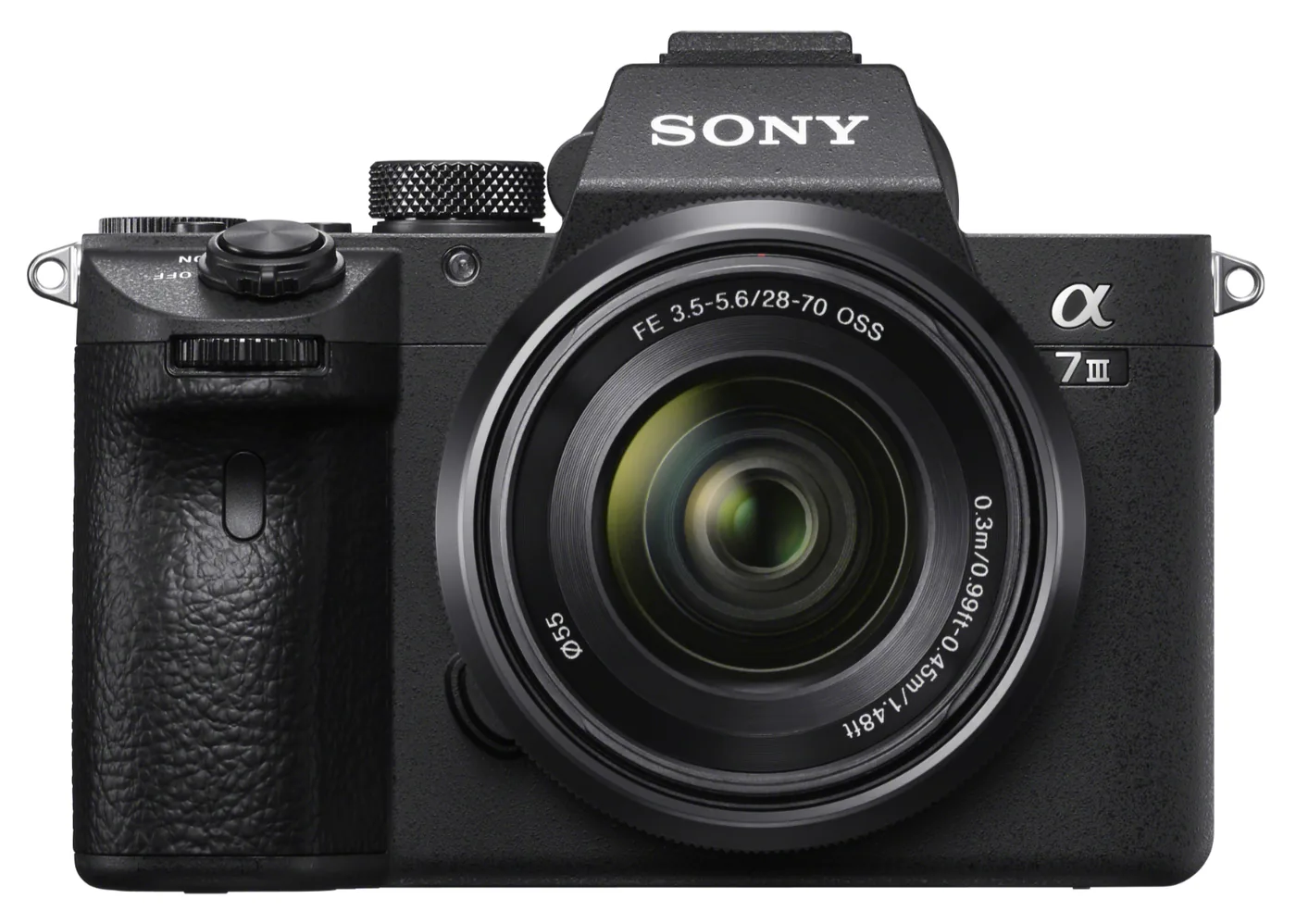
The A7 III produced 14-bit RAW output even when shooting in silent or continuous mode. Its 5-axis in-body image stabilization system was matched to the 24.2 MP sensor and provided compensation of up to 5.5 stops.
AF Speed and Performance
The new α7 III mirrorless camera offered faster AF performance than the α7 II. It combined 425 contrast-detection AF points with 693 phase-detection AF points, an innovation adopted from the α9. The AF system covered approximately 93% of the frame, enabling reliable focusing and tracking even with fast-moving subjects. AF response and tracking improved considerably over its predecessor, with almost 2x faster focusing in low-light conditions and 2x faster tracking, driven by the sensor’s quicker readout.
Eye AF was also available on the camera, including in AF-C mode. The feature was useful when a subject turned away or looked down. Other improvements in focusing flexibility included autofocus in magnifier mode, Eye AF support with A-mount lenses, an ‘AF On’ button, a multi-selector or ‘joystick’ for quickly moving focus points, and flexible touch-focus functions.
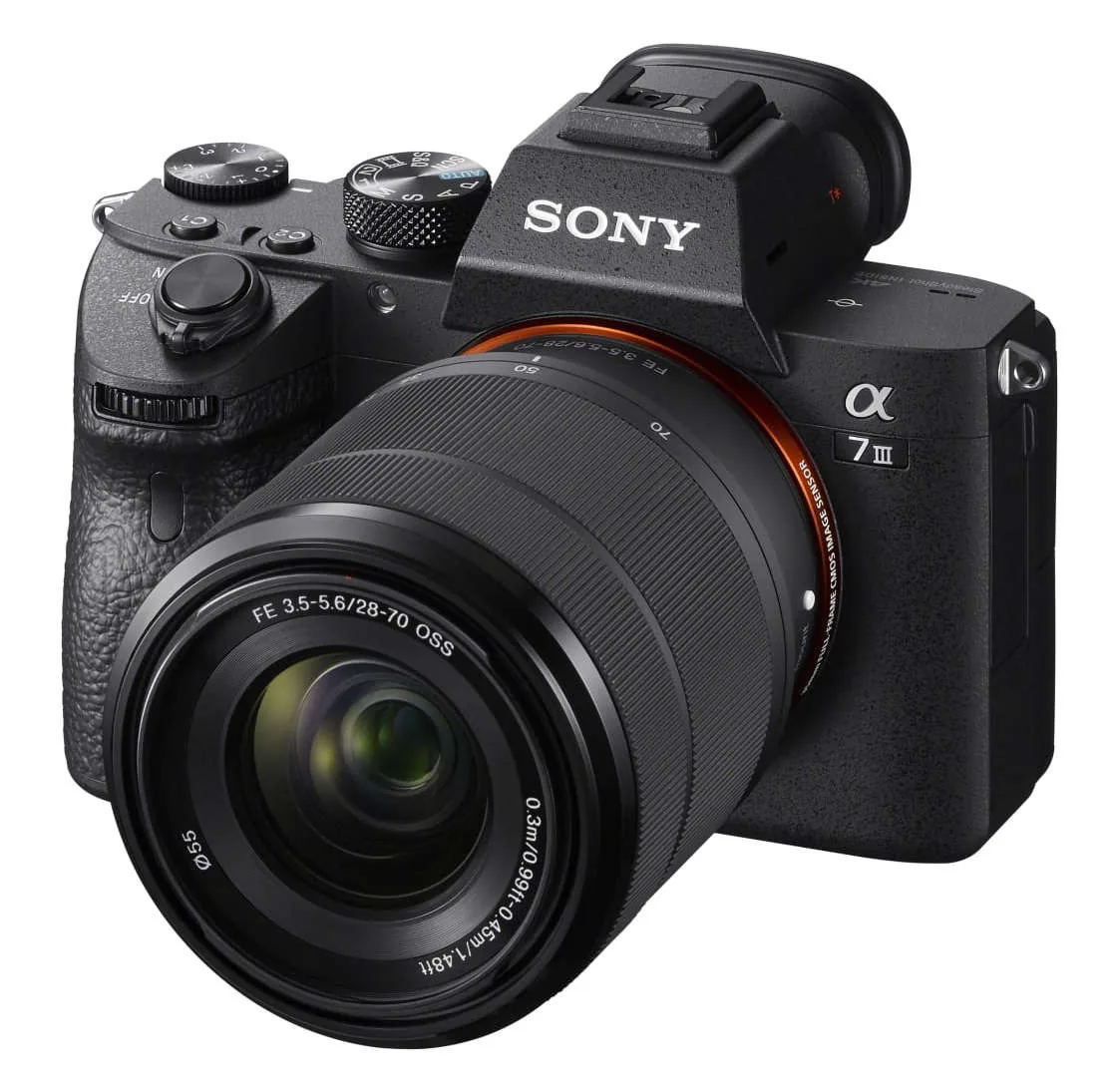
Autofocus System and AF/AE Tracking
The updated image processor in the Sony α7 III enabled 24.2 MP shooting at 10 fps with precise AF/AE tracking for up to 177 JPEG / RAW images or 89 uncompressed RAW images. This high-speed 10 fps mode was available with either the mechanical shutter or completely silent shooting. The camera could also shoot continuously at up to 8 fps in Live View mode with minimal lag in the viewfinder or on the LCD screen.
While burst images were being written to the memory card, key camera functions remained available. Users could access the ‘Fn’ (Function) and ‘Menu’ buttons, image playback, and several other options, including image ratings and functions for sorting images by location.
When a shooting location was lit by fluorescent or other artificial lighting, the anti-flicker function could be activated. The camera then automatically detected the light frequency and adjusted the shutter speed.
4K Video Quality
The α7 III offered 4K video recording (3840 x 2160 pixels) across the full width of the full-frame image sensor. When recording in Super 35 mm, the camera read every pixel without pixel binning, producing 2.4x the data required for 4K images.
Design, Construction, and Customization
This full-frame camera included many enhanced functions first introduced in the Sony α9 and later in the Sony α7R III, including two SD card slots, one of which supported UHS-II SD memory cards. Users had several options for storing content on the cards, including separate JPEG/RAW recording, separate still/movie recording, relay recording, and more. Battery life was also significantly extended: with a CIPA rating of up to 710 shots per charge, Sony described it as the longest battery life of any mirrorless camera in the world at the time.
The camera also included a ‘My Menu’ function that could store and instantly recall up to 30 menu items. Its controls allowed users to rate images with stars for easier playback and review, and to edit the first three characters of image filenames. Users could assign a total of 81 functions to 11 customizable buttons, and the camera was dust- and water-resistant.
Availability and Price
The new Sony α7 III became available in the Benelux in April 2018.