This article covers the Sony A450 (2010 model).
Older camera reviews remain online as historical references.
Take the Sony A550 and remove one of its most appealing features. Is there still a worthwhile camera left? The Sony A450 sets out to prove there is.
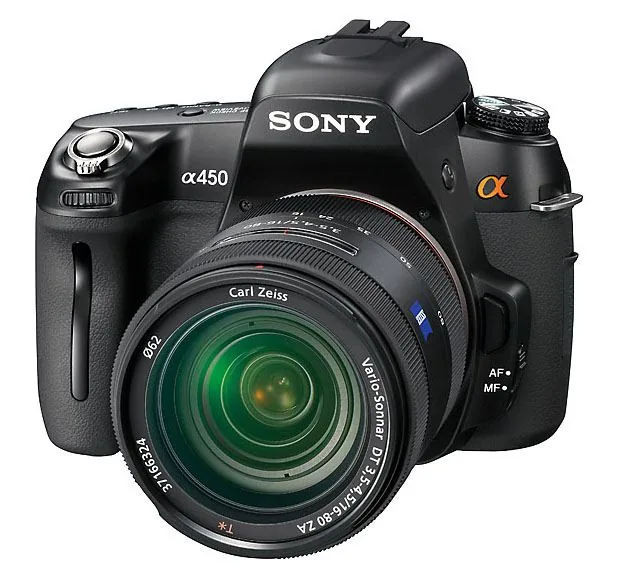
Live view and an articulating screen, while retaining conventional fast autofocus, are the highlights of the Sony A500 and A550. They let you shoot from unusual angles while maintaining full control and focusing extremely quickly. The A450 does not offer that combination.
Speed (1)
What it does retain is burst speed: 5 frames per second, or even 7 frames per second when no focus adjustment is needed between shots (meaning focus is set only for the first image in the sequence). That is very fast for a consumer DSLR and approaches semi-professional performance.
That speed is the Sony DSLR-A450’s main strength. A soccer parent shooting a son or daughter from the sidelines does not need live view: screens are difficult to see in bright sunlight, and for a stable shooting position it is better to hold the camera to your eye with your elbows tucked against your sides.
That is very fast for a consumer DSLR
Speed (2)
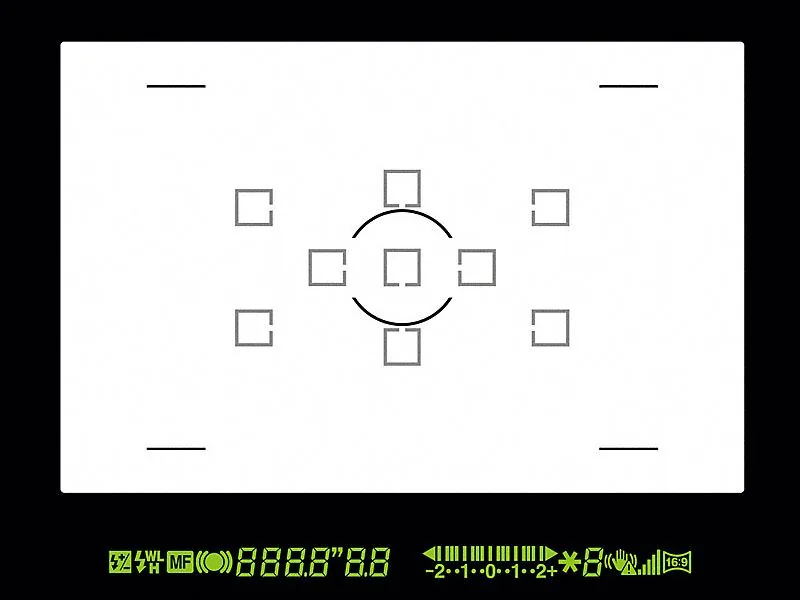
The A450 also focuses quickly. Many lenses for this camera lack their own focus motor, but the camera's motor is fast and powerful, delivering genuinely quick autofocus supported by a 9-point AF array.
Older Minolta lenses are driven quickly as well, as they are on the A500 and A550.
Speed (3)
Focusing is often complete before you have fully raised the camera to your eye. An eye-start sensor above the viewfinder eyepiece activates autofocus as soon as something approaches it. In this mode, half-pressing the shutter button does not trigger autofocus; it serves purely as an AF lock, holding the acquired focus.
If you do not want eye-start autofocus, you can disable it in the menu. Focus activation then works conventionally, as on other manufacturers’ DSLRs, by half-pressing the shutter button.
Speed (4)
The A450 uses the A550’s 14-megapixel image sensor and its back-illuminated sensor technology, which minimizes the gaps between pixels so they receive as much light as possible. Sony claims twice the sensitivity of conventional technology, resulting in a better signal-to-noise ratio.
This is an excellent sensor that can be used up to ISO 1600 with few reservations
This is indeed an excellent sensor that can be used up to ISO 1600 with few reservations; ISO 3200 is still quite usable. ISO 12,880 is best reserved for emergencies, while 6400 remains surprisingly good. Noise reduction works intelligently. Sony is so confident in it that the camera offers only Normal and High settings. The latter is very aggressive and causes a clear loss of detail.
The Exmor R sensor also contributes to the camera's speed, because its strong high-ISO performance allows relatively fast shutter speeds in low light. That is useful for parents photographing judo, ballet, or equestrian events, as well as for theater and concert enthusiasts.
Viewfinder with LCD
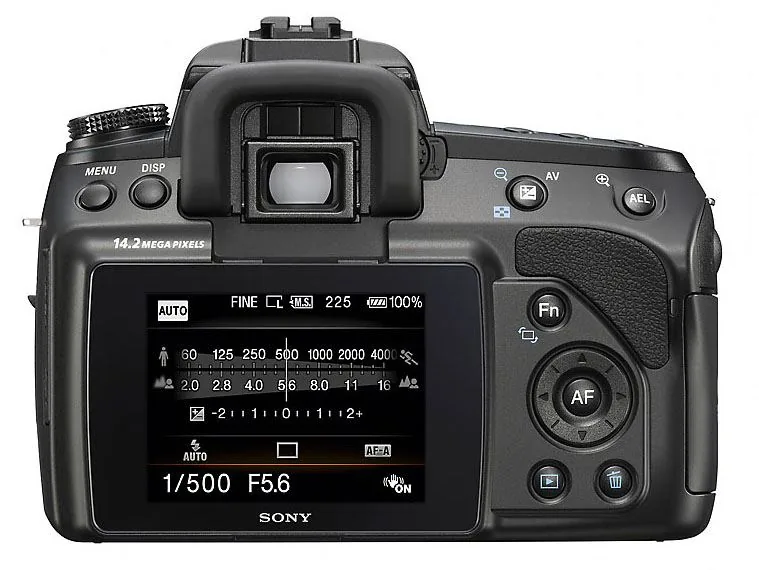
Without live view and fast autofocus together, you will often rely on the viewfinder. This is not a strong point of the A300 and A500 series. The viewfinder is fairly small and the eyepiece opening is narrow, so eyeglass wearers may not see the entire frame at a glance.
That is slightly more favorable with the A450. This viewfinder is slightly larger than that of the A500 and A550, because the live-view system built into those cameras’ viewfinders does not take up space here. It still feels somewhat cramped, though. If Sony wants to perfect its DSLRs, its designers should look through a comparable Canon.
Live View After All
To be clear, the A450 does have live view, but it uses the conventional approach found on other brands: the mirror flips up and the sensor’s live image appears on the screen. Sony calls it “manual focus check live view,” which might suggest that autofocus is unavailable and focusing must be done manually.
The A450 does have live view, but it uses the conventional approach
Fortunately, that is not the case. Press the AF button on the back; the mirror briefly drops, the camera focuses quickly, and the live image returns. It works well. You can magnify the live-view image to check focus.
For tripod work, such as product photography, manual focus combined with a magnified live-view image provides maximum precision. The A450 does not offer contrast-detection autofocus based on the live image, as compact cameras do; Sony considers it too slow.
Auto HDR
Auto HDR is a particularly useful feature. The camera makes one brighter and one darker exposure, then combines the two images. This captures a brightness range that could never fit into a single exposure.
The result can also look unnatural. Because the effect is adjustable, you can keep it subtle or deliberately exaggerate it.
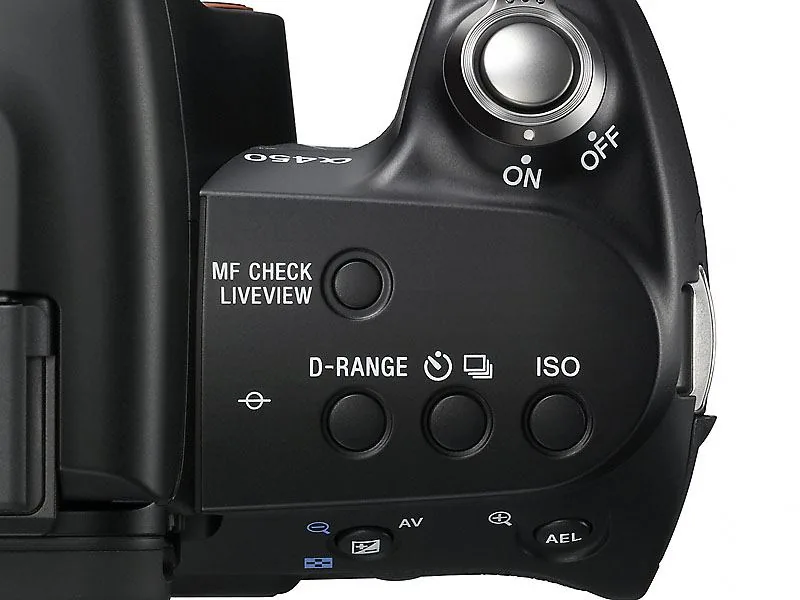
In addition to Auto HDR, the camera has a D-Range Optimizer that adjusts brightness within the normal range, much like gamma correction in image-editing software. Its strength is adjustable as well.
Controls
Sony once again distinguishes itself through simplicity. The A450 is not overloaded with specialized settings: everything essential is present, but menu and button enthusiasts should look elsewhere.
Perhaps Sony has been slightly too frugal, however. For example, you cannot choose the Auto ISO range: it is fixed at 200–1600, unless you set ISO manually. More frustratingly, the automatically selected ISO value is not shown in either the viewfinder or the rear display.
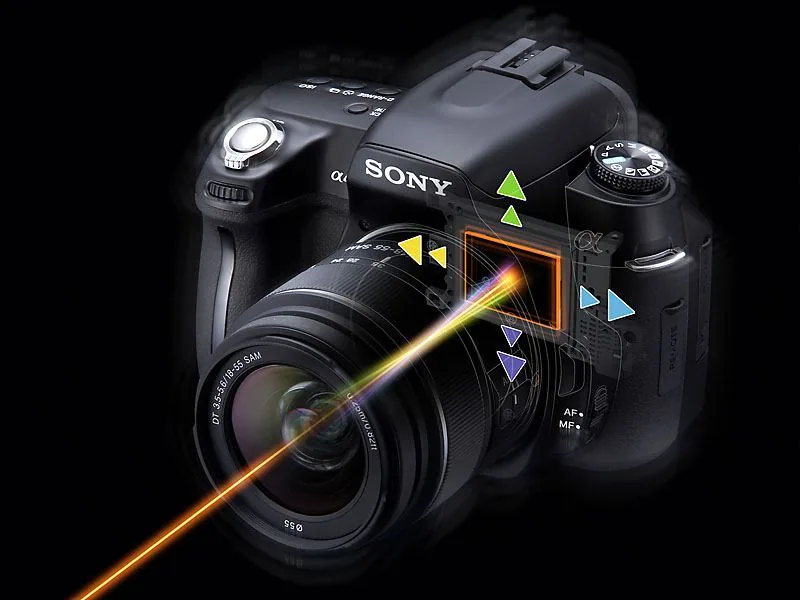
The interface deserves considerable praise, including its clear, informative depth-of-field and action indicators. Every function is easy and quick to find.
Tip: Because the A450 is a relatively economical model, you may have money left to invest in lenses—for example, one of the gems in Sony’s lineup, the Carl Zeiss Vario-Sonnar DT 3.5-4.5/16-80 mm.
The A550 costs about 150 euros more. That is a worthwhile saving if you prefer conventional viewfinder shooting. If you want live view and an articulating screen but the A550 is too expensive, consider the A500. It is similar to the A550 but lacks 7 fps shooting (its maximum is 5), has a smaller and slightly less vivid live-view screen, and offers “only” 12 million pixels, though image quality is comparable. The price difference between the A450 and A500 is small.
If you primarily want the A550’s speed and image quality and care less about its other features, however, the A450 is certainly attractive.