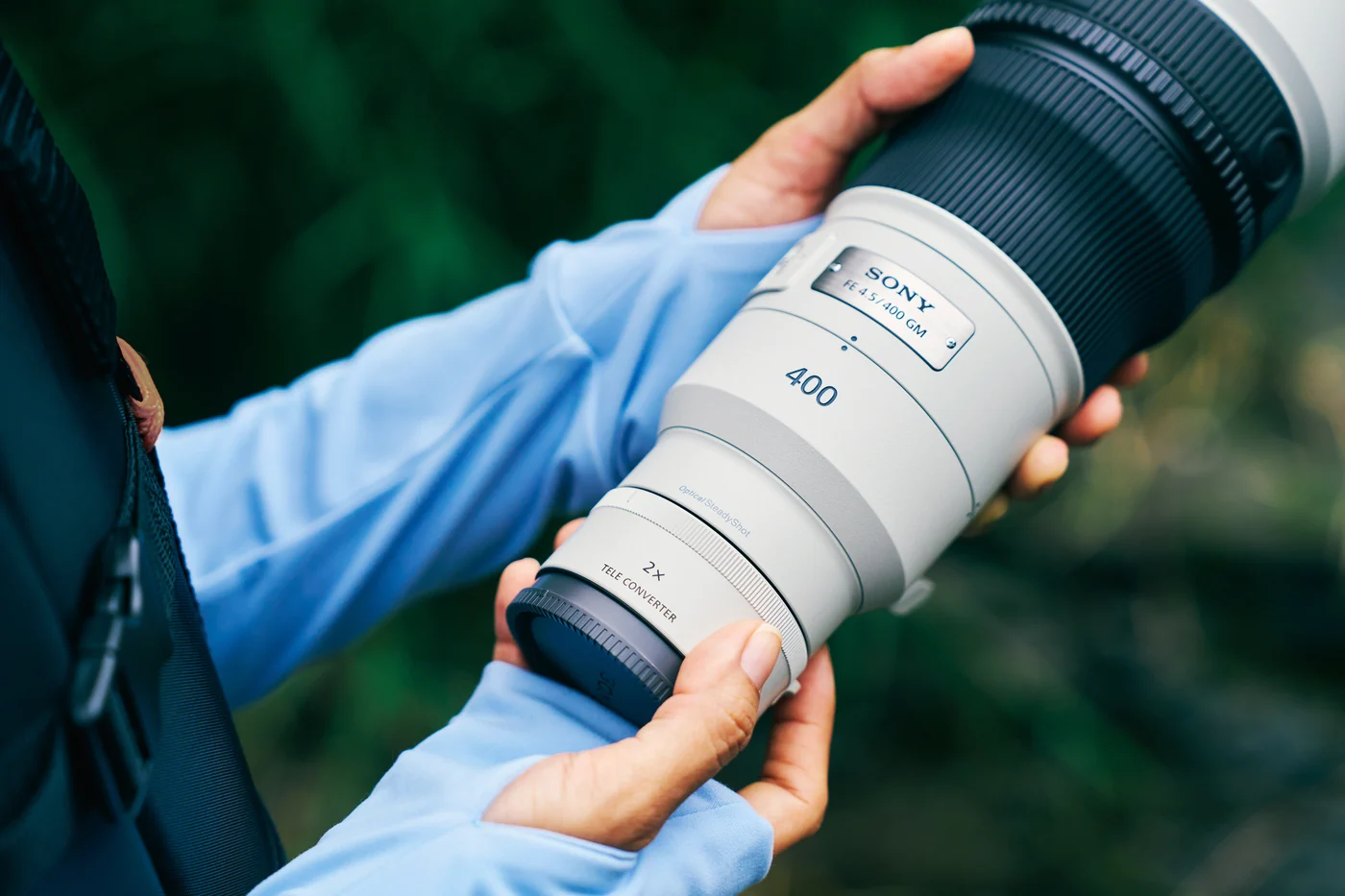
Taking a long telephoto lens with you usually means carrying quite a bit of weight in your camera bag. Sony makes that choice easier with the new FE 400mm F4.5 GM OSS and FE 600mm F6.3 GM OSS. Both lenses weigh around one kilogram, excluding the tripod mount. This makes them particularly interesting for photographers who shoot birds, wildlife and sports while staying on the move.
Long reach without the heavy load
The FE 400mm F4.5 GM OSS weighs approximately 994 grams, while the FE 600mm F6.3 GM OSS comes in at around 995 grams. That is remarkably light for two supertelephoto lenses with these focal lengths. They measure 242 and 263 millimetres long respectively, and both have a maximum diameter of approximately 108 millimetres.
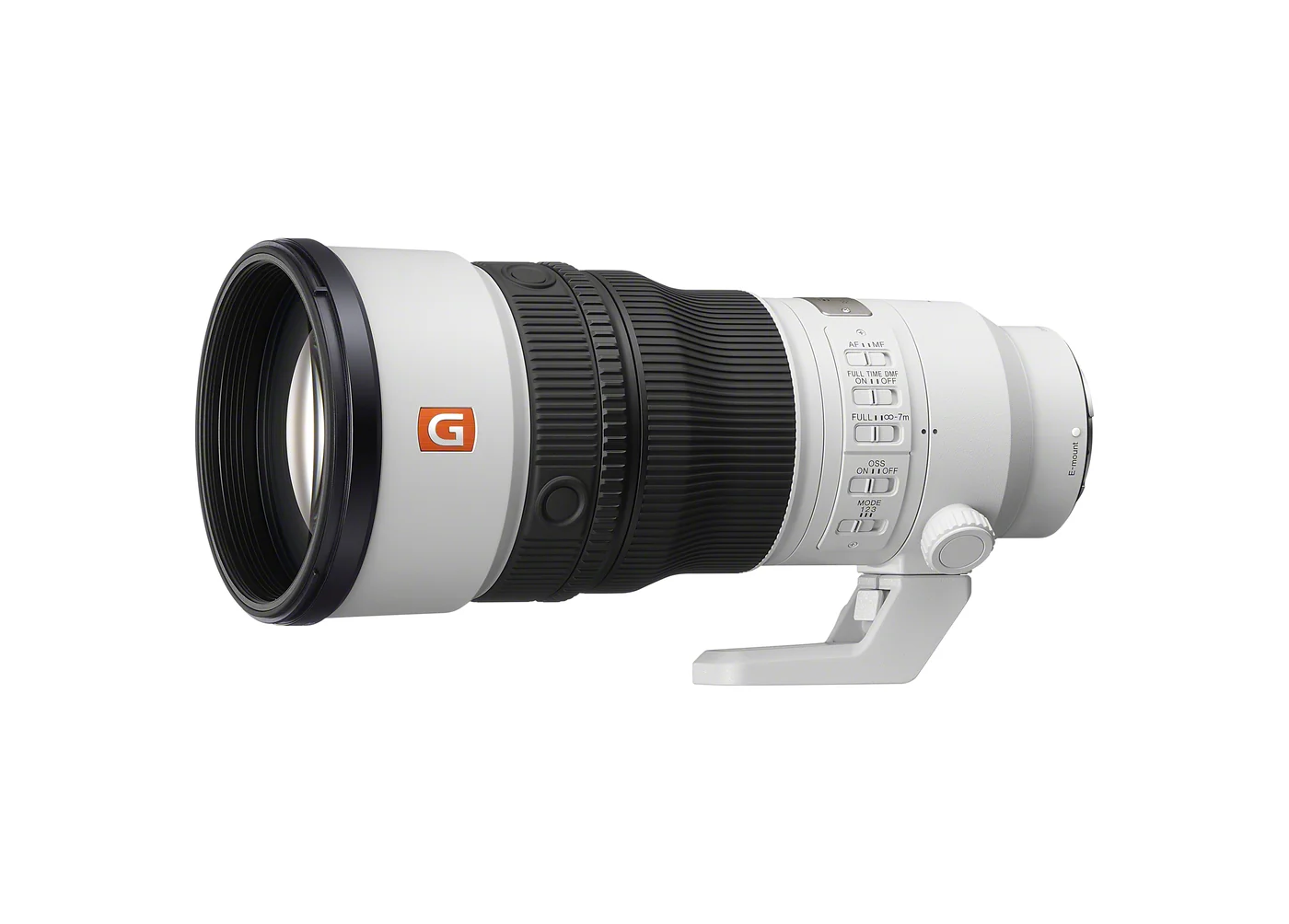
Sony has also positioned the centre of gravity closer to the camera body. This should make the combination easier to balance when shooting handheld or tracking a moving subject.
While walking through the dunes or alongside a sports field, you can react more easily and change your position. Sometimes, taking just one step sideways is enough to create a calmer background.
Should you choose 400mm or 600mm?
The 400mm has a maximum aperture of f/4.5. This combination is well suited to sports, larger animals and birds that come reasonably close. From the same position, it gives you more space around your subject than a 600mm. That can be useful when you want to include some of the surroundings or are trying to follow a subject that moves unpredictably.
The 600mm f/6.3 is more firmly aimed at distant subjects. Think of a bird on the other side of the water or an animal you would rather not approach. From the same position, the subject will appear considerably larger in the frame.
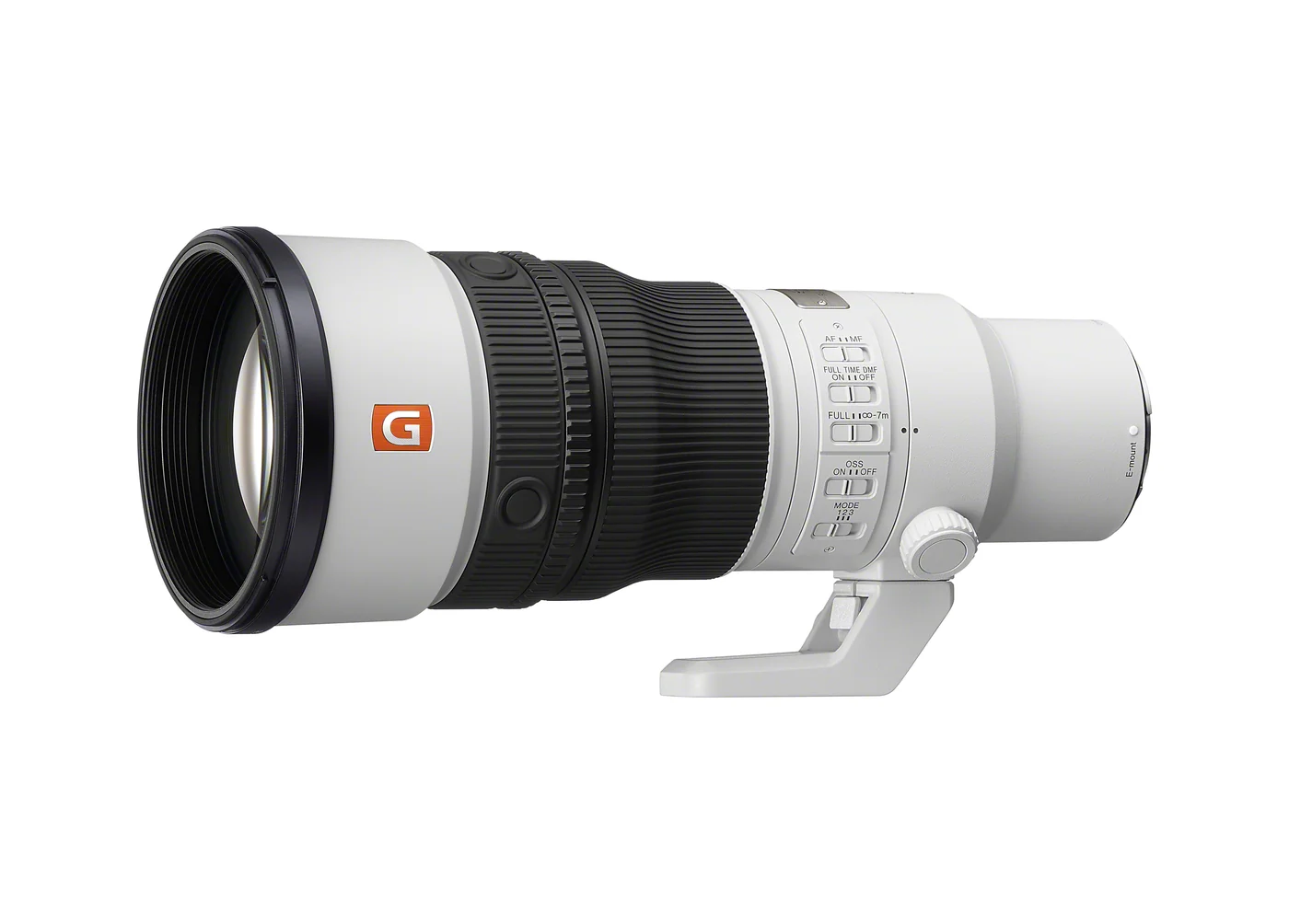
Both are fixed focal length lenses. You cannot zoom out when a bird suddenly lands right in front of you. Anyone accustomed to the flexibility of a telephoto zoom lens will need to think a little more carefully about distance and framing.
Aperture remains a trade-off
The low weight comes with maximum apertures of f/4.5 and f/6.3. The amount of available light therefore remains an important consideration, especially early in the morning, in a dark forest or when photographing evening sports.
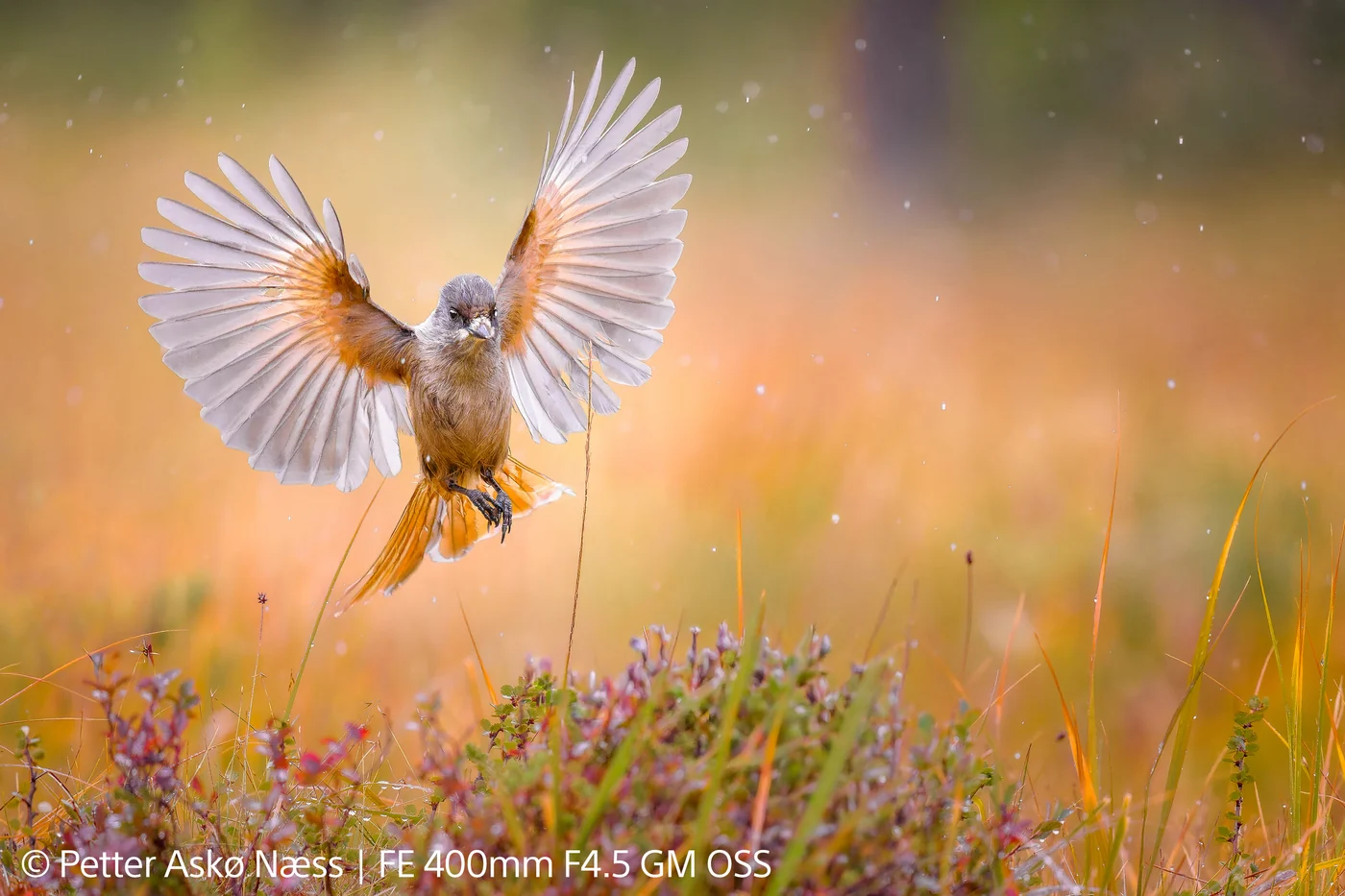
For a stationary bird, you can sometimes use a slower shutter speed. For birds in flight or running athletes, however, you need a fast shutter speed to freeze the motion. This may require a higher ISO setting.
Both lenses feature optical image stabilisation. This helps compensate for camera movement, but it cannot freeze a moving subject. That distinction remains important, even with a lightweight supertelephoto lens.
Autofocus for fast subjects
Sony uses two XD linear motors for autofocus in each lens. On the Alpha 9 III, the lenses support shooting speeds of up to 120 frames per second, including autofocus and exposure tracking. This maximum speed depends on the camera and shooting conditions.
The barrel includes four customisable focus-hold buttons, a function ring and a focus limiter. The latter lets you restrict the distance range in which the autofocus searches. This is useful when you know your subject will remain farther away.
Even more reach with a teleconverter
Both lenses are compatible with Sony's 1.4x and 2x teleconverters. With the 2x converter, the 400mm becomes an 800mm and the 600mm becomes a 1200mm.
The trade-off is a loss of light: a 2x converter costs two stops. The resulting combinations are 800mm f/9 and 1200mm f/13 respectively. This makes them most worth considering when plenty of light is available.
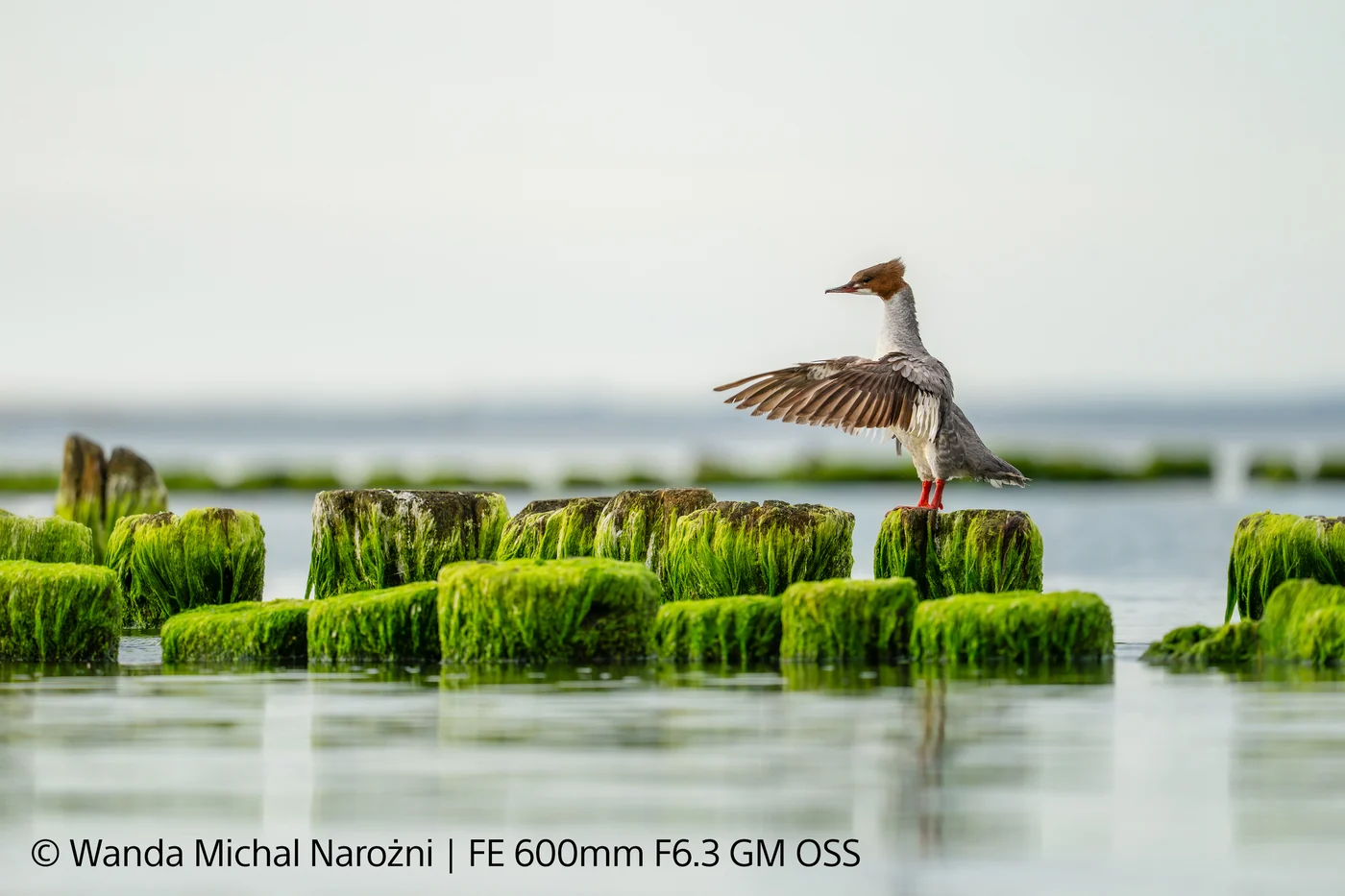
The lenses are designed to resist dust and moisture, and feature a fluorine coating on the front element.
Price and availability
The Sony FE 400mm F4.5 GM OSS and Sony FE 600mm F6.3 GM OSS are expected from late September 2026. The announced prices are approximately €2,800 for the 400mm and €3,900 for the 600mm.
For photographers who often work on foot, the main attraction lies in the combination of reach and portability. The choice then comes down to your subject: does 400mm give you enough space and reach, or do you regularly need the extra reach of the 600mm?