‘Finding something by chance and insight while looking for something else.’ That is the dictionary definition of serendipity, but the story of German physicist Wilhelm Conrad Röntgen (1845-1923) serves just as well as an example.
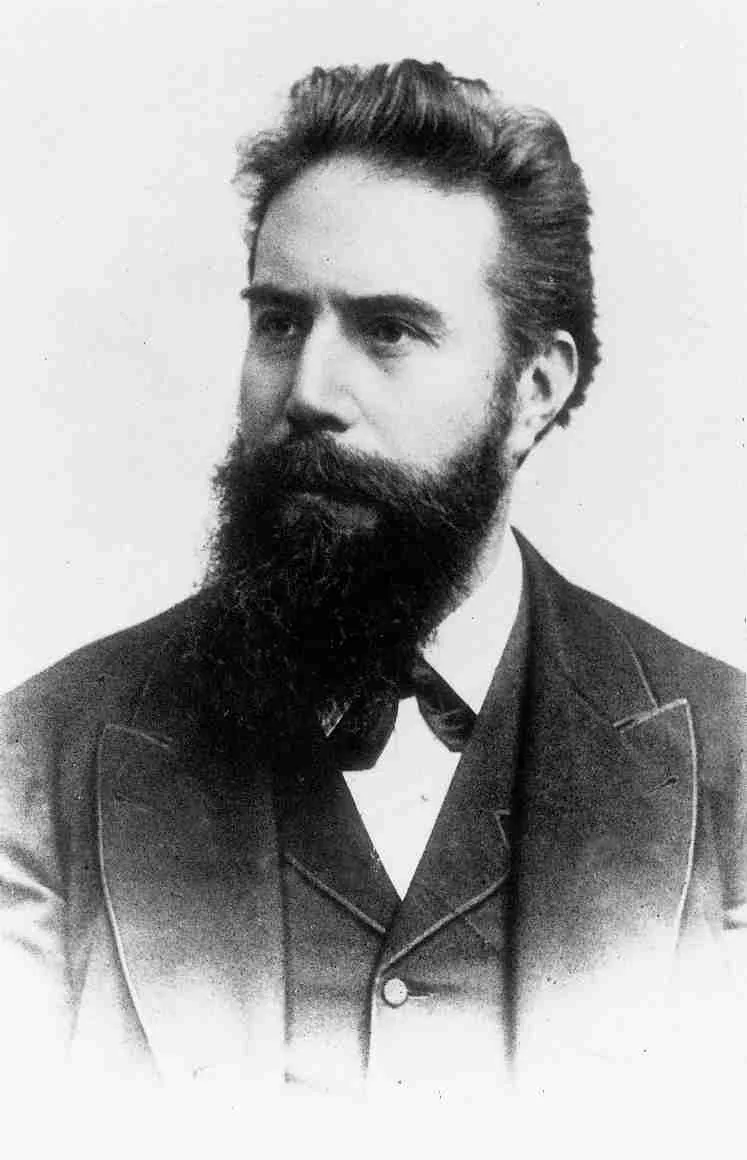
At the age of three, he moved with his parents to Apeldoorn. After pursuing several courses of study, he eventually earned his doctorate in mechanical engineering in Zurich in 1869. Röntgen was initially interested in gases and the electrical properties of quartz, until he made a highly significant discovery one evening in 1895.
During an experiment with a so-called cathode-ray tube, Röntgen noticed unknown rays emerging from the device. Since he did not know what kind of rays they were, he named them X-rays, after the mathematical symbol for an unknown quantity.
Röntgen discovered that the rays passed easily through skin but were stopped by bone. Medical science in particular continues to make extensive use of X-ray imaging, while some photographers and artists also employ the technology.
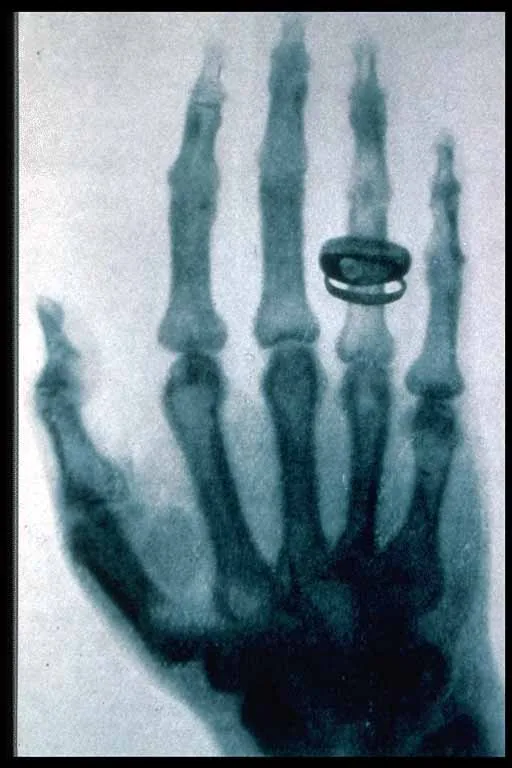
For his discovery, Röntgen received the very first Nobel Prize in Physics in 1901. For moral reasons, however, he refused to patent his invention in any form.
Röntgen ultimately died of cancer in 1923. Although ionizing radiation is now known to be harmful to humans, it is not believed to have contributed to his death.
Produced by Maarten Huisman