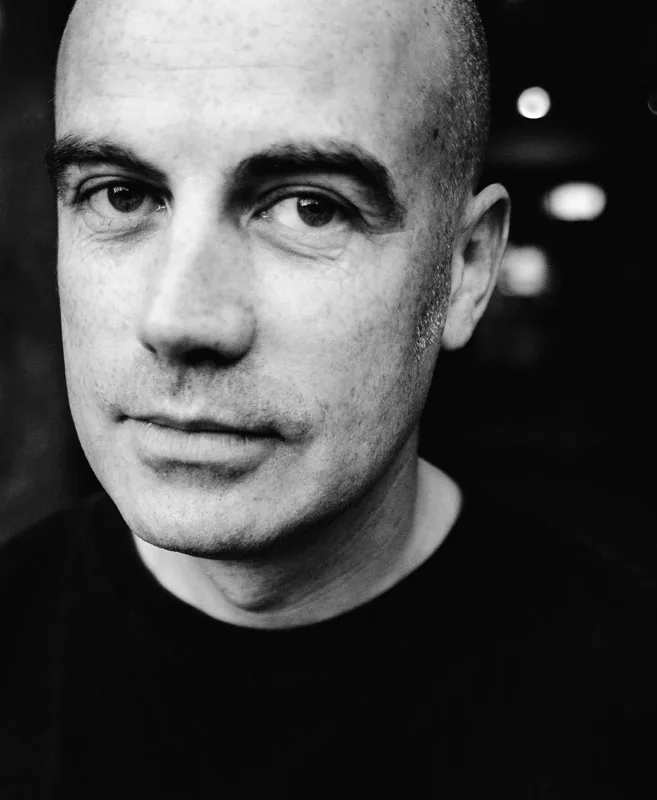
He is one of the Netherlands’ most celebrated photographers: he won five Silver Camera awards, took a World Press Photo in 2000, received another World Press Photo award in 2006, and has had his work exhibited around the world. Documentary photographer Robert Knoth (1963) discusses his fascination, fame, and danger. ‘I have experienced it all: gunfire, bombings, minefields, and angry mobs.’
You have received several awards during your already impressive career. Which prize means the most to you?
“It would have to be my first World Press Photo award in 2000, for a photograph taken in an Angolan refugee camp—an award you certainly do not imagine winning at the start of your career.
The first time I thought I was good enough to enter, I won straight away: a dream come true. The second time I was much less impressed (laughs); it was more confirmation that the first was not a fluke. It is gratifying to realize that you can compete at the highest level.”
You wrote books and produced moving reports about Chernobyl. Why this fascination with a nuclear disaster?
“I am more drawn to marginal and obscure stories than to subjects receiving widespread attention, because they give me more room to develop my own approach. More importantly, I am fascinated by how power operates.
Although my latest book, Certificate No. 000358 / Nuclear Devastation in Kazakhstan, Ukraine, Belarus, the Urals and Siberia (2006) , is about nuclear disasters in the former Soviet Union, it is primarily a story about rulers, military personnel, and scientists—and how they became involved in the most horrific experiments, with disastrous consequences for their own people.
Where traditional journalism often covers only incidents such as Chernobyl, I find it more meaningful to place them in a historical perspective and show that Chernobyl was part of a long tradition of criminal policy under successive communist governments. What happened in Russia and Kazakhstan is the darkest subject I have ever photographed. Some colleagues who also work on this subject cannot let it go either. Nuclear energy and weapons can be so destructive. Terribly fascinating.”
More importantly, I am fascinated by how power operates
And it is dangerous. How do you view the news that the number of journalists killed rose again in 2007?
“It is complicated. First, the number of journalists has simply grown explosively. Second, more local journalists are now active in distant countries, and they are much more vulnerable than Western journalists. They are more quickly drawn personally into local political conflicts that can be very dangerous for them.
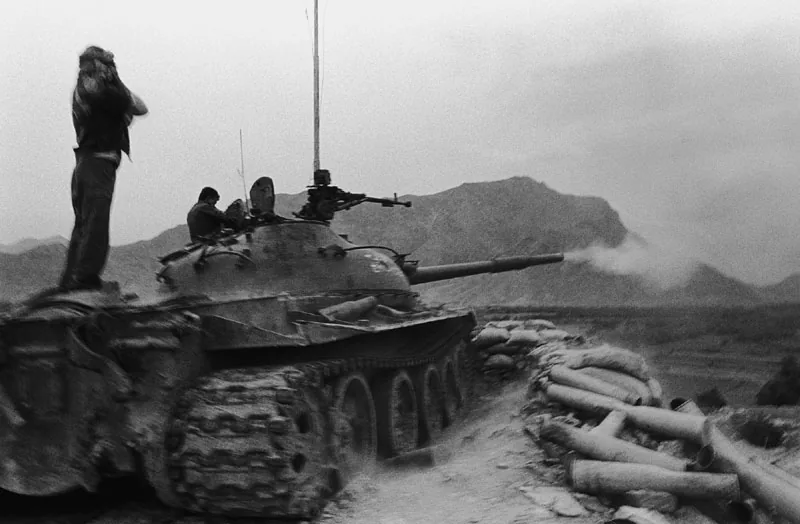
During the Cold War, the parties could count on reasonably “neutral” reporting, or at least a voice through part of the media. That is very different in today’s conflicts. This is partly because radical groups reject everything Western, but also because complaints—legitimate or otherwise—receive little or no serious attention. Western media are far less independent than they once were.
People are also more aware of the media’s impact. Both the Dutch military and dictator Robert Mugabe therefore try to control the media as much as possible. That is understandable, because the consequences can be far-reaching. The Dutch military does so in a friendly way; the Mugabes of this world use violence.
Sometimes you know you are going to do something foolish
Journalism has come to play a crucial role in shaping perceptions. Because it partly performs that role poorly, you inevitably become a party to the conflict. Unfortunately, it has turned into a runaway circus that abandoned the principle of seeking the truth long ago.”
You do not seek out the safest regions either. How do you prepare mentally?
“You cannot prepare for it; you learn to deal with it. Well, how can I describe it? Sometimes you know you are going to do something foolish… professional pride, recklessness, the need to complete your story.
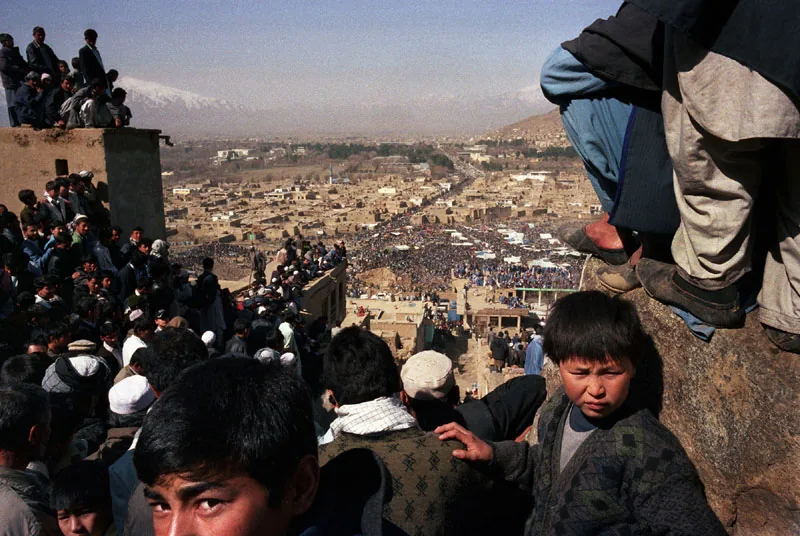
As you get older, you do become more aware of your vulnerability. There is a reason they send only young people into the military. Older people know better. Still, I have experienced it all: gunfire, bombings, minefields, angry mobs threatening to lynch you, robberies, and the biggest killer—car accidents. What do you do? Get away or take cover. Incidentally, the last time things became difficult was a long time ago, and it happened in Rotterdam of all places, where addicts attacked me in full view of police officers who did not intervene. So it is all very relative.”
You work for Getty Images. Does that relationship compromise your independence as a photojournalist?
“Working for Getty has not changed much: I still operate independently and submit stories that Getty then sells. It also sells stock photography. Getty can call me for an assignment while I am working somewhere. So I am not the traditional wire-service photographer who covers only news and supplies images every day. I focus mainly on in-depth stories.”
Information: www.robertknoth.com. Also read: Robert Knoth’s Favorite Photograph.
The World of Getty Images
Photo agency Getty Images—with headquarters in Seattle, United States—is the world’s largest image provider, thanks in part to the Time & Life Pictures and Stone collections. It sells images to countless newspapers and magazines, as well as film and advertising agencies. To maintain its daily flow of photographs, Getty Images represents approximately 140 professional news photographers and works with around 2,000 more freelance photographers, including Dutch photographer Robert Knoth.
Info: www.gettyimages.com.