This article was updated in 2025. In 2011, the Drents Museum acquired two exceptionally rare portrait photographs from 1858. Today, those images are more important than ever for understanding early Dutch photography.
The Drents Museum owns two exceptionally rare mid-nineteenth-century portraits known as ambrotypes. They depict Lucas Oldenhuis Gratama and his wife. Dating from around 1858, the images are among the earliest examples of portrait photography in the Netherlands.
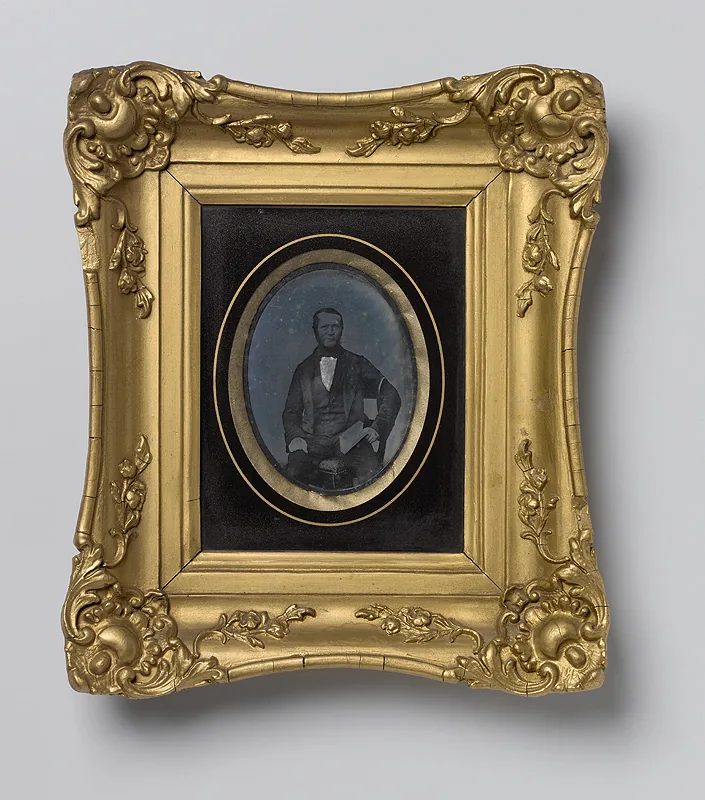
The significance of these images extends beyond their age. Lucas Oldenhuis Gratama was one of the founders of the Drents Museum, making the portraits an unusually personal part of the museum’s own history.
The ambrotypes were donated in 2011 by Frans Klein, director of Museum Magazijn in Amsterdam and Gratama’s great-great-grandson.
Ambrotypes: Photography on Glass
The ambrotype was a popular photographic process between 1850–1860, especially for portraits. The image was captured on a photosensitive glass plate, creating what was effectively a negative. When the glass plate was placed against a dark background, the image appeared as a positive portrait.
Ambrotypes were generally framed behind glass and kept in a protective case. Today they are very rare, because photography during this early period was almost exclusively available to society’s elite.
In the Drents Archives in Assen also holds a small collection of nine other ambrotypes depicting members of the Gratama family. Together, these images offer a unique glimpse of early Dutch portrait photography and the social history of Drenthe.
Much of this early photographic heritage is still not publicly accessible online, underscoring the fragility and rarity of these images.