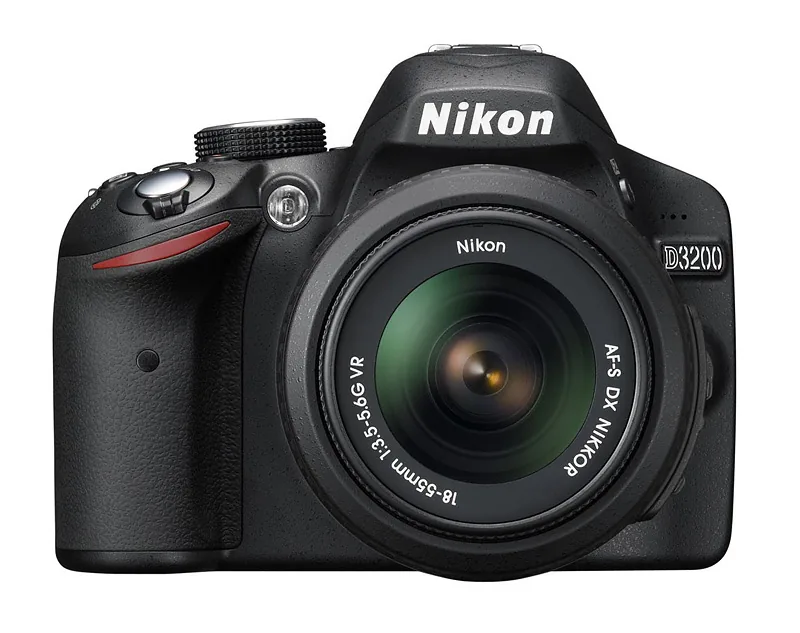
Nikon expert Dré de Man takes a first look at the new D3200.
It takes some getting used to, but for Nikon, the megapixel race was far from over. In 2008, Nikon introduced the D3x, offering 24 megapixels at a then-unique level of quality—but also at a sky-high price. Even so, it was the first time Nikon offered more megapixels than Canon.
On February seventh, the full-frame D800 with 36 megapixels was announced, and then came the D3200, an entry-level model offering 24 megapixels.
24 megapixels was no longer particularly unusual, since competitor Sony offered the same resolution in its midrange cameras. Nikon went one step lower, however, in the sense that this camera would cost even less than the Sony models.
It was also almost certain that the D3200 would produce less noise than the Sony NEX7 and A77/66. We planned to examine that in detail in a later test.
The D3200 naturally followed in the footsteps of the D3100. That model remained on the market for the time being, becoming Nikon's true entry-level option. What more did the D3200 offer?
- 24 instead of 14 megapixels, with less noise
- a much better monitor (920,000 pixels vs. 230,000)
- a connection for an inexpensive Wi-Fi module
- Full HD (1080p30) and 60 fps at HD resolution (720p), up from 24 and 30
- a connection for an external microphone
The external WT-1a Wi-Fi module was attractively priced (suggested retail price: € 59). The unit was quite small, although cameras with a built-in Wi-Fi module naturally offered a more elegant solution.
With an Android app, photos could be sent immediately to Facebook, for example, or to an online backup. (An Apple app was expected to follow soon.) Otherwise, the camera closely resembled the D3100 and therefore had a clear, comfortable grip.
Another feature the camera inherited from the 3100 was Guide Mode. It was essentially a mode in which the camera explained various settings, even using sample photos. It could be helpful for beginners, although some settings took much longer to adjust than they did without the guide. Fortunately, it was very easy to switch off.
Does an entry-level camera with 24 megapixels make sense?
The image-processing chip (Expeed 3) had also become a little better and faster. The chip that controlled functions including autofocus was faster as well, enabling slightly quicker continuous focusing during video recording. The camera still had 11 focus points; that had not changed.
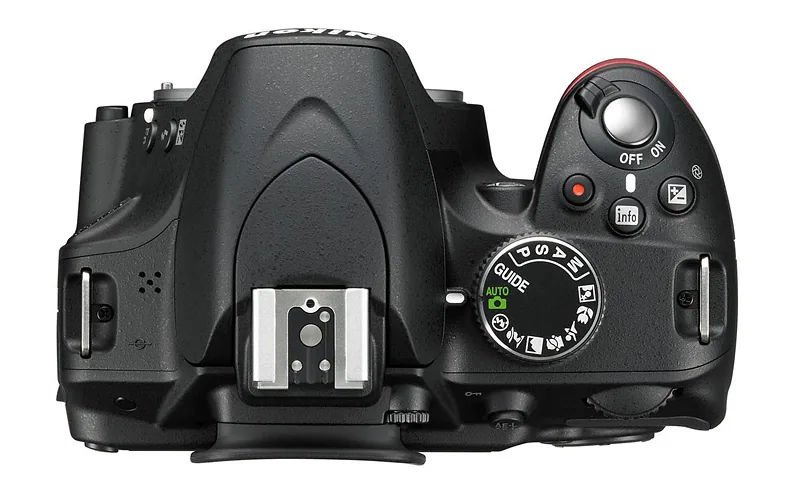
Manual focus is recommended for creating truly beautiful films, but most users probably would not try it. One improvement was that the movie-record button was no longer on the back of the camera, but on top next to the shutter-release button.
Despite its 24 megapixels, the continuous-shooting speed had also improved: it now captured four frames per second instead of the three achieved by the D3100.
So, did an entry-level camera with 24 megapixels make sense? Yes, in the sense that even photos made with the standard zoom would look better than those made with the D3100. No, because a good lens is much more important than the number of megapixels.
Fortunately, the D3200 was inexpensive enough compared with other models that you could easily add a 35mm or 50mm f/1.8 lens. I briefly tested the camera that day. The JPEGs looked very good, ISO 3200 showed hardly any visible noise, and in that respect the camera was even better than the D3x.
Unfortunately, I could not yet assess the RAW files because neither Nikon Capture nor Adobe Camera Raw supported the camera at the time; that was expected to take about another ten days. I planned to report later on the results of a more extensive test of RAW performance and dynamic range.
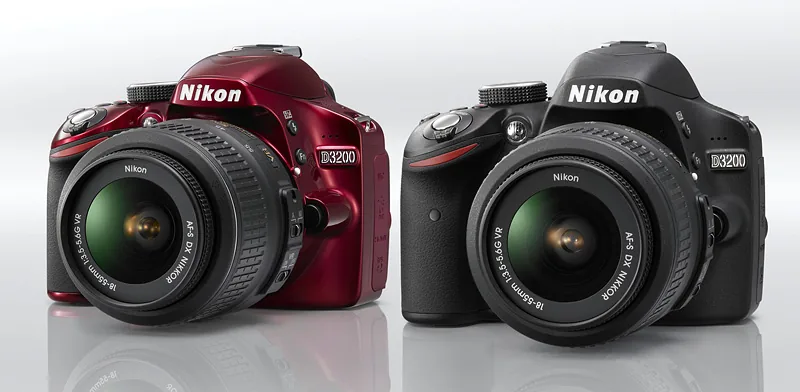
The Nikon D3200 (a current compact Nikon alternative is the Nikon Z50II) became available on May 15 in black and, initially, in red only by special order. The suggested retail price for the body was €599. Many stores would probably have offered the kit with the 18-55/3.5-5.6 VR lens—and a memory card—for about the same amount.