A different kind of photography. Without a CCD, without batteries, sometimes even without a lens—and often without quality. Lomography does have a high fun factor. It is elusive, yet keeps drawing people back.
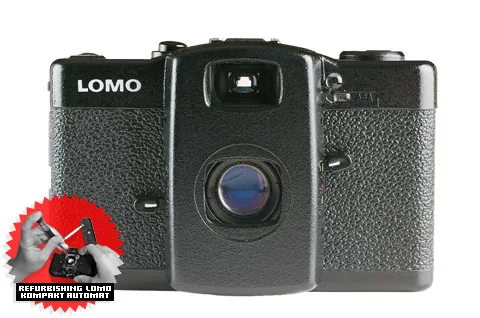
Lomo is the name of a Russian camera factory. Among other things, it made a very compact small-format camera that fit easily in a pocket. It was derived from a Japanese compact camera but, like most Russian camera imitations, was less refined and often less reliable because of its poor finish.
The little camera attracted the attention of Viennese students late in the twentieth century, and they began photographing almost anything with it. The little device, the Lomo LC-A, was inexpensive. The students loaded it with the cheapest film they could find—preferably expired stock that already showed a nice color shift. Developing and printing were done at the cheapest drugstore, in the smallest format and on the cheapest paper.
By consistently embracing cheap, low-grade materials, this form of photography became a nonconformist counterweight to the conventional photography practiced by middle-aged men carrying bags full of equipment. A proud nickname emerged: Lomography. Its motto: Don’t think, just shoot.
Lomographic Society
It has since become a global phenomenon. At www.lomography.com, you can get to know the community. Lomographers from around the world publish their albums there, and a broad range of products has become available. It is no longer limited to Russian equipment: wherever unusual photographic gadgets are made, lomographers manage to establish contacts.
These include beautiful Chinese twin-lens reflex cameras and original Russian Cold War spy cameras. Russian Leicaimitations—new or refurbished—and very serious panoramic cameras can also be found there, along with interesting pinhole cameras, action cameras that capture multiple exposures in one frame, fisheye cameras, and lenses.
And what about the fisheye cutter, a little cutting device for circular fisheye photographs—for which they also offer a photo frame? Or the suction-cup tripod. Or the single-use camera loaded with black-and-white film. Clever things, strange things.
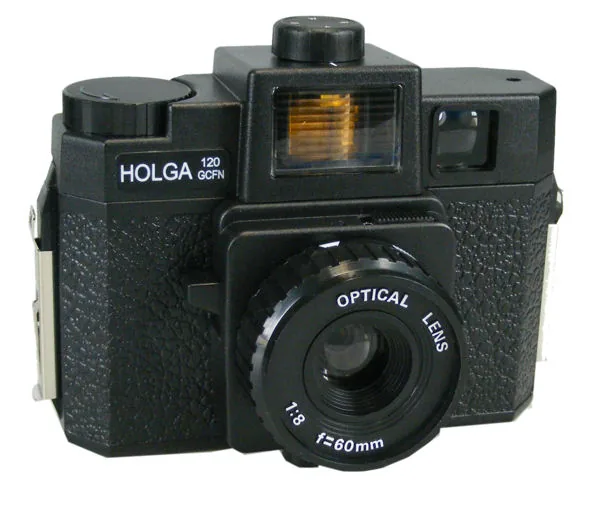
Everything can be ordered online. Prices tend to be high. Some, such as the plastic Russian Lubitel twin-lens reflex, are frankly indefensible. The Holga, a plastic 6x6 cm camera for large 120 roll film, is also very expensive there.