This is the third and final installment on landscape photography. This article takes you to Norway. It discusses the preparation for such a trip and uses several photographs to illustrate the theory from parts 1 and 2.
Introduction
You can photograph beautiful landscapes in the Netherlands—from tidal flats and peatlands to rivers and sandy plains. The European Netherlands even has hills. Its highest point, the Vaalserberg, is only 322 meters high, however, so it is not exactly in the big leagues.
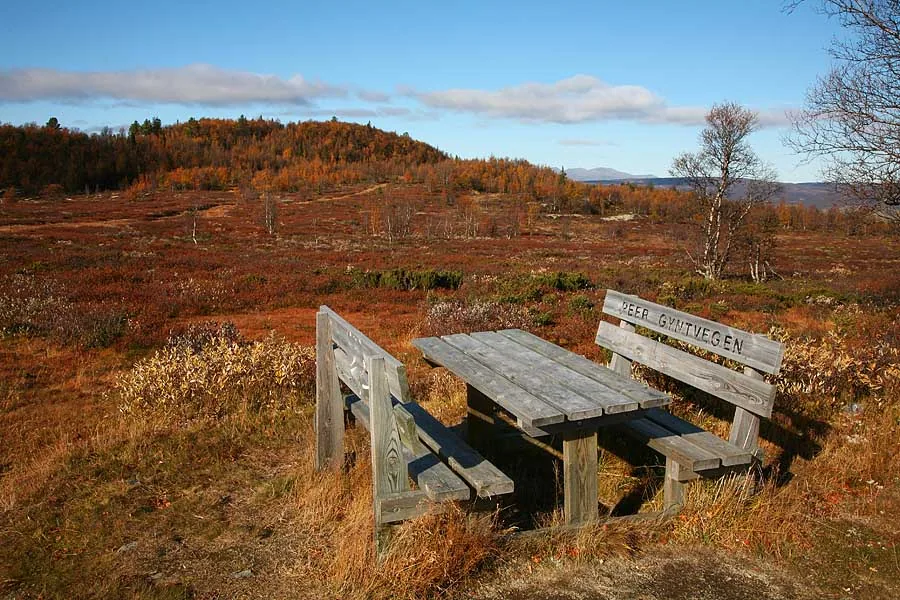
To photograph truly rugged mountain landscapes with snow-covered peaks, tundra, and fast-flowing rivers, you have to travel abroad.
Norway offers all that and even more: its fall colors are spectacular. Norway is a large country, however, which raises the question: “Where do you start?” To answer it, I spent a great deal of time preparing. I visited many websites, corresponded and spoke with fellow photographers, and searched books and magazines for the most beautiful locations.
In the end, I decided to visit Rondane and Jotunheimen during the last week of September. These are beautiful mountain regions located about 300 km north of Oslo.
Exploring the mountains
Landscape photography is about discovery and experience. You find beautiful compositions by immersing yourself in the landscape. That means leaving the well-trodden paths behind. In other words: walk.
In Norway, you can roam for days without encountering another person
Mountain weather is unpredictable, however. In Norway, you can experience three seasons in a single day, so to speak. You need to prepare by wearing the right clothing. Good hiking boots, layers of clothing, and a waterproof jacket are essential. A small towel is also very useful for quickly drying your camera and lenses after a rain shower. Of course, the GPS and cell phone go in the bag as well.
Changing light
The changeable mountain weather provides many opportunities to create beautiful images. It does require photographers to anticipate what is coming. You need to know your camera and be able to change its settings quickly as the light changes.
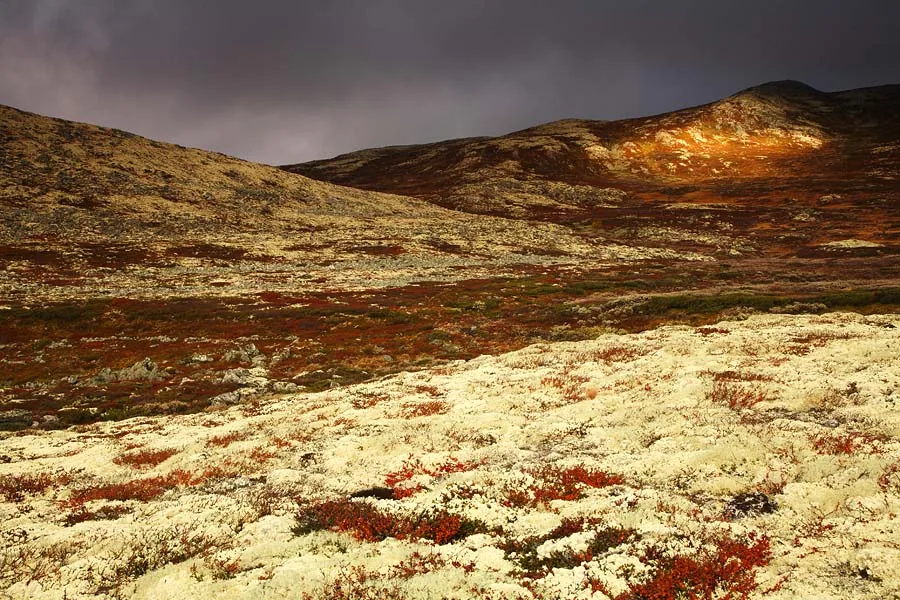
For the photograph of Rondane, for example, I noticed the sky clearing behind me and rays of sunlight “dancing” across the mountain peaks. The rays moved from left to right, and I had only a moment to find a composition, set up the camera, and press the shutter at just the right time. The leading line creates depth and draws the eye straight to the patch of light on the mountains in the background. The dark sky gives that patch of light even greater emphasis.
Fast-flowing streams
Water often adds something special to a photograph. In calm weather, a small lake is like a giant mirror, reflecting the landscape and sky in the water. This adds depth, and the reflection makes the photograph more interesting to look at. You can use ditches, canals, and rivers as leading lines to create depth in your image.
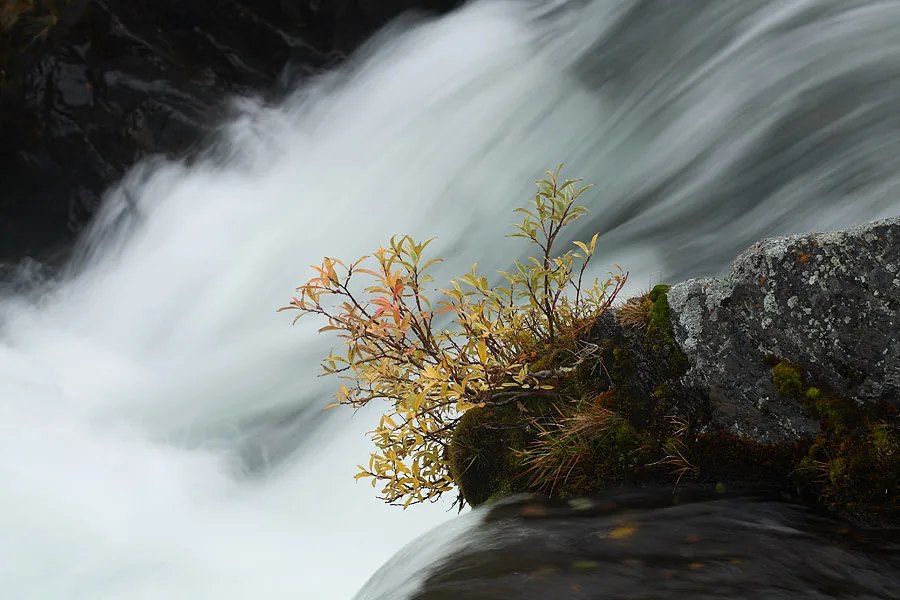
Fast-flowing water, however, is a very different story. Fast-flowing streams and waterfalls can add tremendous dynamism to a photograph.
This is especially true when you convey the speed of the water by choosing a slow shutter speed. The image does not “freeze” the water; instead, its blur creates the illusion of motion and speed.
Fall colors
The third and fourth weeks of September are the peak weeks for fall colors in Norway. The colors are much more intense there than in the Netherlands. You see fall hues everywhere—in the mosses, shrubs, and, of course, the trees. When the rising sun shines directly on the trees, in particular, they can sometimes look as if they are on fire. In those situations, however, it is also difficult to control the contrast between light and dark.
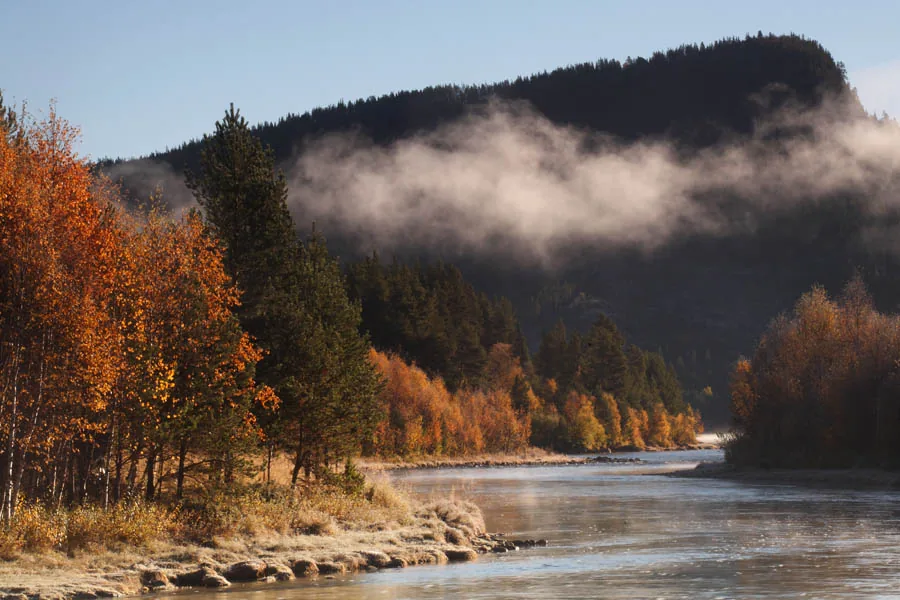
You can use a graduated neutral-density filter to reduce the contrast between the sky and the foreground. In the mountains, the horizon is often uneven, making a hard-edge graduated neutral-density filter unsuitable. A soft-edge graduated filter provides a solution. In the photograph “Fall Colors in Norway,” such a filter was used to make the cloud and sky slightly darker. A polarizing filter was also used to reduce the glare from the dewdrops on the trees.
Cultural elements in the landscape
In Norway, you can roam for days without encountering another person. Yet every now and then, you come across remnants of human civilization. Especially when you return to the trails, you occasionally see old, dilapidated sheds, fences, stone walls, and so on. These are worth photographing too.
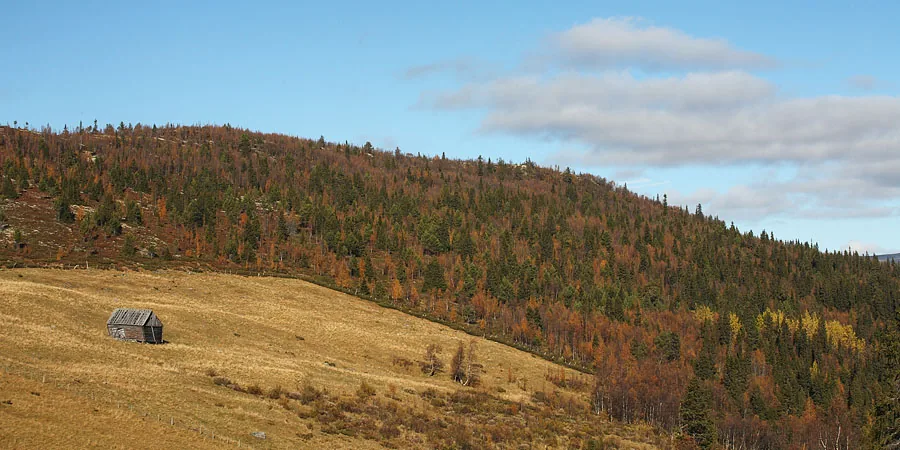
These features are part of our cultural landscape and often give viewers a sense of recognition. Cultural elements also provide a sense of scale and proportion.
Also read Landscape Photography - Part 1.