Modern DSLR cameras can deliver excellent image quality. Which lens will help you get the most out of them?
Reviews often say that a kit lens performs well for the money. But how useful is that to a discerning photographer?
You cannot expect miracles from something worth about fifty euros—the difference between the price of a camera with a kit lens and the body alone. What are your options if you want higher quality?
Just Good Enough
A kit lens is the lens supplied as standard with a camera. To keep the package affordable, it cannot cost much. But the manufacturer does not want to damage its reputation either.
That is the dilemma—and the compromise. At first glance, these kit lenses perform quite respectably. But there is much, much more quality to be had. The kit lens represents a culture of settling for a passing grade: adequate, and good enough to get by.
More Punch

For the review of the Pentax K20D and K200D, we were supplied with a 3.6–5.6/18–55 kit lens and a 4/16–45mm lens. Even at a small size on screen, the difference was immediately apparent. The 16–45 produces a much punchier image, even though the 18–55 is regarded as one of the better kit lenses.
You can zoom in, study details, and look for chromatic aberration, but the first impression already tells the story: the 16–45 is by far the better lens. Contrast and sharpness are clearly superior.
The Pentax 4/16–45mm lens was not designed to be small; image quality takes priority. It is much heavier and bulkier than the standard 18–55mm kit lens.
Whether that is due to the coatings, the higher-quality optical design, or better internal anti-reflection treatment—who knows—but the difference is obvious. So is the price difference: the premium quickly reaches around 300 to 350 euros.
Top-Tier Lens
You see the same thing at Nikon when comparing the 3.5–5.6/18–55 kit lens with the more professional 3.5–4.5/18–70 standard lens. With Sony, the difference is even more extravagant.
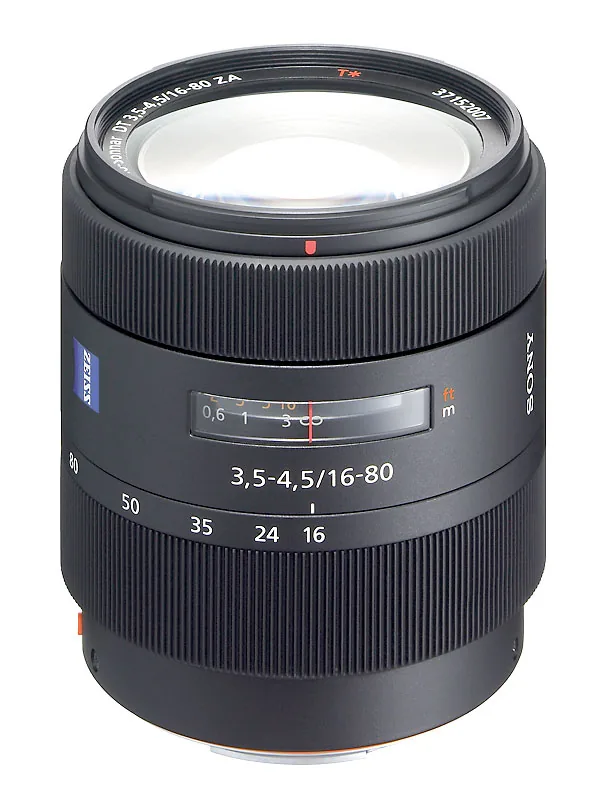
In terms of focal range, the next candidate is the Carl Zeiss 3.5–4.5/16–80mm lens. It is not merely considerably better than the 3.5–5.6/18–70mm kit lens; it is one of the very best zooms you can buy. The price difference can easily be a hefty 600 euros!
The Carl Zeiss 3.5–4.5/16–80mm lens is far more affordable than the exceptionally fast top-tier lenses in this range. It offers not only high detail but also exceptionally attractive rendering of out-of-focus areas: smooth transitions without ragged, broken contours. Unusually beautiful, especially for a zoom.
Canon offers the stabilized 4–5.6/17–85mm IS as an alternative. It is nowhere near as good as the Carl Zeiss, but much better than Canon’s 18–55mm kit lens. Olympus offers the notably fast 2.8–3.5/14–54mm, which commands a substantial premium.
High detail and exceptionally attractive rendering of out-of-focus areas
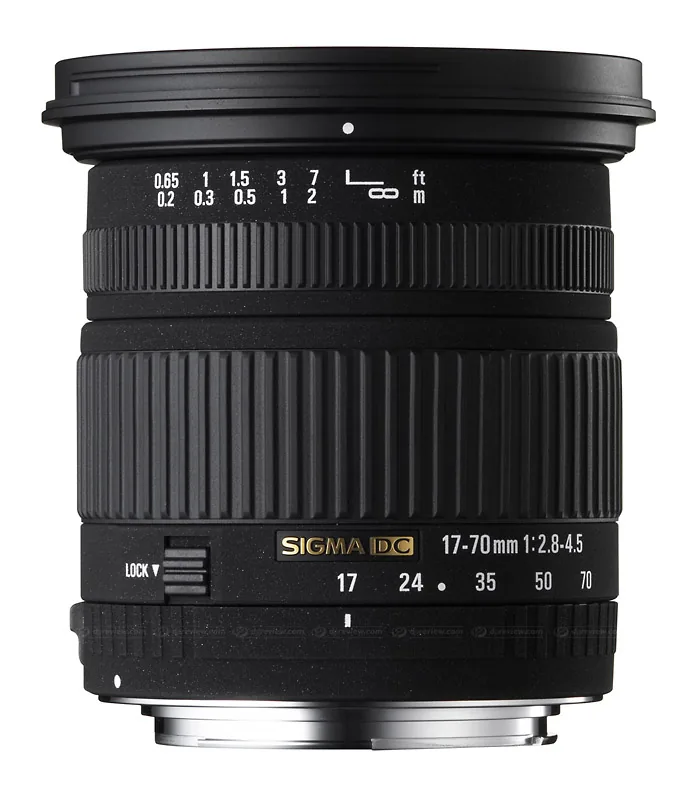
Sigma offers the alternative to these better standard zooms in the form of the 2.8–4/17–70mm. It is attractively fast, has a useful range, belongs near the top of its class, and is very competitively priced.
Sigma’s top-tier 2.8–4/17–70mm standard zoom offers an appealing range, extra speed, enhanced close-up capabilities, and a very favorable price. Recommended for photographers looking to step up in quality.
Perhaps Choose a Cheaper Body?
When choosing a DSLR, attention tends to focus on the camera, while the lens is often treated as an afterthought. That is a mistake.
It is better to pair a somewhat simpler body with a high-quality lens than the other way around. One thing is certain: with a kit lens, you will not come close to extracting all the quality your DSLR can deliver!