Heligoland is a unique destination for nature photography. This German island in the North Sea, 60 kilometers off the coast, is known for its red cliffs, where thousands of seabirds breed. In particular, photographing northern gannets, other seabirds, and seals on Heligoland offers exceptional opportunities, with many hours of sunshine and spectacular photo moments along the cliffs.
The climate is pleasant, there are many hours of sunshine, and the landscape is fairly dry because little rain falls here. It can be very windy, however, and on every visit I have made, the wind has never stopped for a second.
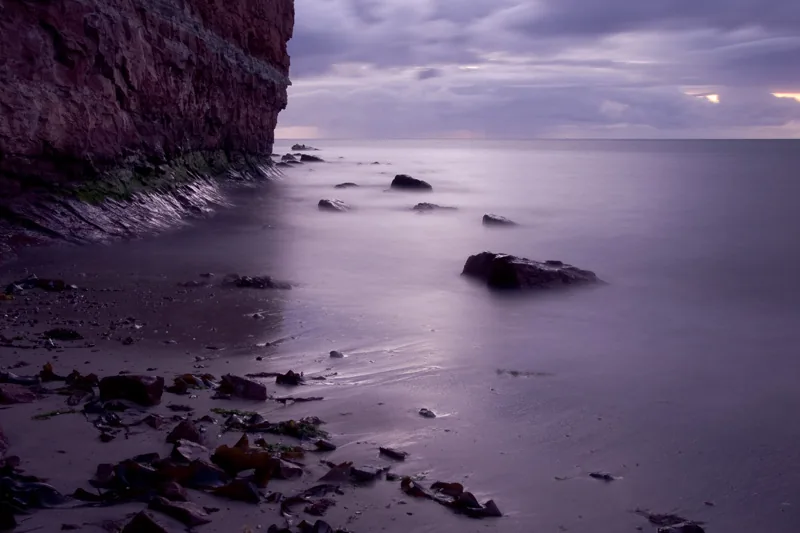
Photographing Birds on Heligoland
Dressing in layers is certainly advisable: standing in a cutting wind for a few hours cools the body considerably, even when it is 17 degrees.
The island is car-free, and its only transportation is local and electric. Walking is therefore the way to get around; traveling from north to south takes no more than thirty minutes. You can reach the cliff by stairs from North Beach or by stairs in the village itself. The village also has an elevator.
Photographing Northern Gannets During Breeding Season
May and June are the northern gannets' breeding season. The northern gannet belongs to the pelican order. Its body is torpedo-shaped, and its wingspan reaches 170-180 cm.
In winter, this bird stays at sea and dives for fish at high speed. Outside the breeding season, its ocher-yellow head is paler. The birds are graceful in both color and build.
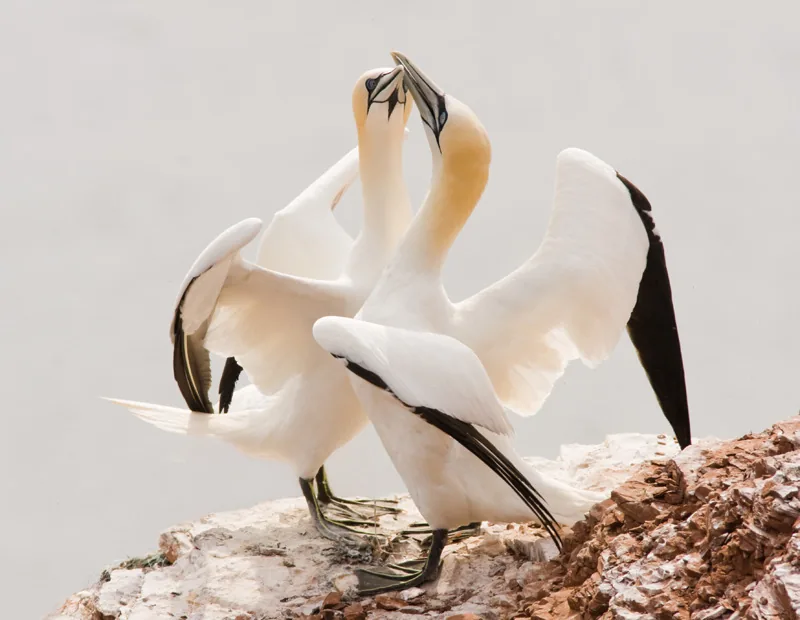
These birds nest and court on the cliffs; their young grow up there and eventually take flight from them.
The unrelenting wind carries northern gannets back and forth, often passing very close by. It is spectacular to watch and provides many photo opportunities.
What Lens Do You Need on Heligoland?
A 200 or 300 mm lens is enough to take beautiful photos. A longer focal length is mainly useful for isolating individual birds from the colony.
The minimum distance is thirty meters, and a 300 mm focal length will be sufficient here as well
A colony can be overwhelming, filled with noise, odor, and constant commotion. Observing individuals and learning to recognize behavior and key moments helps a photo become more than a record of a species; it also gives the image a sense of occasion.
Amid the commotion, you may notice that parent birds continue courting and repeatedly affirm their bond by gracefully stretching their necks and touching their bills together. This behavior continues throughout the breeding period, so parents may still court beside their chick.
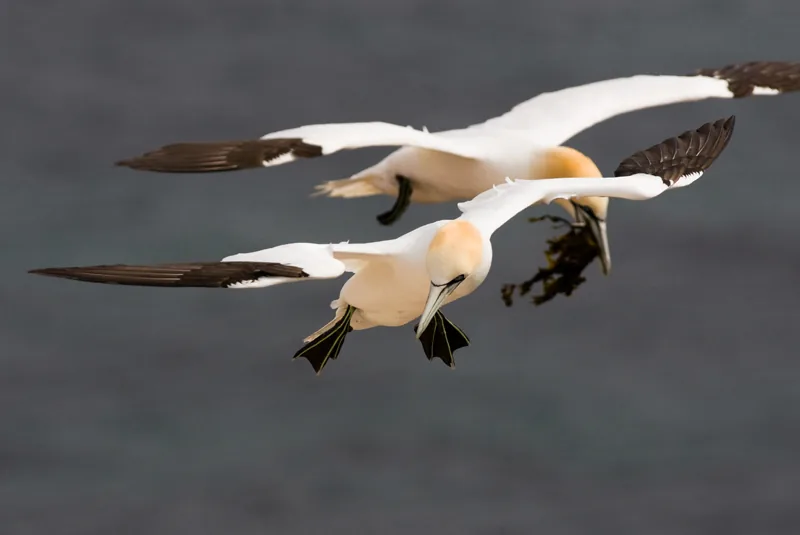
The birds' nests also require attention, and they are constantly handling nesting material. If you watch closely, you can also see the chicks being fed: one parent regurgitates food, and much of the chick's head then disappears into the parent's wide-open bill.
Other seabirds also breed here during this period; northern fulmars, black-legged kittiwakes, and common murres have colonies here.
Photographing Seals on Düne
Düne is a sandy island near Heligoland. Unlike Heligoland, it is quite flat, but it is also small and easy to explore on foot.
There are dunes and beaches, but above all seals: harbor seals and gray seals. Both species lie peacefully beside and among one another in several places and may be approached to within thirty meters, as warning signs indicate. These resting areas are places to which the seals generally return.
The gray seal is larger than the harbor seal, and males can weigh up to 350 kilograms. Young males playfully test their strength, and this continues throughout the day.
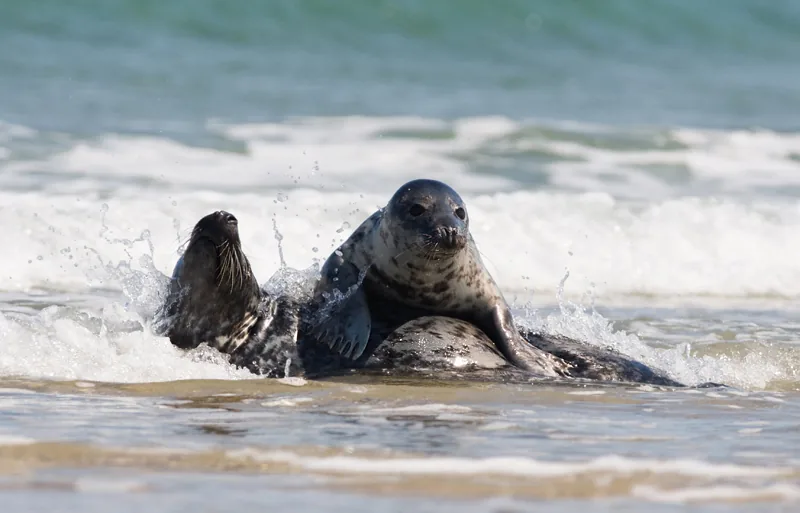
The minimum distance is thirty meters and here too a 300 mm focal length will be sufficient; a longer telephoto reach isolates the animals from the group and can create a close-up effect.
The same advice applies when visiting a seal colony: take time to observe and learn to recognize behavior. Especially if this is your first time seeing a colony or group of animals in the wild, the sheer number of impressions can be overwhelming. Take your time and enjoy it; occasionally lower the viewfinder and simply experience the moment.