photo: © Vincent Mentzel
Vincent Mentzel’s camera has been clicking since the 1960s, and he still shows no sign of stopping. The NRC staff photographer set a standard with his portraits, won prestigious awards, and has numerous photo books and exhibitions to his name. The crowning achievement came with the Rijksmuseum’s plan to include his body of work in the National Portrait Gallery.
“Me, the elder statesman of Dutch photography? That’s not how I see myself.” Vincent Mentzel (1945) casts a thoughtful glance around his packed study in a house along a Rotterdam canal. Filing cabinets hold more than a million negatives, alongside photography magazines, well-stocked bookcases, and stacks of paper everywhere.
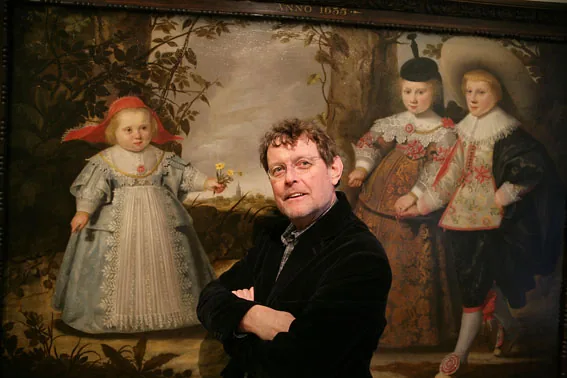
Even the chairs serve a purpose other than the one for which they were intended. “But,” he continues, “that may also have to do with the fact that age does not mean that much to me.” Mentzel would rather reject the honorary title and protests by naming contemporaries who also photograph—“Eddy Posthuma de Boer!”
Mentzel is a photojournalist. In that role, he worked not only in the Netherlands but also traveled to the world’s conflict zones. His photo essays on China, Japan, and Tibet are also highly significant. Yet we know him best as the “photographer of power” during the 1970s.
You may think you can do it, but you also have to prove it
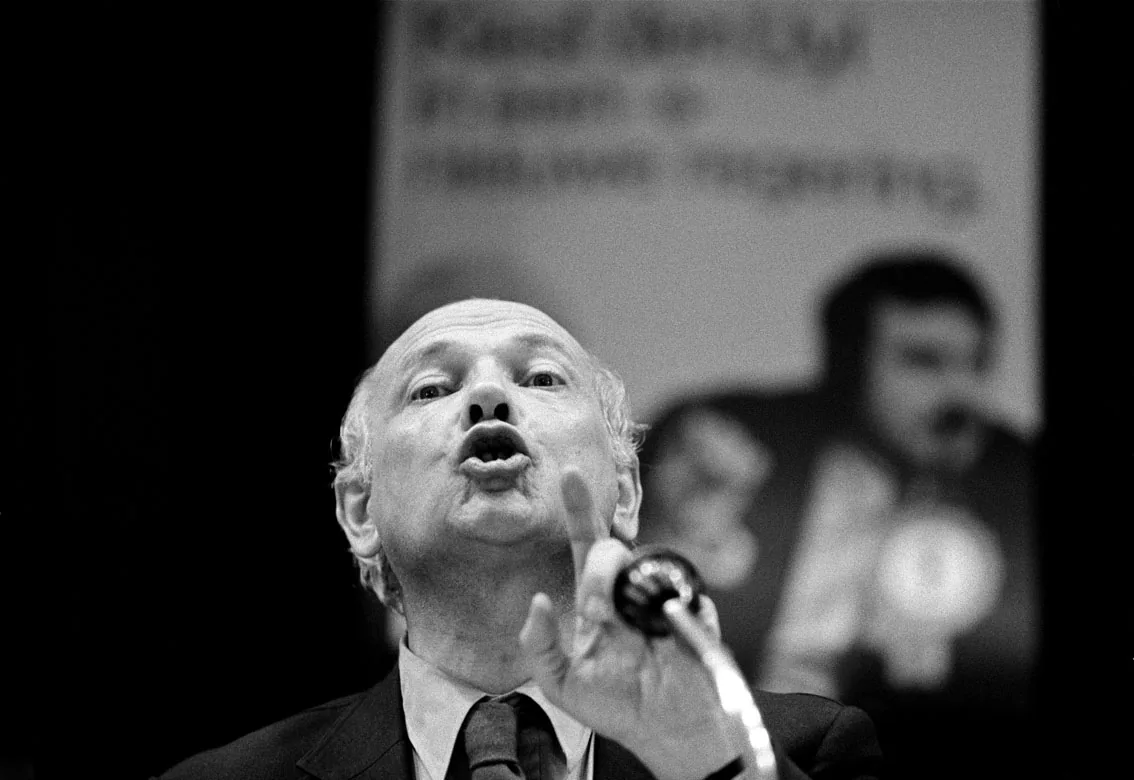
In his long series of portraits of ministers, heads of state, and even dictators from the Netherlands and abroad, his photograph of Prime Minister Den Uyl looking upward occupies a special place. The image was named the Netherlands’ Best Press Photo of 1973 by World Press Photo. That was also the year he joined NRC as a staff photographer, a position he still held at the time of this article.
That is somewhat striking because NRC is a newspaper that relies more on words than images. “I still have to work hard to get my photos into the paper because there is often no room. Images come last. Yet I have the best job in the Netherlands. Because if I want to go to China again—a country that fascinates me endlessly—I can.”
Asked to name a notable period in his career, Mentzel mentions the rise of digital photography. “Suddenly, everything had to be digital. The darkroom at the newsroom disappeared too, something I resisted for a long time. Because what if the queen falls into the water and someone has it on film?”
Incidentally, I notice that during an assignment—out of deeply ingrained habit—I often take only 36 photos...
Mentzel’s resistance was rooted in disbelief. Those were difficult days for him. He had not taken a course and had to teach himself everything. His photographs disappeared into the “invisibility” of discs and drives, which, because of poor cataloging, “didn’t work at all.”
“For a long time, I shot both ways, on negatives and digitally. I couldn’t imagine it could be otherwise.” He has since revised his opinion. “It’s a wonderful development. I’m not a technical photographer and always had to ask how everything worked. It is a blessing that everything can be automatic. Incidentally, I notice that during an assignment—out of deeply ingrained habit—I often take only 36 photos....” (For younger readers: that used to be the standard number of photos on a roll of small-format film.)
If Mentzel has to name one disadvantage of the digital camera, it is that photography has become more “static.” “Many photographers take a picture and then stare foolishly at the rear screen to see whether it worked. That breaks the contact between you and the subject.”
Mentzel does not—never, really—and sometimes, to his great annoyance, he discovers at home on his computer that the color, for example, could have been more interesting. That is why he is enthusiastic about shooting RAW, which offers virtually unlimited options for recovery.
“A little burning, a little dodging. Subduing unimportant details. But I don’t composite anything in! At most, I straighten the photo or remove a small blemish if the person portrayed asks me to.” If there is one thing Mentzel objects to, it is manipulating photographs—especially journalistic photographs, which he believes should be left alone.
There is a perception that the arrival of digital photography also increased the number of photographers. Mentzel does not think so. “The field is thin, and there are no more photographers than, say, twenty years ago. It just shows that earning your place in the sun with a camera is not so easy. You may think you can do it, but you also have to prove it.”
A knot in my stomach every single time
That does not alter his view that Dutch photography is on the rise. Dutch photography is highly regarded abroad, and people in the United States in particular look to the Netherlands. Mentzel says the country has “a strong group of photographers,” not only in photojournalism but also in fashion and advertising. Every day, he sees photographs by Dutch photographers in magazines that are “simply good.”
Mentzel may be celebrated—besides the World Press Photo honor, he won the Silver Camera twice (1975 and 1980) and the Grote Paul award (2007)—but he is anything but blasé. Every day, he feels he has to prove himself. “A knot in my stomach, before every assignment. And then the person I have to photograph says, ‘So what are you going to do? Everything has already been done once.’”
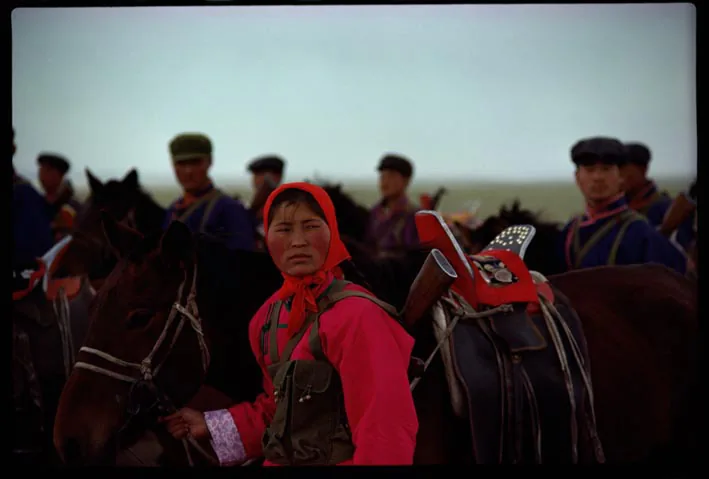
Striking words from a man whose collection was moving to Amsterdam’s Rijksmuseum, where it would earn a place in the National Portrait Gallery—thanks above all to Mentzel’s many portraits of prominent Dutch people. Mentzel hoped the process would be completed later that year, meaning his work would appear there in rotating exhibitions.
He may not be—or want to be—the elder statesman of Dutch photography, but it does underscore Mentzel’s special position in the Dutch photography landscape. “Yes, I think that’s absolutely wonderful.”
Info: www.vincentmentzel.nl