Photo: © Marielle van Uitert
Since 1984, the Dutch Eye Care Foundation, originally established as the Himalayan Eye Camp Foundation, has invested money and expertise in developing eye care in Nepal. Photographer Marielle van Uitert and journalist Piet Arp spent two weeks creating a compelling feature about this deeply rewarding form of aid.
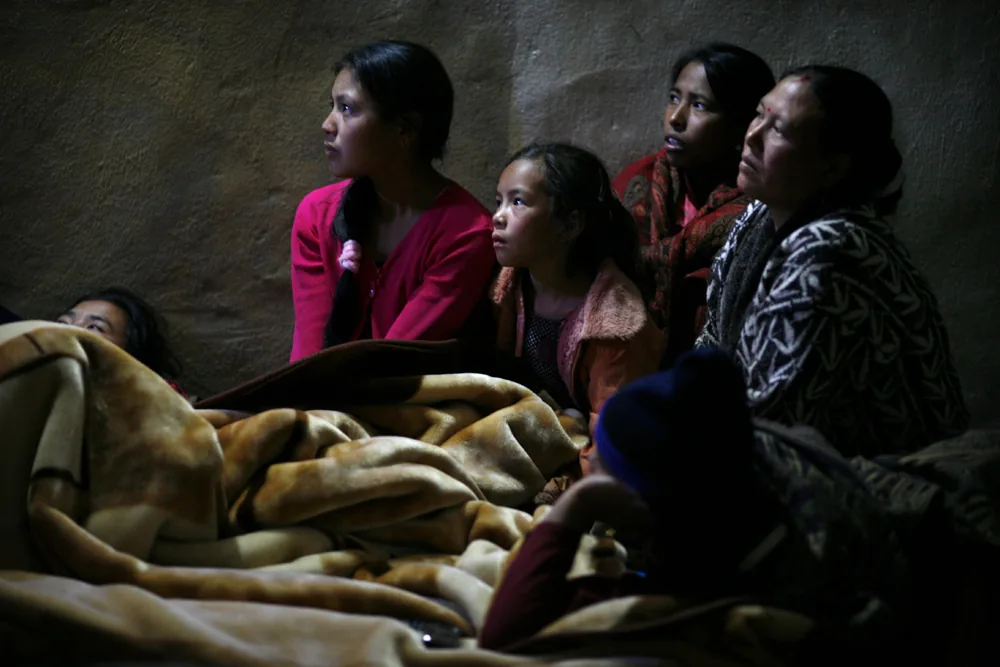
In November 2009, Dutch photographer Marielle van Uitert received a call from the Amsterdam-based Eye Care Foundation about a photography assignment in Nepal. This aid organization actively works to combat blindness and cataracts in developing countries.
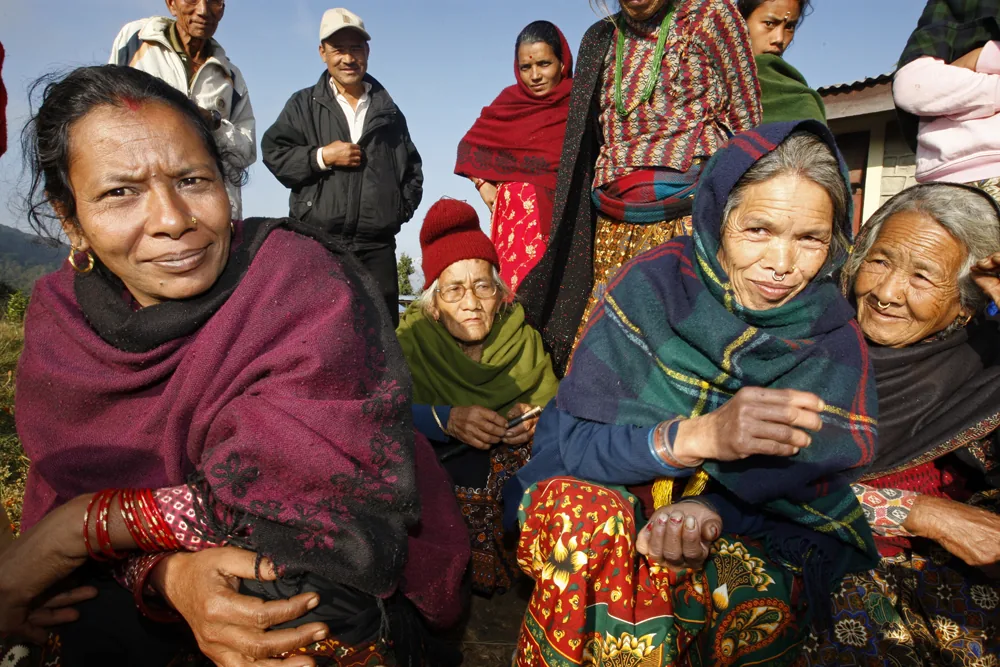
Dutch journalist Piet Arp and video journalist Cassandra Vugts joined the trip and documented the story from their respective areas of expertise. At the time, they were working together with ECF to organize several exhibitions in the Netherlands.
You need certain ideals in life and must continue to believe that, alongside war, truly beautiful things also happen in this world.
“It is wonderful and rewarding work when you meet a blind, hopeless woman who has completely lost the will to live, then see her blossom after this minor procedure because she can see her own children again for the first time in a long while,” Marielle said.
“You need certain ideals in life and must continue to believe that, alongside war, truly beautiful things also happen in this world. It was immediately clear to me that I wanted to go. My aim was to reveal the human side and portray the impact of a minor surgical procedure.”
Cataracts
As in many other Asian countries, cataracts are fairly common. With this condition, the eye's lens becomes cloudy, sometimes at a very young age or even from birth. The person can then distinguish only light from dark and is effectively blind in that eye.

The condition can be treated quickly and inexpensively if enough doctors are available. Many patients have cataracts in both eyes and are therefore completely blind—and dependent on their families. After surgery, the patient is no longer dependent on others
Walking around independently is impossible, because most live in villages on the slopes of the Himalayas. Most remain at home, resigned to their situation. They depend on their household or extended family for food, clothing and shelter. In its early years, the Eye Care Foundation sent Dutch ophthalmologists into the mountains to perform free cataract surgery in short-term eye camps and quickly reduce avoidable blindness.
The Procedure
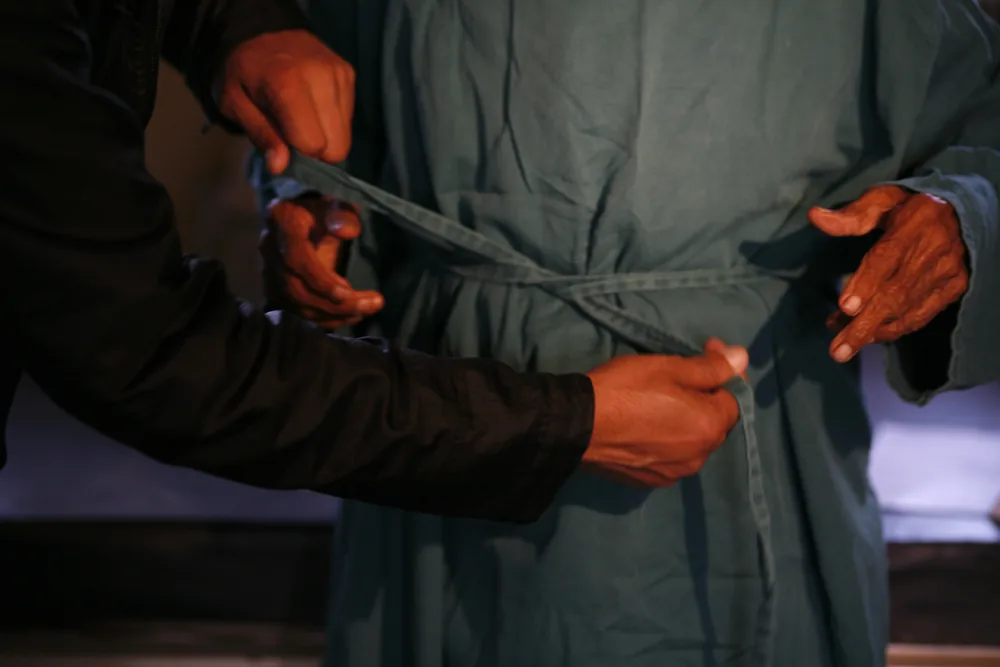
The procedure can be performed under basic conditions and is almost always successful. After surgery, the patient is no longer dependent on others.
By then, so many Nepalese people had been trained as ophthalmologists that Dutch doctors were hardly needed anymore. Dutch donors primarily continued to provide financial assistance, mainly for new investments in hospitals and equipment, and for free eye care for the poorest people. Anyone able to pay for the procedure does not receive this care free of charge.
Independent again in a matter of seconds
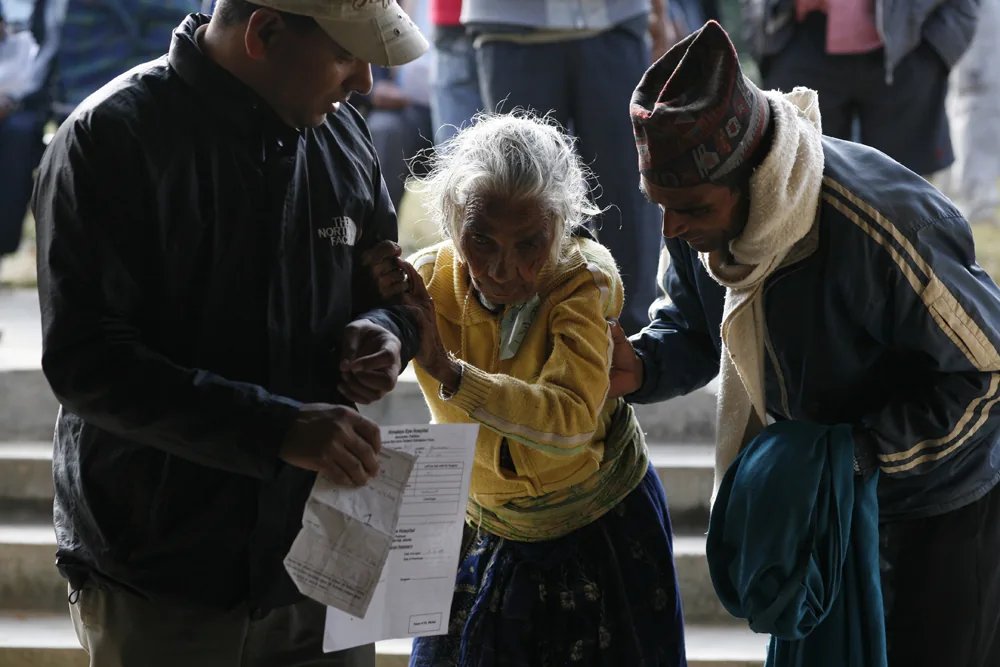
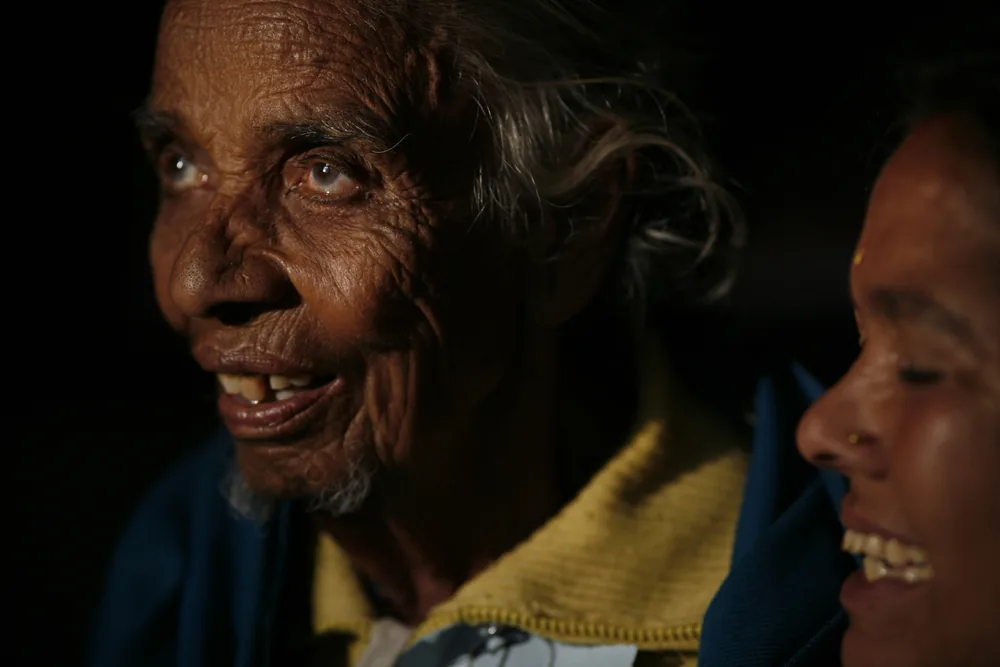
Rukmini Adhikari, 90, is carried into the town of Bhachchek Bazaar, looking like a pitiful shadow of a person. Cataracts have left her blind in both eyes, and she hopes surgery will let her see her children again during the final years of her life.
In the cramped examination room, ophthalmologist Indra quickly determines that both eyes can be treated. “Tomorrow we will operate on the right eye. We will remove the cloudy lens and implant a small artificial one. Two days later, we will do the same with the left eye. Then she will be able to see well again.”
The bandage is removed and she looks around. In a matter of seconds, Rukmini is once again the woman who commands her children with authority. She is very pleased with the result. Her children once again rush to do her bidding while she confidently strikes up a conversation with another patient. The operation is a success.
Just in Time
Indra is concerned when Sarala Tamang, 3, is carried into the temporary clinic by her mother, Junisa, 30. It is not entirely clear what happened, but the girl suffered an eye injury a few days earlier while playing with her brother.
Sarala probably fell and damaged her cornea. In the village where she lives, the girl received some medication, but it does not appear to be helping.
Sarala Tamang has an eye injury and is accompanied by her mother, Junisa. Indra takes a close look. The cornea is damaged. To save the eye, Sarala will have to go to Pokhara because treatment of the perforated cornea must be performed under general anesthesia for the toddler. “She needs surgery immediately. Even then, we will have to wait and see.”
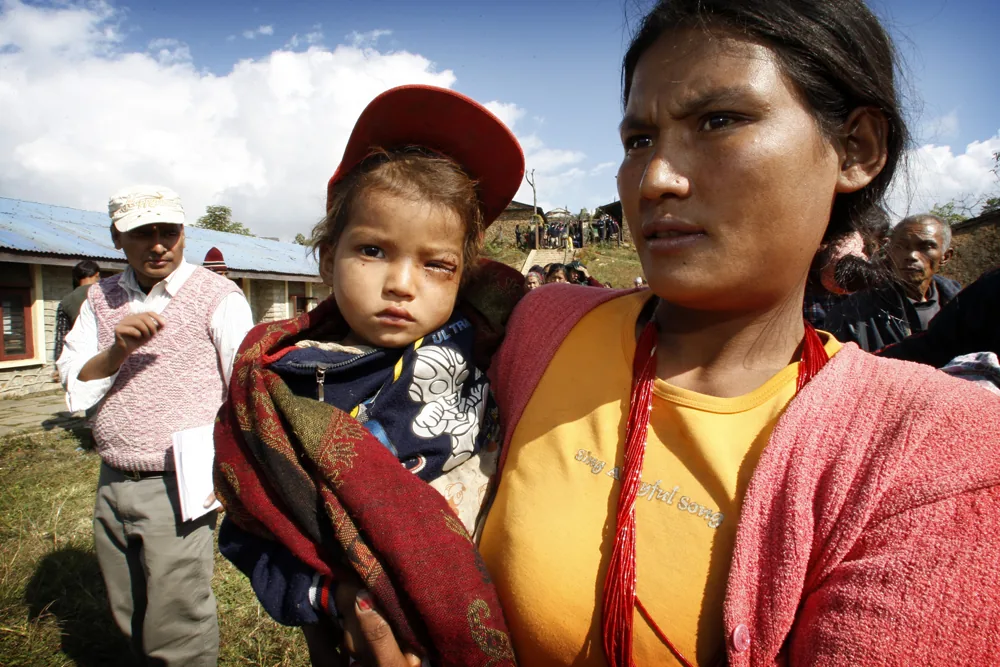
The mother listens to the diagnosis stoically. No, she does not have the one hundred euros needed for hospital treatment and lodging. And no, she cannot afford the bus either, which costs ten euros. The problem is that her husband is unable to work or care for the children. Junisa cannot simply travel to Pokhara because it is harvest season, the only time of year when she earns some money for the family.
Indra offers to have the hospital pay the treatment and lodging costs for mother and child. Junisa remains downcast. She cannot pay for the bus either. The reporting team decides to cover that. After consulting other doctors, Indra makes a decision. In a highly exceptional move, he sends one of his eye team's two off-road vehicles on an extra trip to the hospital.
She will probably never realize that pure luck alone saved her left eye
Bhachchek Bazaar is the last town in this part of the mountains that can be reached by car, and only during the dry season.
After an hour, Junisa relents and gets into the off-road vehicle with her little daughter. An acquaintance will alert her husband. Indra remains concerned. The eye should have been operated on days earlier. It has deteriorated so much that he cannot say whether Sarala will ever see with her left eye again. “Even so, it is extremely important that she goes to the hospital. If we do not treat that wound very quickly, the eye will become infected and ultimately have to be removed.”
A few days later at the eye hospital in Pokhara, Junisa says the journey was very difficult. Both she and Sarala became extremely carsick. They arrived late in the evening, and Sarala underwent surgery first thing the next morning.
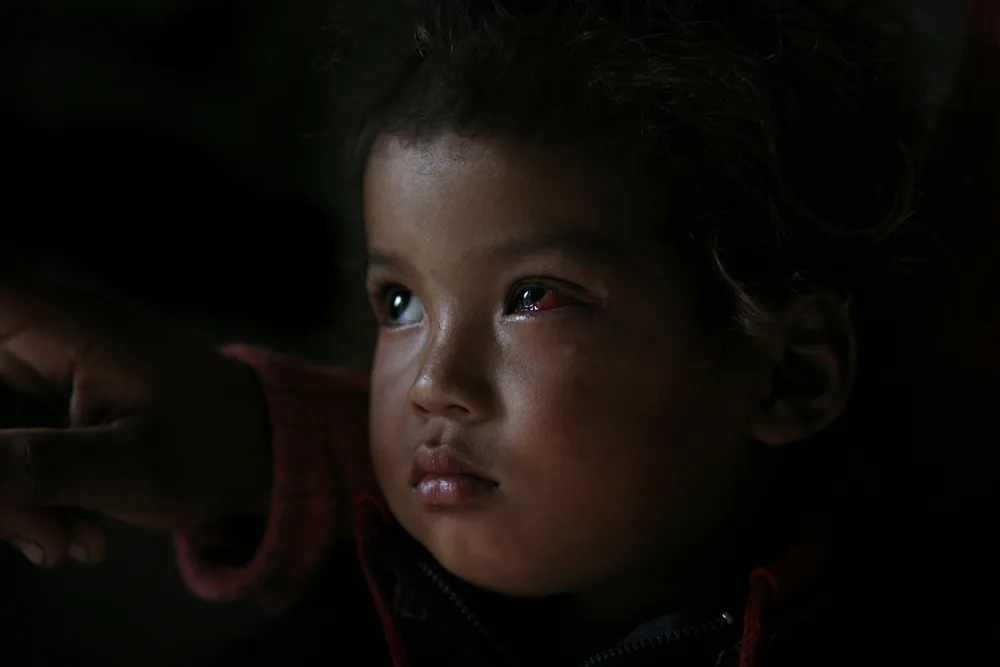
A few days later, word arrives that Sarala can once again see reasonably well with the injured eye. Indra thinks she will probably never realize that pure luck alone saved her left eye. “Every day, one or two acute cases like this arrive at the eye camps. We are almost never able to send our vehicle back. This time, because a larger team was traveling with us, we happened to have an extra vehicle available. Naturally, we made use of that opportunity in this case.”
The Photographer
Working at high altitude and walking mountain paths with two heavy cameras around your neck—a Canon 5D and an EOS 1D Mark III—is physically demanding. But the work on location was not the only challenge; the journey there was especially difficult. It took us an entire day in a 4x4 to reach Bhachchek over extremely rough terrain.
The roads had turned into mud tracks, and guardrails were unheard of there. After a full day of jolting and bouncing—with video journalist Cassandra Vugts and me sitting in the back on a far-too-small seat—we reached our destination. Once there, we slept in people's homes in the same ‘living room.’
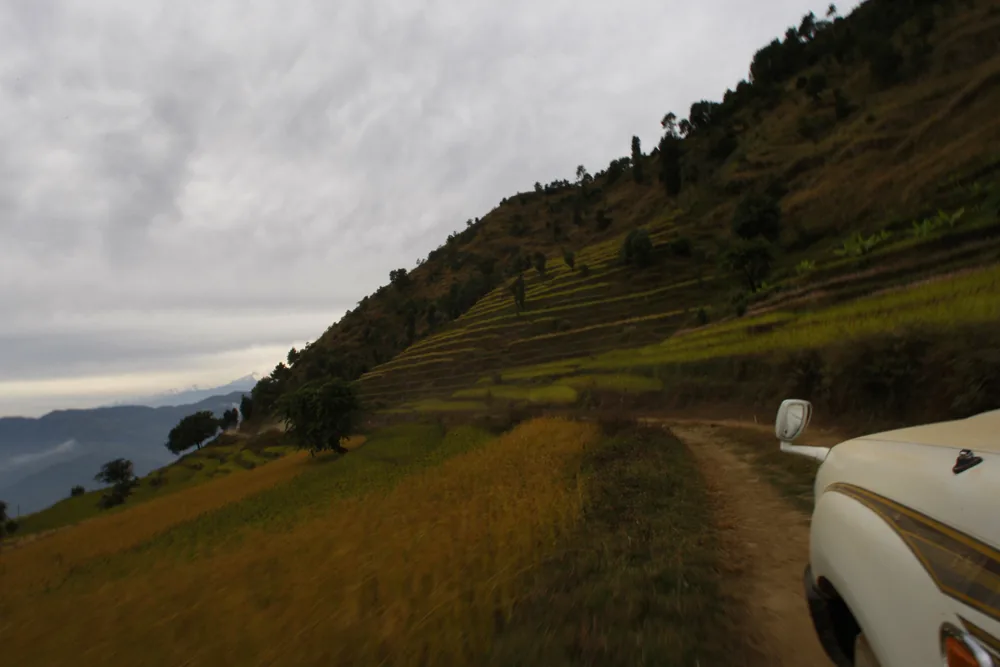
On the Way to Bhachchek
The nights were short, and at 05.00 a.m. we were awakened by a Buddhist mantra. We set out for the eye camp in the mountains and documented the entire process and atmosphere there. It became dark early, so we had to make the most of the daylight. When I was finally able to review my images in Pokhara after four days, I discovered that a speck of dust had appeared in all of them. Enlarged, it became a large spot.
As a photographer, you not only capture images within a frame; you also expand your own frame every day
I immediately opened my camera and found the problem behind the mirror. I managed to limit the damage with a blower brush, but correcting it later at home was a major task. Despite the physical hardships—no shower and no running water—I had a very special journey that I would repeat without hesitation.
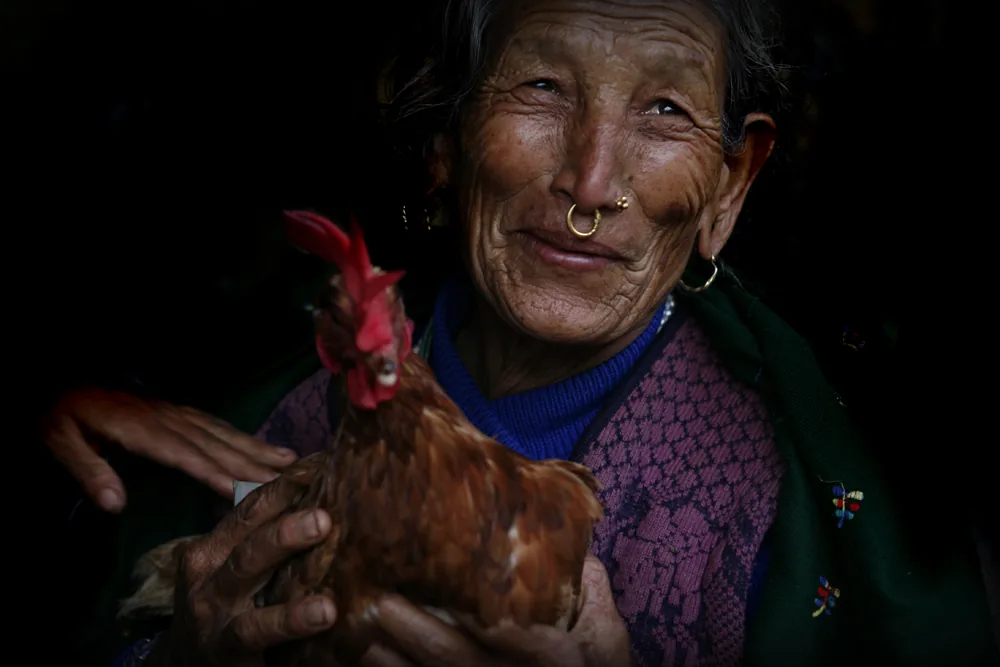
The gratitude of the Nepalese people and their hospitality felt like a warm blanket. Christians, Hindus and Buddhists live together here in harmony, and I am grateful to have encountered all these outlooks on life. As a photographer, you not only capture images within a frame; you also expand your own frame every day.
Eye Care Foundation Amsterdam
Eye Care Foundation Amsterdam arose from a merger between Eye Care Worldwide and Mekong Eye Doctors. In Nepal, India, Pakistan, Cambodia, Vietnam and Laos in Asia, and in Djibouti, Ghana and Tanzania in Africa, the Eye Care Foundation works with other aid organizations to create sustainable eye-care infrastructure.
Usually, one or more provinces are adopted, and the foundation supports the establishment and equipping of hospitals, the training of doctors and assistants, and the education of health workers in remote, hard-to-reach areas. To provide care in these inaccessible regions, medical teams travel there for short-term eye camps.
The previous year, Nepal recorded for the first time that the rise in blindness caused by cataracts had leveled off. The number of people with cataracts was declining. Remarkably, doctors and assistants from Nepal and Vietnam were by then sometimes assisting at eye camps in other countries as well.
In addition to cataract operations, which cost about 35 euros per patient, the foundation also ensures that schoolchildren receive eye examinations and, when necessary, prescriptions for glasses.
The foundation depends on donations: IBAN NL14 ABNA 0543 4445 54, payable to Eye Care Foundation Amsterdam.
More information: www.eyecarefoundation.nl
This article was written by Piet Arp