After my photo report in Turkey, I wanted to compare the refugee crisis there with the situation in Lebanon. In Turkey, I had been surrounded by Assad's spies and had nearly been forced to surrender my cameras because I had entered a refugee camp illegally... I was not going to let that happen a second time.
The major difference between Turkey and Lebanon is the absence of such camps in Lebanon. Most Syrian refugees stay with relatives or rent a small plot of land where they put together shelters made of wood and carpets.
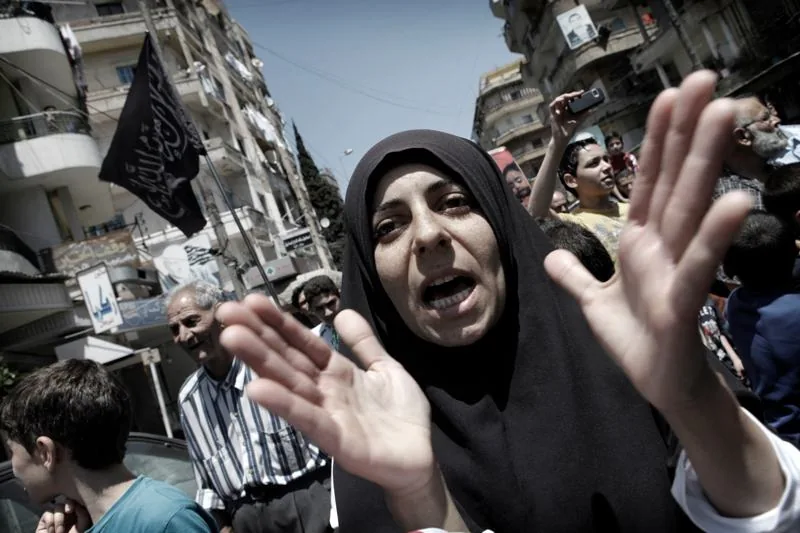
Lebanon – Protests against Bashar al-Assad's regime were growing. After Friday prayers at the Sunni Hamza Mosque, Syrian refugees and Lebanese supporters alike took to the streets of Tripoli.
Fatima, 36, lived in a dark, cold mosque in Arsal, in the Bekaa Valley. She was both frightened and angry as she held up her two-year-old niece Shahad, who had been shot by a sniper in Al-Qusayr. The girl was paralyzed from the waist down. Her mother had gone to Syria to get fuel and never returned.
Fatima had crossed the Lebanese border illegally in search of medical care for Shahad. "If we cried oil instead of tears, NATO would help us," Fatima said.
If we cried oil instead of tears, NATO would help us
Taking photographs was difficult. The mosque was pitch-black, so I had to make do with a sliver of light from a niche. Fatima was afraid to be photographed, like nearly all Syrian women in Lebanon. Yet she wanted this story to be told. I was allowed to take only one photo and had to operate my camera controls by touch.
In Wadi Khaled, on the northern border with Syria, I was forced to get out of the van at a Syrian military checkpoint and was questioned for several hours. They sent me back to Tripoli to request permission from the intelligence service to enter this dangerous area as a journalist.
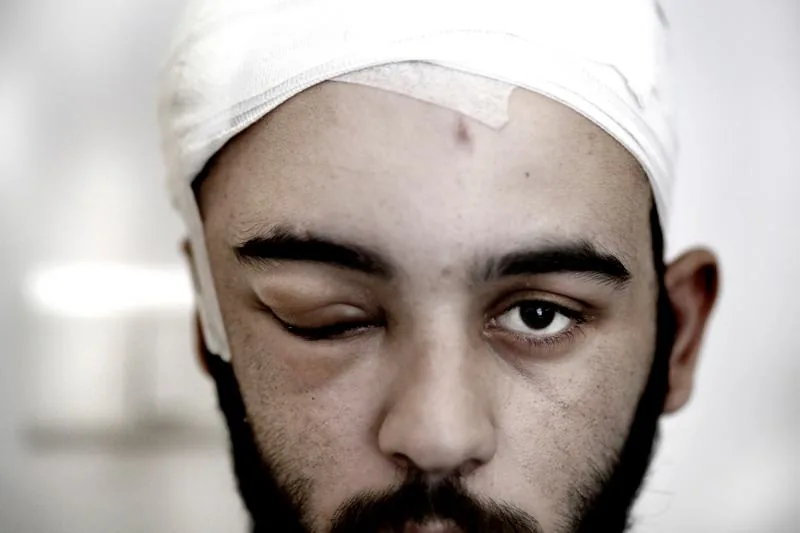
Lebanon – In a hospital in Tripoli, a Syrian refugee sat staring into space. He had been shot in the head by the Syrian army. His brain no longer functioned properly.
Eventually, I managed to enter the area with my fixer and translator. I was taken close to the border, where I saw Syrian soldiers readying their rifles. They shouted at me to take a photo, but I knew that if I aimed my camera, they might aim their machine gun. I kept my cameras as low as possible.
The tension was overwhelming when my driver suddenly turned around and pushed me out of the vehicle a little farther down the road. I was forced to run across an open field with my cameras, not knowing what awaited me. My supposed 'helpers' suddenly no longer spoke English.
I had to keep my head down as I looked at all the bullet holes around the window above me
I ran, ducked, and prayed until I finally reached a bullet-riddled bunker, where my fixer pulled me inside. Syria lay directly ahead of me. I could not see the snipers, which made it even more frightening. I shouted that I had no interest in photographing this damn border, but my words clearly fell on deaf ears.
I had to keep my head down as I looked at all the bullet holes around the window above me. My fixer then forced me to stand up and point my camera toward Syria, preferably at the military posts. I refused to put my head through the opening, but I had no choice. I took a few shots through the opening and ran back across the open field with my cameras to the van, which was safely parked behind the bunkers.
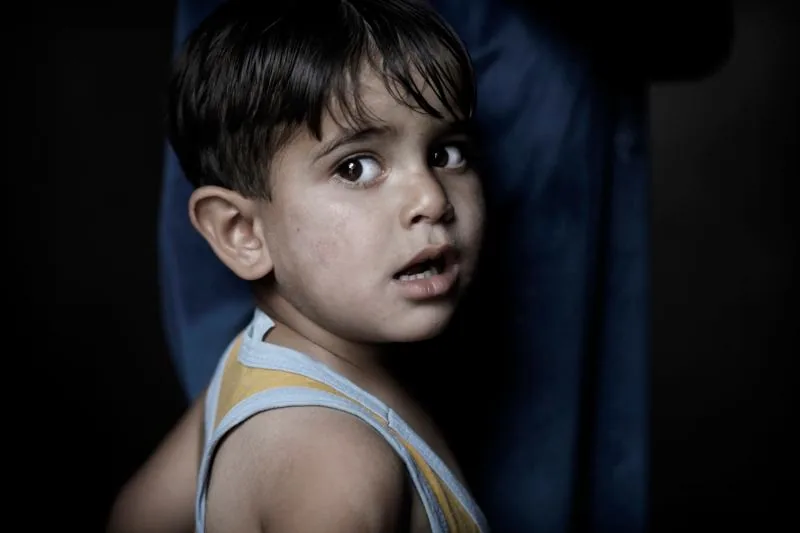
Lebanon – A boy who had fled Syria lived with his mother on an abandoned chicken farm. He was constantly afraid and had nightmares at night about the horrific killings he had witnessed.
I was furious when I learned that two Lebanese journalists had been shot dead by Syrian snipers at exactly the same location. Eventually, we left this street, where every house had been hit by gunfire and children could play only behind bunkers.
Later that same day, I had to report to the intelligence service in Tripoli, where I was expected to show all my images before leaving Lebanon. When I arrived, all hell broke loose... mortars and bullets filled Tripoli's humid streets, sparing me an interrogation. Tripoli was caught between Sunni opponents and Alawite supporters of the Assad regime.
The women did not dare be photographed for fear that their families in Syria would be tortured
Ten people died that evening. Despite the escalating violence, demonstrations in the streets of Tripoli continued to grow. Anti-Assad songs were openly sung and chanted. Syrian and Lebanese demonstrators stood together against a regime they believed would ultimately have to relinquish power.
As a photographer, I encountered enormous obstacles in Lebanon. People were deeply afraid of photographs because family members were still in Syria. The women did not dare be photographed for fear that their families in Syria would be tortured by the Assad regime.
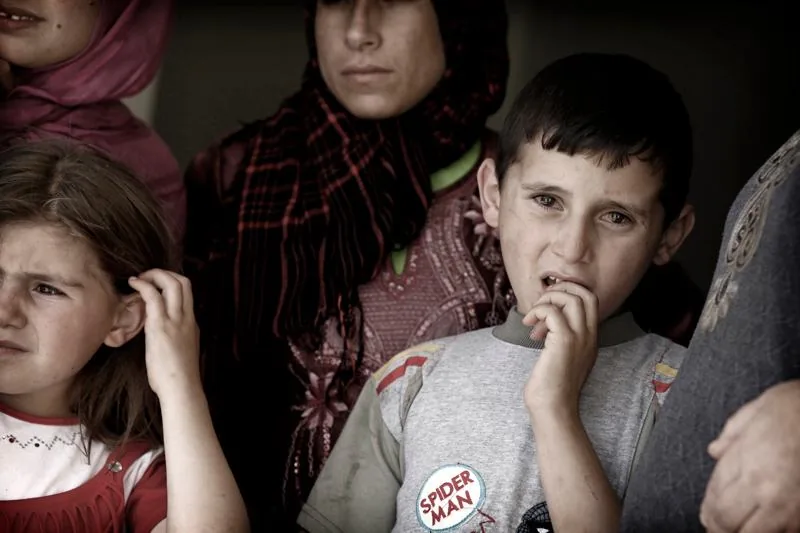
Lebanon – A boy had lost his entire family in Syria. He made it to Lebanon on his own and lived with other families in an abandoned school in Wadi Khaled.
After more than a week, patience, dedication, and above all respect and honesty finally paid off. People got to know me and eventually approached me themselves to share their stories. I am deeply grateful to these courageous people and fully committed to bringing their stories to the outside world. It may be only a drop in the ocean... but let it be one that continues to reverberate for a long time.
This photo series was made possible in part by the Postcode Lottery Fund and Free Press Unlimited.
More information at www.paralleluniversum.nl.