Photographer Tom van der Leij travels the world, encountering everything from wildlife to vibrant cities. With the FIFA World Cup taking place in South Africa this summer, we are publishing a miniseries about the country. Part 2: the Wild Coast
My first visit to the Wild Coast, in the former homeland of Transkei, was during an exchange program between a university of applied sciences in Utrecht and Rhodes University in Grahamstown. Every weekend I set out with two friends, Merei Dekker and Elles van Gelder. Both now work in journalism: Merei at SBS6, and Elles in Johannesburg as a correspondent for RTL, De Pers, and Radio Netherlands Worldwide.
The next morning the sun shone and we arrived in paradise
When we once had a long weekend off, we decided to travel to the far northeastern corner of the Eastern Cape. Friends told us that the Xhosa people—known for the click sounds in their language—lived there in round huts made of clay, straw, and cow manure. “They grow their own crops and keep chickens, cattle, and horses,” my South African fellow student Howard Drakes told me. He also knew a great deal about the region's history.
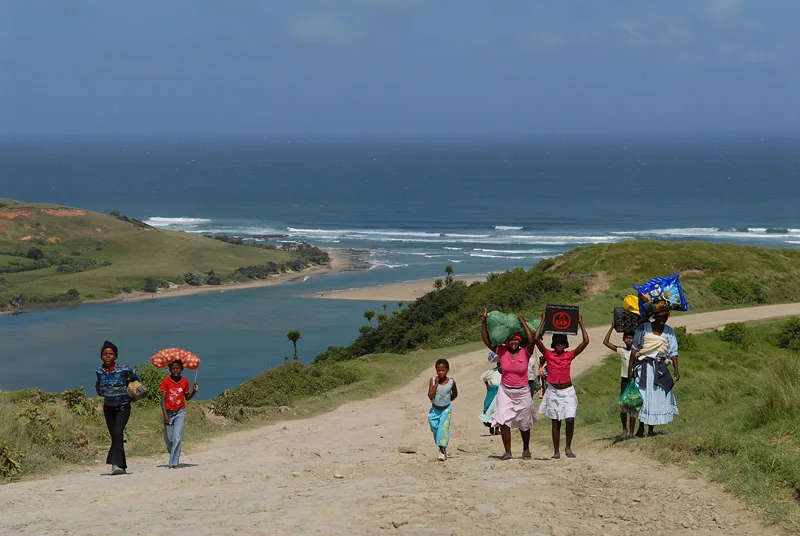
For example, the former apartheid regime designated several so-called homelands where the Black population was required to live. Transkei was the largest. Major ANC figures such as Walter Sisulu and Nelson Mandela were born here. For years, white people did not dare show themselves in the area.
The authenticity, the tribal culture and especially the breathtaking coastline are the attractions
On that first journey through Transkei, our grueling trip ended in Mpande, a hamlet where a white man named Dillon Harvey had established The Kraal backpackers' lodge. During the final hours we drove in pitch darkness and pouring rain, dodging deep potholes, drunk drivers, and Nguni cattle—an ancient breed—on the road.
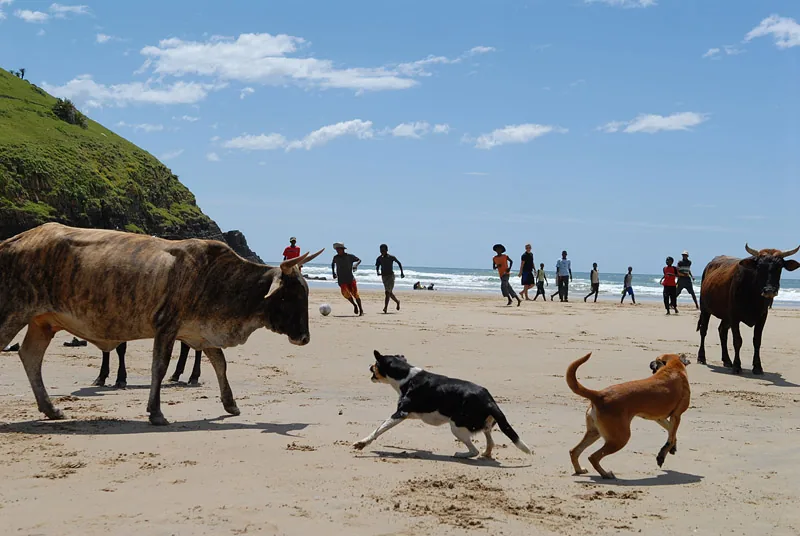
The next morning the sun shone and we arrived in paradise. That's what it felt like. Xhosa women came by in the morning with fresh oysters, we rode on horseback to a shipwreck and drank home-brewed beer with the local chief.
Wide rivers that flow into the rugged coast along which you saw dolphins and whales jumping
I discovered that using fill flash when photographing Black people in daylight worked very well. The Wild Coast lived up to its name, with broad rivers meeting a rugged coastline where dolphins and whales could be seen leaping.
Nowadays, the Wild Coast is no longer systematically skipped by tourists. Many young people in particular find their way to well-known places such as Port St Johns, The Hole in the Wall and Coffee Bay.
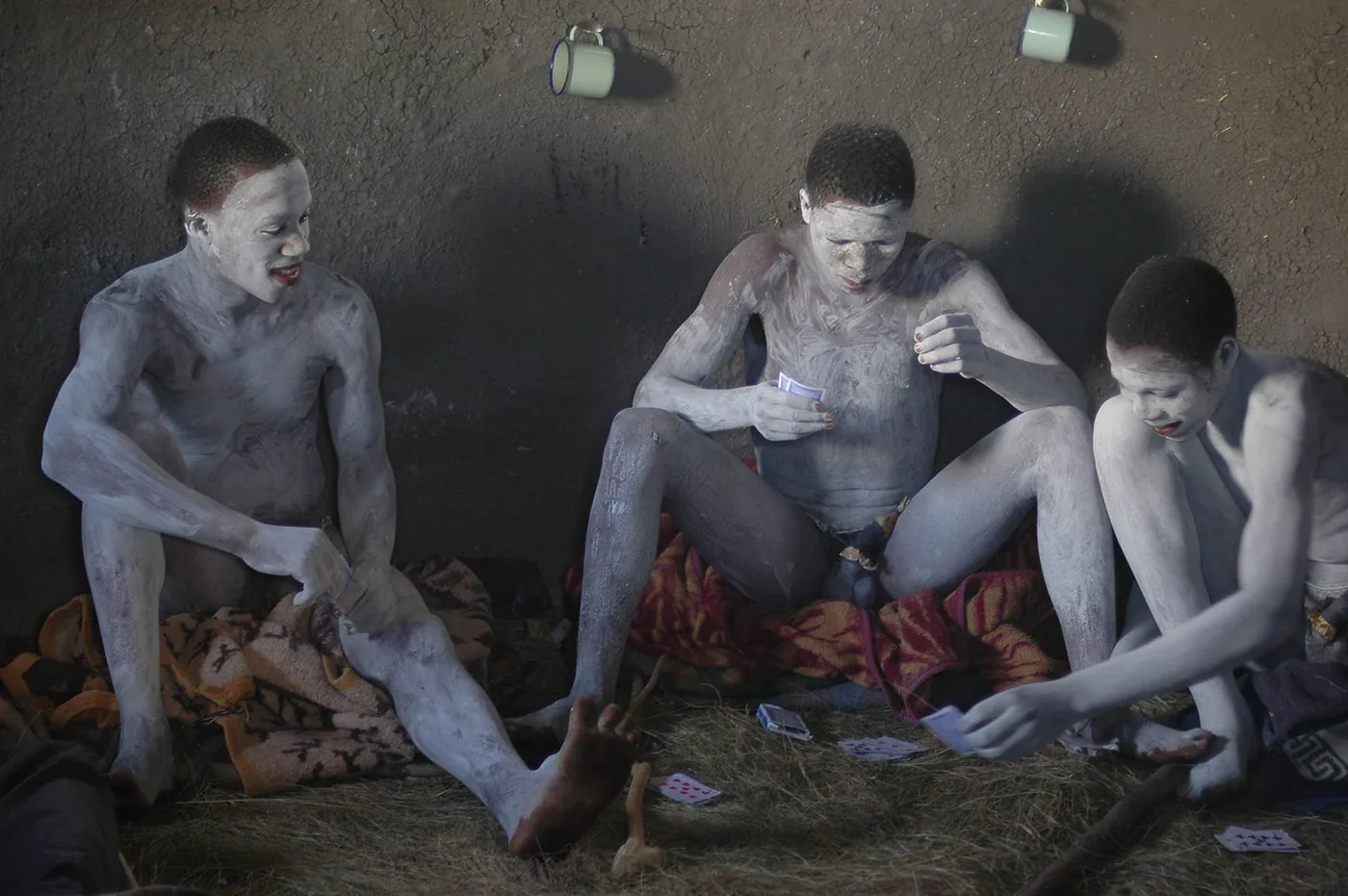
They feast on dagga (weed) or the hallucinogenic mushrooms that grow on horse turds. Since the abolition of apartheid, more and more white South Africans are visiting the area.
I discovered that using fill flash when photographing Black people in daylight worked very well
The authenticity, the tribal culture and especially the breathtaking coastline are the attractions. Hills that roll into the wild, warm Indian Ocean, turquoise rondavels (huts) that are spread like tufts across the landscape and the rich Xhosa culture, that is the coast of the Transkei
The interior of the Transkei is less visited and perhaps less attractive to tourists due to the lack of the ocean. It has its own charms.
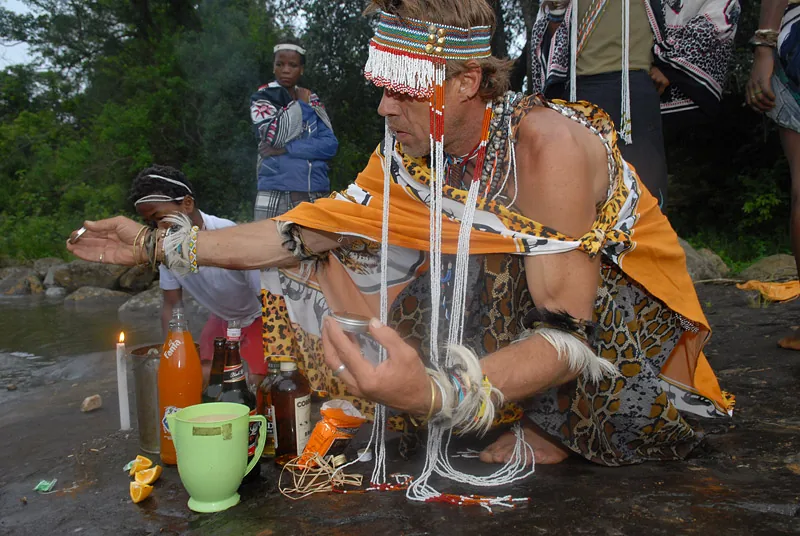
The white traditional healer (Sangoma) Chris Ntombemhlophe Reid lives near Lusikisiki.
It is quite a trip to get there, but then you are really in the heart of the Transkei. You have to cover the last hour on foot. Chris has been Sangoma for fifteen years. He was a multi-millionaire in his “previous” life and now he lives with a few others in a few huts in the middle of nowhere. He organizes ceremonies and you can even apprentice with him if you have had your Sangoma calling. A unique event for every photographer!
The Transkei has stolen my heart; I visit several times a year and have seen the region change over the past decade. At that time there was no electricity or running water and there was a paved road.
Since the ANC came to power, deprived areas have also received help. Schools are built, hospitals are established and the elderly receive pension payments.
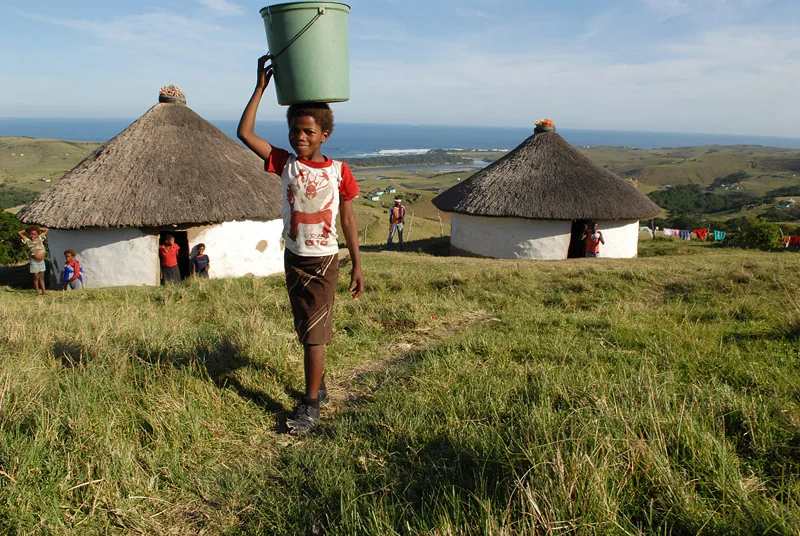
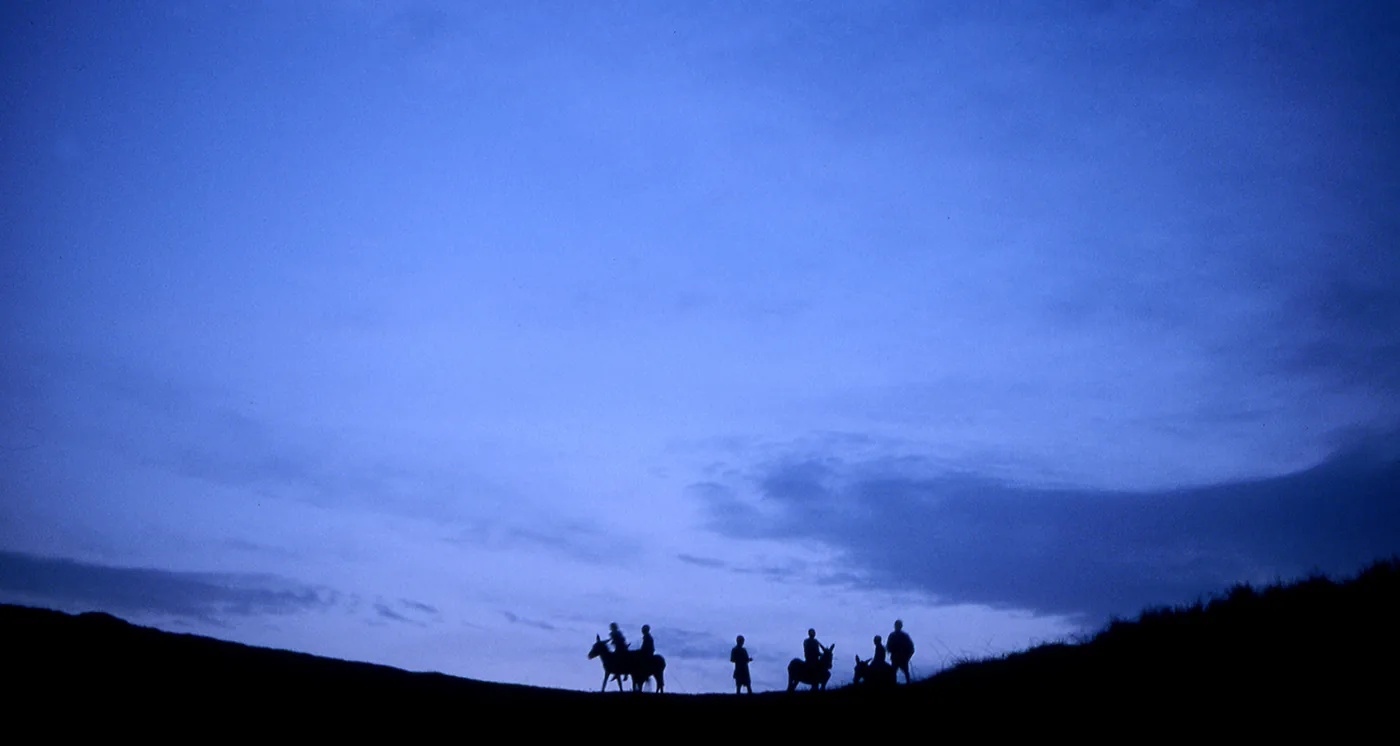
But this part of the country is still one of the poorest regions. The rural, primitive life has its charm for an outsider; it can produce quite photogenic pictures; girls balancing buckets of water on their heads as they walk back from the river to their hut. Or at nightfall, use a tripod to capture the contours of shepherds bringing in the cattle.
I must admit that I also handed out quite a few pens and pencils.
Over the years, in addition to cheap accommodation, lodges and resorts have also been added. Tourists no longer only travel with backpacks but even with trolley suitcases.
Tourists change the behavior of the local population partly by introducing Western habits and customs. Some photographers/tourists give money or food for a photo. That creates a begging culture and you can't blame people for asking every photographer for something. I must admit that I also handed out quite a few pens and pencils.
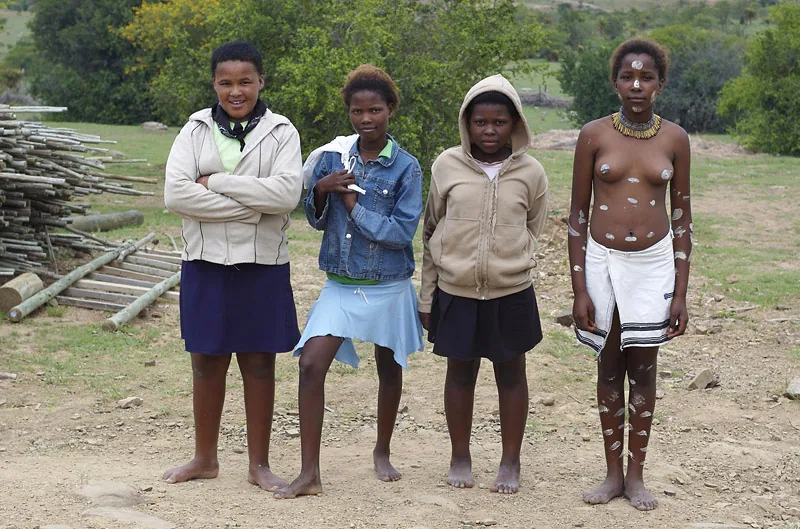
The Transkei, the Wild Coast, its inhabitants and traditions are changing. Where children used to run behind the car and welcome you, they now loudly ask for food or money. You see so-called traditional Xhosa women sitting on the side of the road smoking pipes. When you take a photo, you get a hand pressed under your nose and ask if you want to pay.
If you go here; bring enough memory cards and batteries!
You can also see that, alongside emerging, more commercial operators (meaning white) South Africans are working with local communities to build eco-friendly accommodations in which local residents become co-owners. Bulungula Lodge is one example: a beautiful place beside a river on the ocean, benefiting the entire village. If you visit, bring plenty of memory cards and batteries!
The N2, the road that runs through the Transkei, passes Qunu. Nelson Mandela has a house in this village on the N2. He can be found there several times a year.
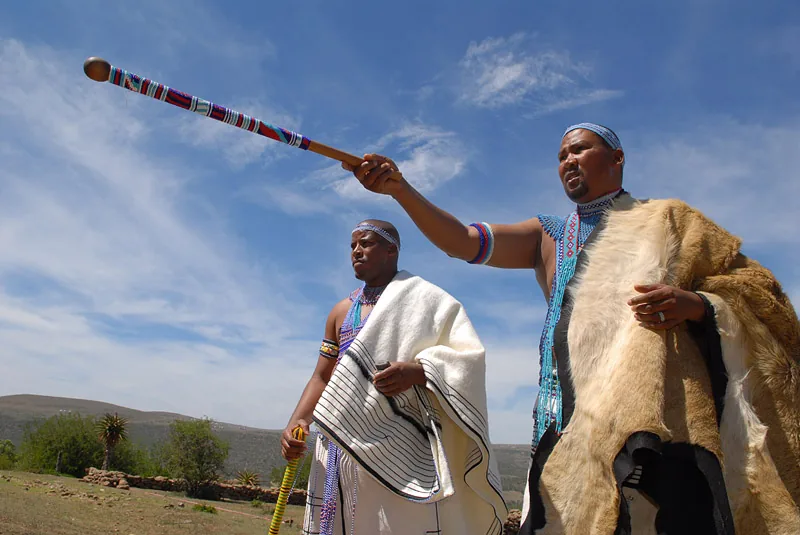
His grandson and favorite, Chief Mandlesizwe Zwelivelile 'Mandla' Mandela, also lives there, partly in his grandfather's house. Alongside his work as a politician and businessman, he fulfills his responsibilities as chief of his clan. He provides AIDS education and upholds traditional Xhosa values and customs. I have had the honor of accompanying and photographing him several times.
The Transkei is unavoidably changing, but it will remain photogenic no matter what.
For example, I was once with (former fellow student and friend) Howard Drakes in Nelson Mandela's house with his grandson Mandla while his grandfather was in the room next to us. I used all my charm and persuasion to get a photo of the two of them, but the lively legend was completely shielded by his PR lady. It made me quite frustrated. This was my chance, I thought. But afterwards I understood it, how often he has to do things. It was a shame.
People like Mandla, Dillon or Chris make the Transkei what it is; a unique area. If, like me, you have this area in your heart, then the trip along the coast is an absolute must. You will pass through the beautiful Mkambati and Dwesa nature parks and really come into contact with the Xhosas. The Transkei is inevitably changing, it has its pros and cons, but it will remain photogenic no matter what.