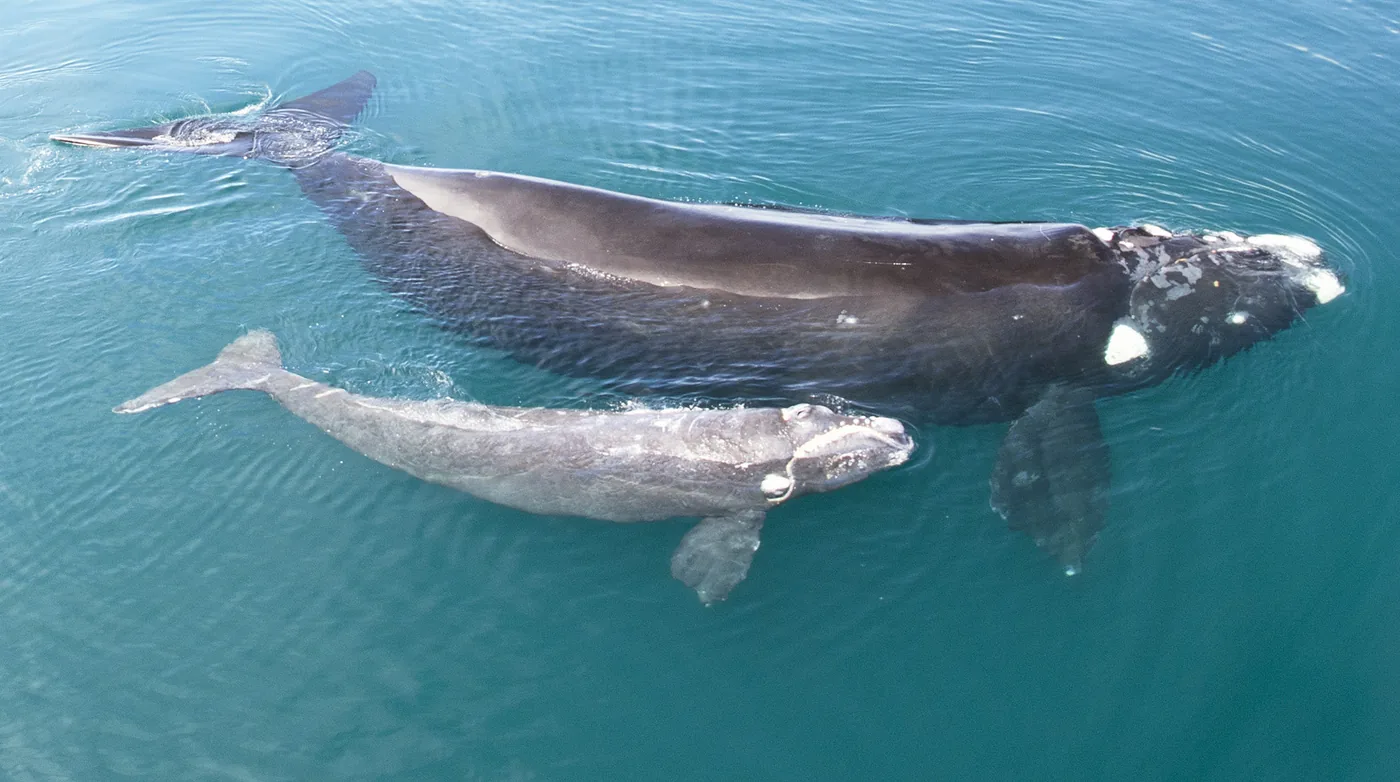
photo: © Tom van der Leij | While sailing, the southern right whale hangs upside down to get some sun on its body
Photographer Tom van der Leij travels all over the world, encountering every kind of subject. He took a bus from Buenos Aires to the Valdés Peninsula to photograph whales.
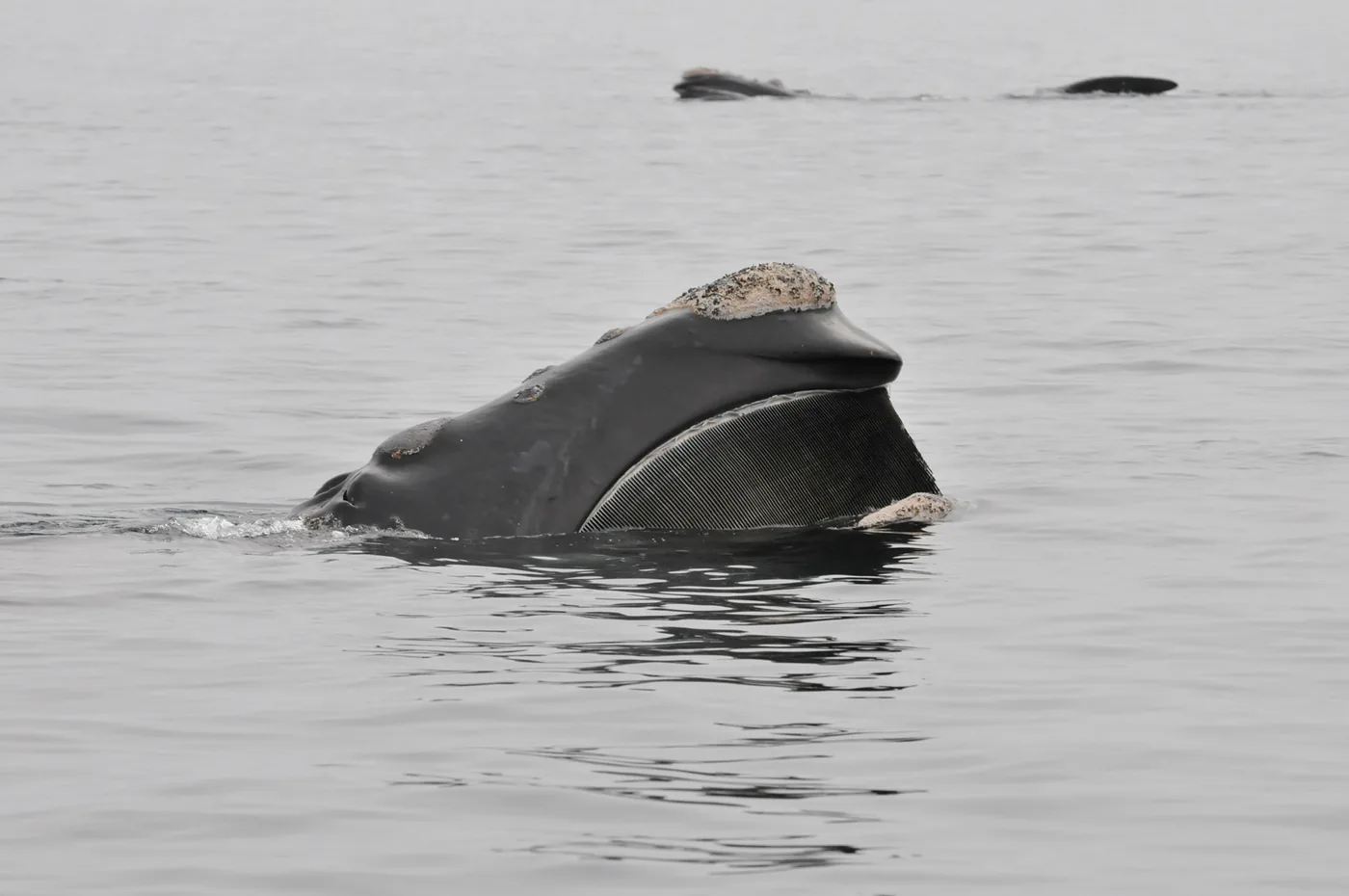
Every spring, hundreds of these giants of the earth gather here. They relax, mate, and give birth to their young. They are southern right whales, known in Dutch as Zuidkapers. Reaching lengths of up to fifteen meters, they spend several months each year around the UNESCO World Heritage Site of Península Valdés.
They are exceptionally approachable, gentle animals, offering a unique opportunity to see and photograph them at very close range. Six companies organize whale-watching trips from the village of Puerto Pirámides, which lies within the national park.
I expected that I would not be the only person eager to see these animals, but I did not know the region was also extremely popular with Dutch visitors. I meet several at the place where I am staying, later encounter an older couple at the bus station, and share the whale-watching trips with Dutch couples.
Alejandro Avampini, a nature photographer and the owner of Del Nómade Hostería Ecológica in the whale-watching village of Puerto Pirámides, speaks highly of his Dutch guests. ‘In September, the film crew from Waar is de Mol stayed here, with Johnny de Mol and Angela Schijf. They were very nice.
They are exceptionally approachable, gentle animals, offering a unique opportunity to see and photograph them at very close range
Your compatriots are enthusiastic in general, and they always arrive with a carefully thought-out plan. They always have good equipment, and their clothing prepares them for the worst. Haha—sometimes they are a little too well prepared.’
I think I know what he means. I can often pick out the Dutch travelers on my journey without fail: couples wearing matching unisex clothing, men and women dressed in the same blue or red fleece jackets and zip-off pants, with practical hiking shoes underneath. I am not always inclined to reveal that I am Dutch too. The most entertaining part is seeing whether they also recognize me as a stereotypical Dutchman.
After so many miles in foreign places, it is nice to speak Dutch again. That down-to-earth outlook and straightforward logic can be refreshing. I do not feel that way, however, about Frank and Desirée on my first whale-watching trip.
Windbreakers, zip-off pants, sturdy athletic footwear, scarves around their necks, and caps on their heads—all for a ninety-minute boat ride. Both have cameras around their necks: Desirée gets to use the compact model, while Mark operates the SLR. First, I listen to what they have to say to each other.
It is whale season now, but by March these animals will have made way for the orcas
‘Frank, did you get that one?’ Desirée lets her own camera hang and directs her boyfriend. ‘Pay attention, Frank—you missed another one, and there is one jumping!’ After more commentary, Frank asks, ‘Would you like to switch cameras for a moment, Dees?’ She does not want that either, explaining, ‘You are the one who knows about photography, right?’
Fortunately, the whales approach them on their own. There are several, and when a mother and calf appear, the boat's engine is switched off. About ten meters away, the mother turns upside down in a behavior known as ‘sailing,’ warming her underside with the sun's rays. The calf swims around her and inspects the curious human creatures.
Ten years ago, Frank could easily have filled two dozen rolls of film and is now undoubtedly glad that he brought several memory cards and batteries.
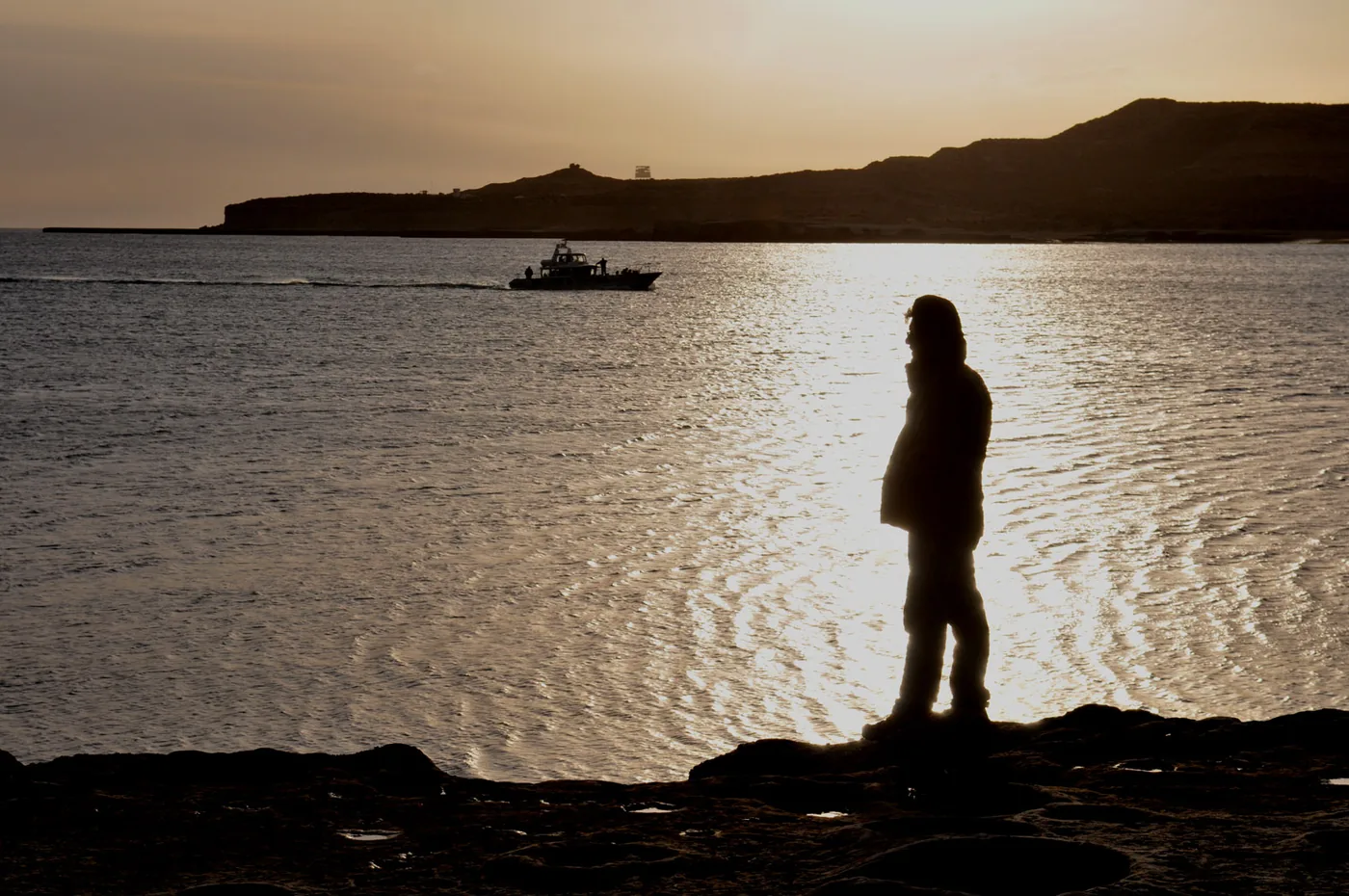
I decide to take the evening tour as well. It is much quieter in terms of fellow passengers than the daytime trip. The light is disappointing because the ash cloud from the active Chilean volcano has created a kind of overcast that filters out every ray of sunlight.
The boat is different too: it has no raised platform, making it harder for me to create distance from the whales. That is really a luxury problem, because they come extremely close. But I want to include both the boat and a whale in a single photo. At one point, we are surrounded by the gentle giants. They swim around us, and several even pass directly beneath us. One lightly bumps the boat.
That is when I am glad to have fellow passengers Mark and Linda from Rotterdam. I immediately recognized their nationality from their clothes, hairstyles, and open, excited manner. They are as speechless as I am at this natural spectacle. ‘What magnificent animals—and so close,’ Linda exclaims. It is nice to have a beer with them afterward. An experience like this creates a bond; you want to share it, preferably in Dutch.
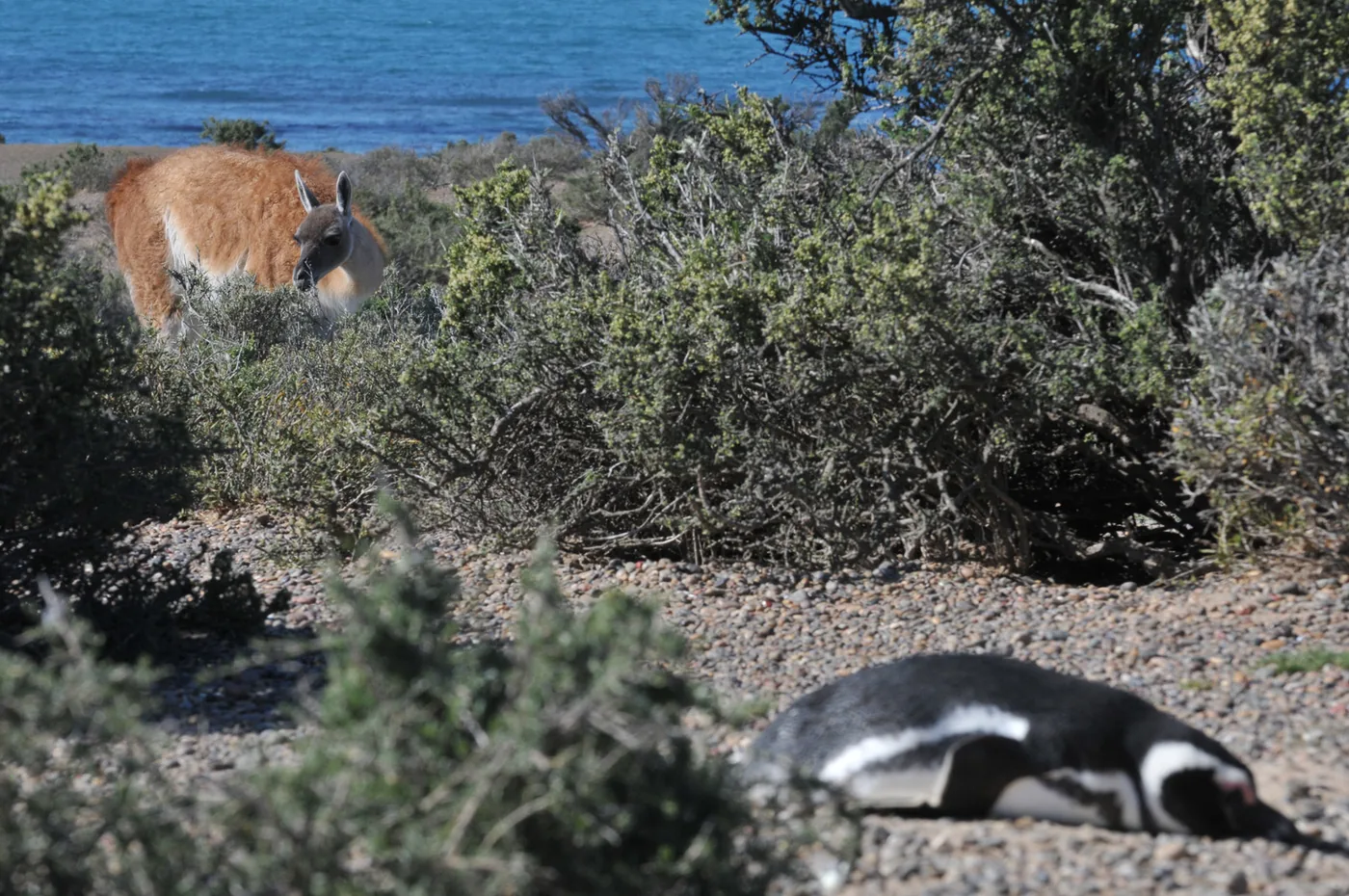
Over the next few days, I explore the peninsula thoroughly. I get up an hour before dawn and drive the unpaved roads past guanacos—a type of llama—and sheep, heading toward the elephant seals at Punta Norte. It is whale season now, but by March these animals will have made way for the orcas. This is the only place in the world where they launch themselves onto the beach to catch a sea lion pup. It is a unique spectacle.
In a single day, I travel the more than five hundred kilometers to and from Punta Tombo, home to the continent's largest Magellanic penguin colony (more than 500,000). The penguins emerge from the water, waddle up the beach and return to their burrows. Some are so exhausted that they fall asleep right in front of you.
This is the only place in the world where they launch themselves onto the beach to catch a sea lion pup
Because I rented a car in Puerto Madryn at a good price, I can set my own schedule and do not have to rely on organized tours that stop only at designated places and rush through all the peninsula's highlights in less than ten hours. For photographers, having your own transportation in nature parks like this is practically essential.
Back at the ecolodge, I tell owner and nature photographer Alejandro about my experiences with the whales. He shows me his work: photos of whales from every angle and in many kinds of light. He also shows some images of orcas throwing themselves onto the beach. I realize that driving around the peninsula for a few days and taking two whale-watching tours will never produce images like these.
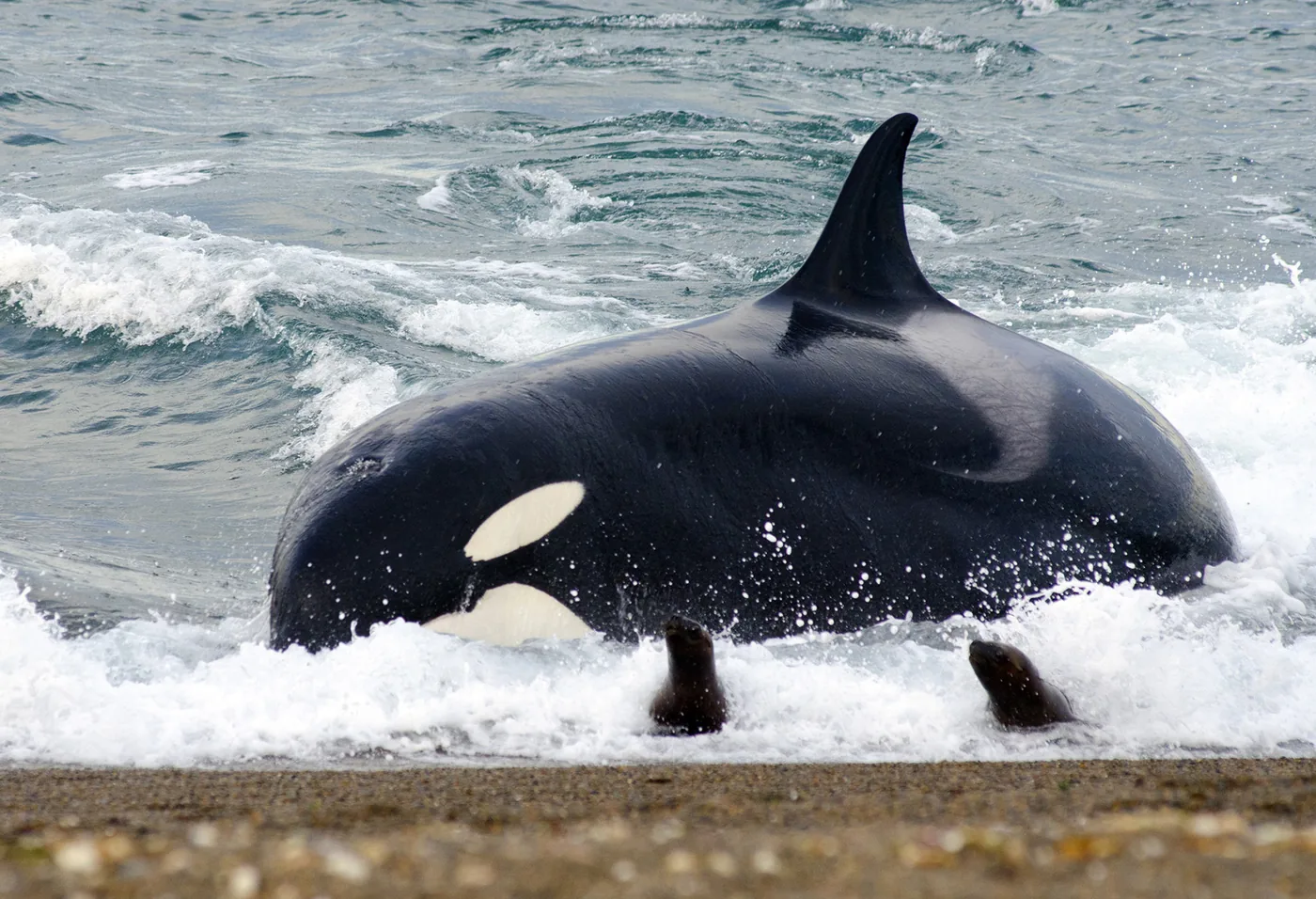
photo: © Alejandro Avampini | Orcas at Punta Norte
Ale also has a hefty 500 mm lens, while I have to make do with a modest 70–200, 2.8. He tells me that for one of his better penguin photos, he drove to a colony several times a day for two weeks, waiting for the right light. ‘Well, for a unique image, you either need luck or the patience of a saint,’ he says with a laugh.
Alejandro urges me to return at the end of March. The orca season runs from mid-March to mid-April, but the true peak is from March 20 to April 5—not a day earlier or later. You do need to arrange a special permit to get really close; otherwise, as now, you remain about thirty meters away.
‘For the past several years, I have stood there every day at high tide for six hours, alongside a growing number of international photographers.’ Perhaps I will return then. But I have no illusions. If I come, it will be to absorb the atmosphere, experience the spectacle with my own eyes, and perhaps—with a great deal of luck—capture that unique image.
On the way back, I make one last quick stop at Punta Loma, the sea lion beach, which is clearly visible from a hill. They move beautifully and gracefully through the water below me, while others bellow themselves hoarse on shore.
Two young women on bicycles see me sitting there and stop. ‘Did you get any good shots?’ they ask me in Dutch. I nod, looking astonished. Do I really look that Dutch, I wonder? On the way back, I burst out laughing—that red Dirk van den Broek bag must have given away my nationality!
Whale season: June–December.
For custom trips: The Latin America Specialist: www.las.nl
KLM has flown weekly to Buenos Aires since November; from there, it is a 14-hour journey by luxury sleeper bus, or you can fly.
With thanks to: rentacardubrovnik, www.ecohosteria.com.ar.