Photographer Tom van der Leij travels all over the world, with every imaginable subject appearing before his lens. During this multiday trek through the Salkantay mountains, it was his equipment that gave him pause.
When digital compact cameras with screens arrived, photographers began to adopt a different posture while shooting: camera straight ahead, both arms extended, stomach out, back arched, and knees slightly bent.
Then came the revolution: you could take photos with a phone too! Three-, four-, and five-megapixel cameras built right into your phone! I was overcome with disbelief. The photographer's pose had become a little more casual and less serious—just one arm, shooting from the wrist.

By then, all my friends had owned smartphones with umpteen-megapixel cameras for years, apparently taking wonderful snapshots with them. Photography had become accessible to everyone. Add a Photoshopped finish and voilà—a new photographer emerged.
Then came the revolution: you could take photos with a phone!
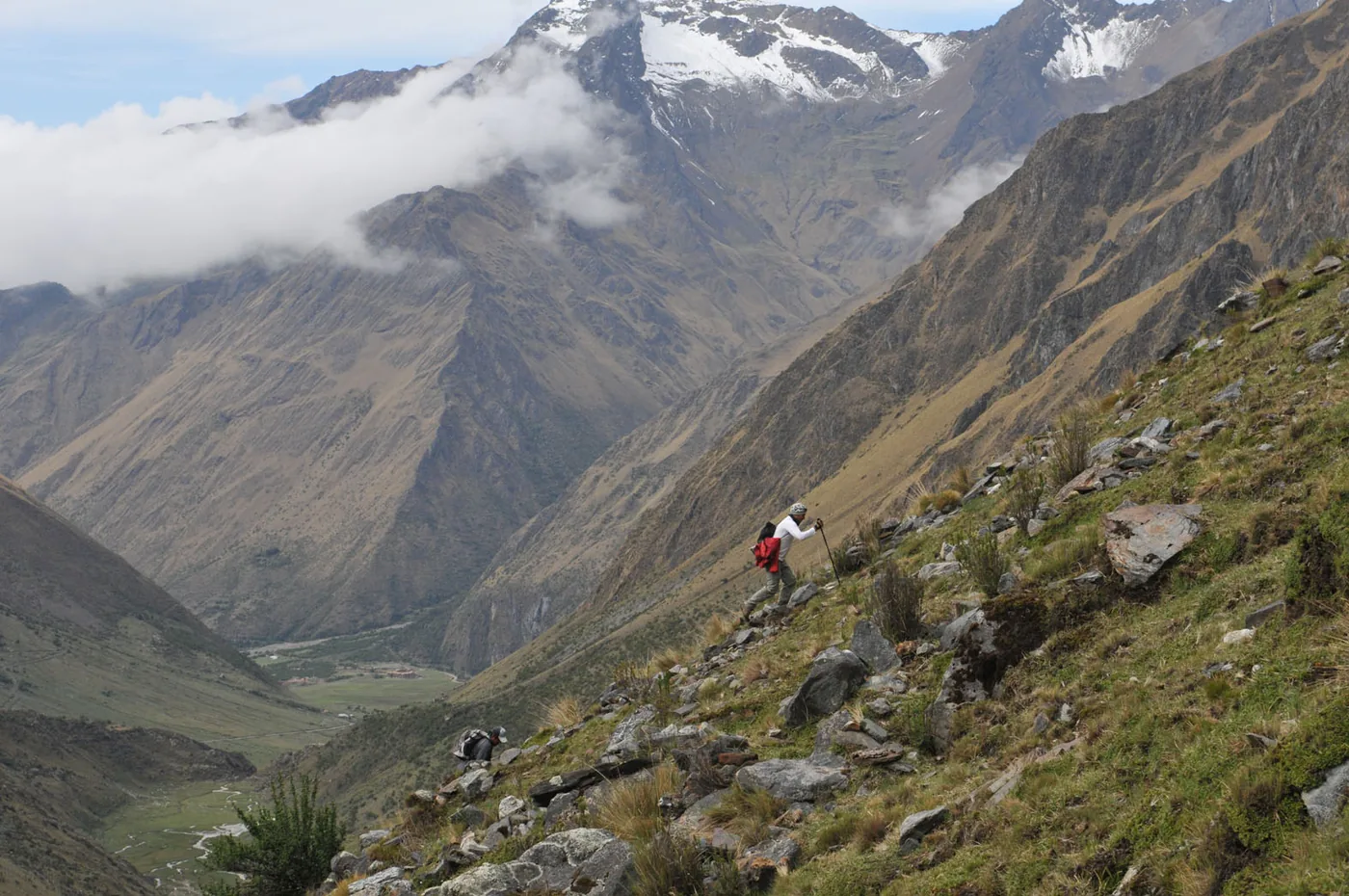
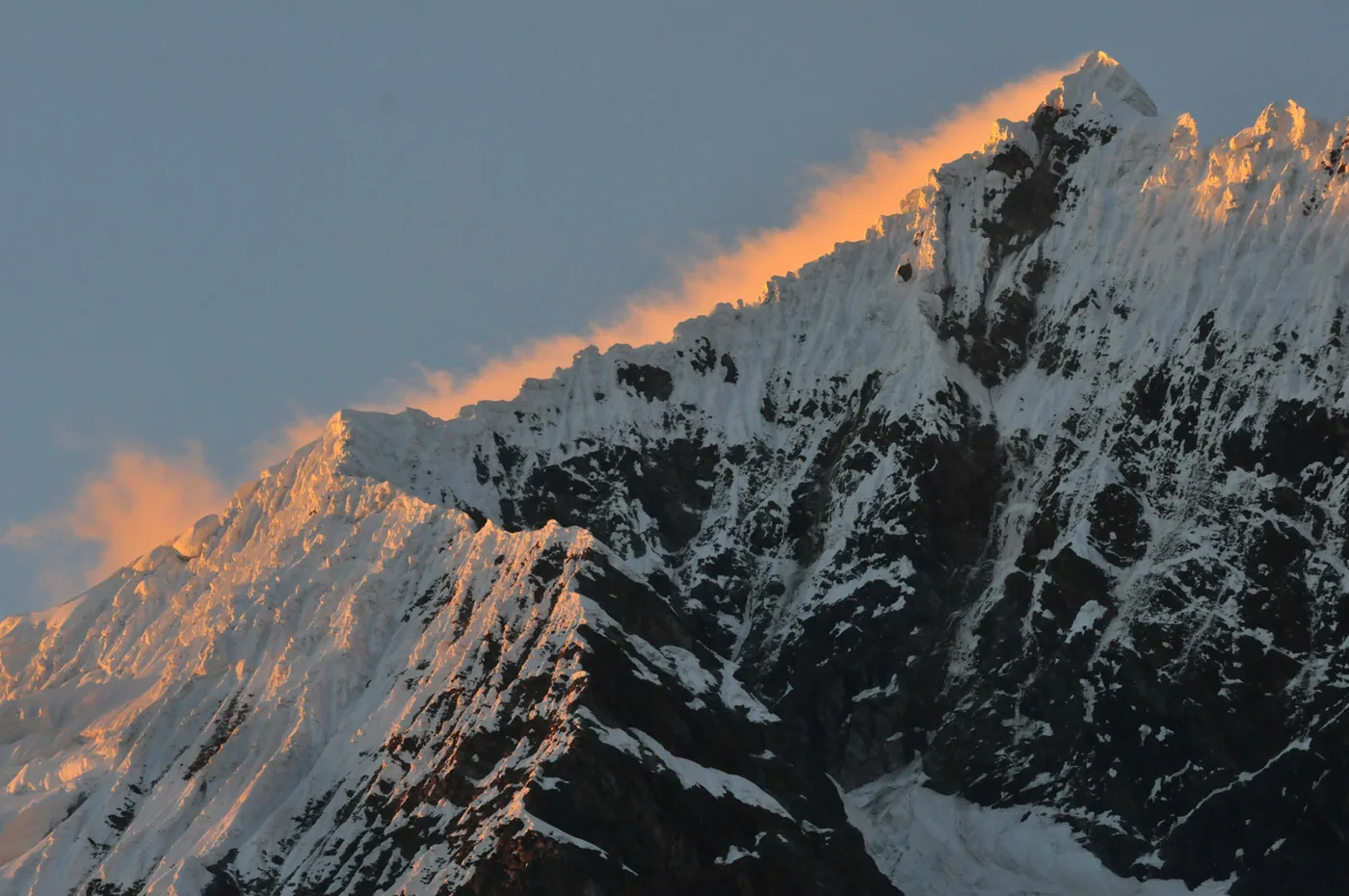
Not long before, I had been hiking through Peru's Salkantay mountains, which surround the famous Inca city of Machu Picchu. Magnificent snow-covered peaks rose around a pass at an elevation of 4600 meters, with glaciers and trails through the clouds. The thin air and the heavy camera equipment on my back began to take their toll.
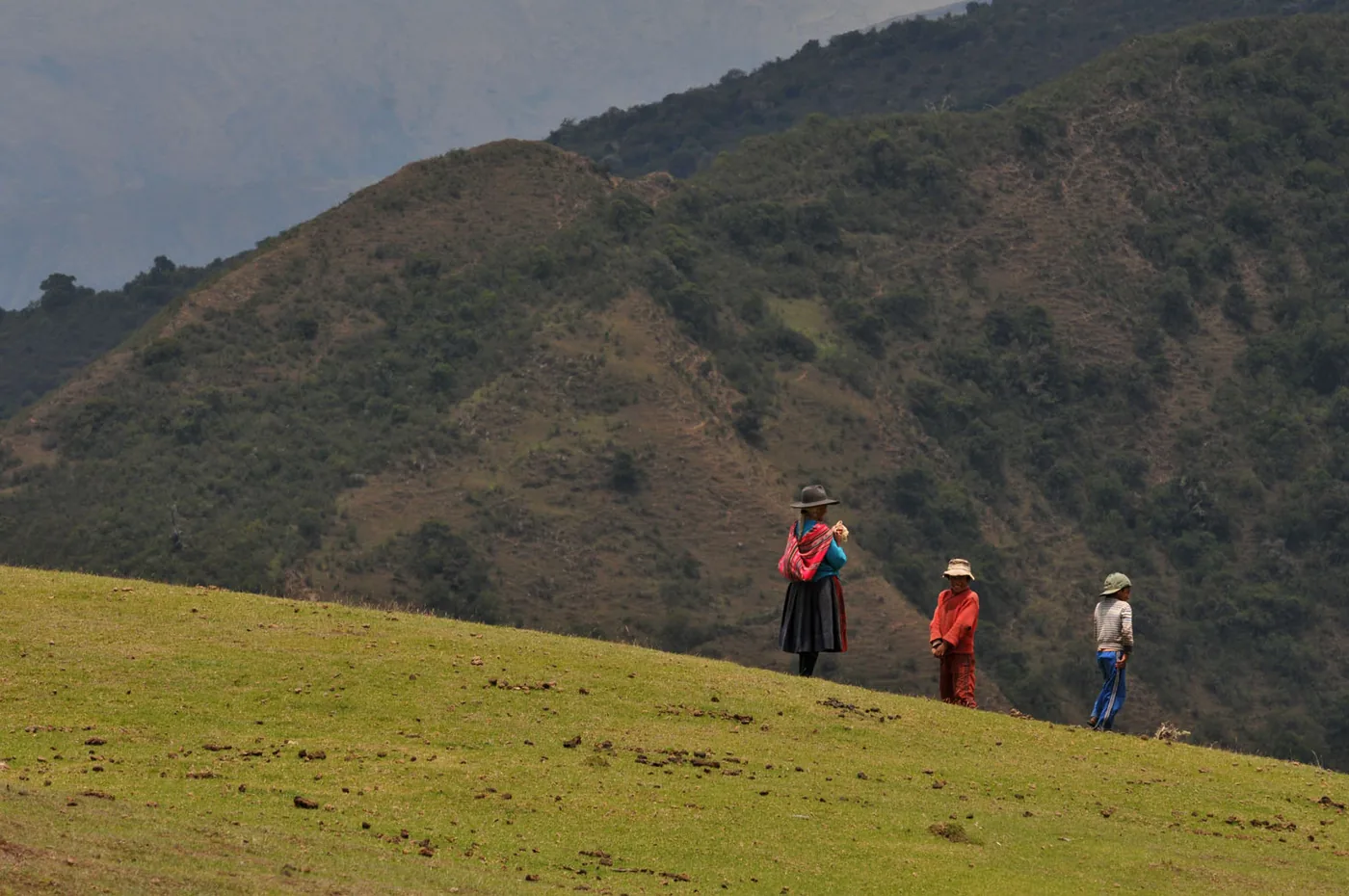
Panting like a runaway deer, I was among the last to reach the top, in the figurative sweep wagon I so despised. I cursed the heavy telephoto lens in particular, which I ultimately used only three times. Fortunately, the descent was much easier. Within two hours, I had shed almost all my clothing and was walking through the jungle.
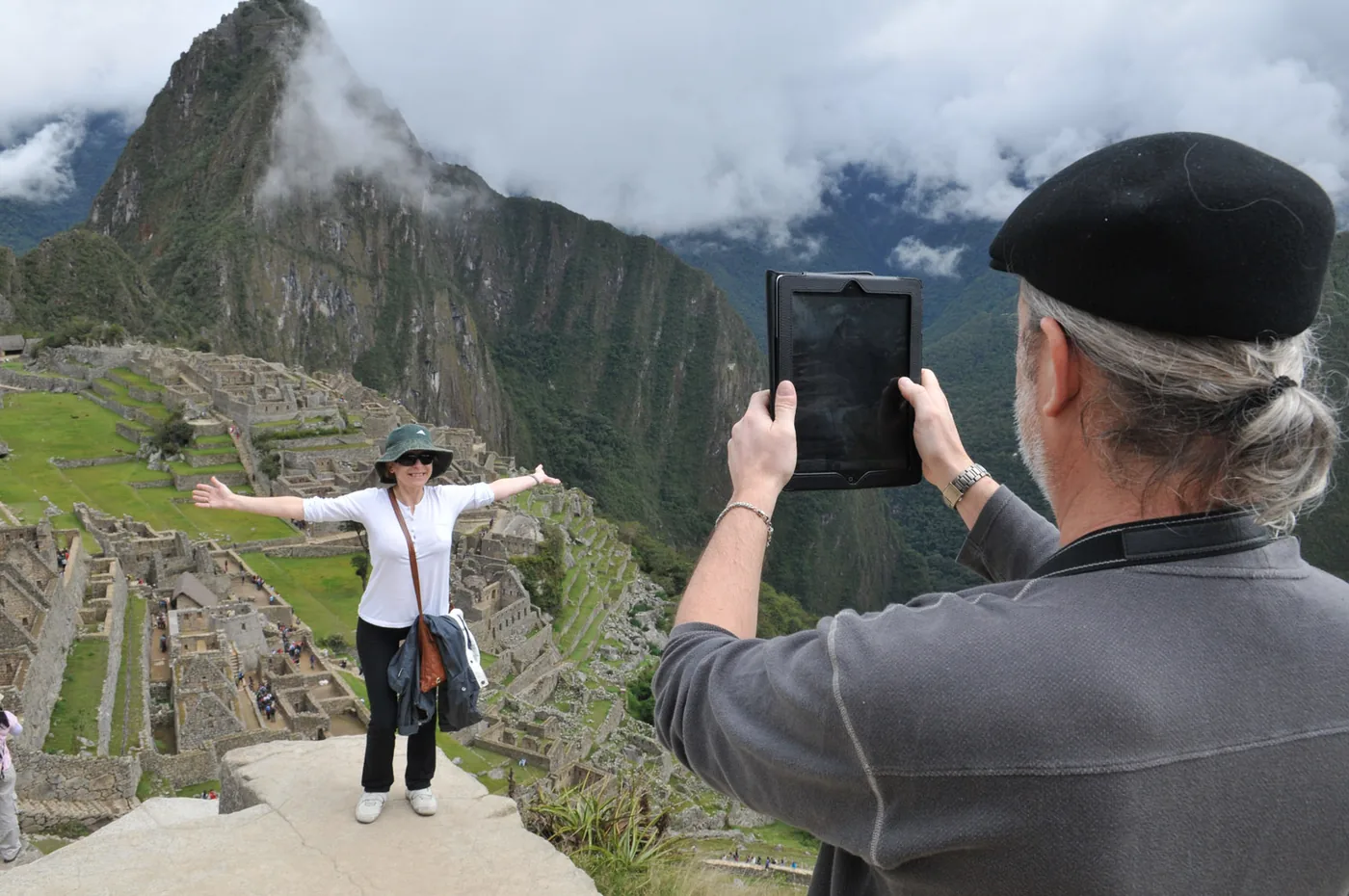
When I finally reached the new wonder of the world, Machu Picchu, on day four, I encountered an even newer photographic phenomenon. By then, people simply took photos with a tablet. I had not realized that tourists carried those devices under their arms while trekking up and down mountains.
As the willing slave of my own equipment, I travel the world with fifteen kilos on my back
Taking photos with a tablet requires a slightly different, more static pose, but it does look sleek and serious—as though you are looking through your own television screen.
I felt time was running out for me. I had been lagging behind all these technological developments for years, stubbornly clinging to extremely heavy camera equipment. As the willing slave of my own gear, I traveled the world with fifteen kilos on my back: heavy lenses, batteries, and cameras. I felt like a turtle.
Even when I was not taking a photo, my posture resembled Quasimodo's: hunched over with a hump on my back. I vowed to buy the new generation of cameras—small and fast, and hopefully capable of good image quality. If you know which one, email me!
Taking photos with a tablet requires a slightly different, more static pose
And what about my posture? I sometimes see myself in photos and have to admit that shooting with an SLR looks pretty intense: large lens, lens hood, the camera as an extension of my body—ready to shoot wherever and whenever I want. A camera like that simply feels good in the hand.
Still, I was seriously considering buying a smartphone for snapshots. It looked so convenient: compact, no heavy load, and less serious. And the quality? What did it matter? Newspapers and magazines were gradually disappearing. Who would notice one pixel more or less on an iPhone screen? Climbing that mountain in Peru would certainly be much easier. I had already considered my posture: back straight, professional expression, and both hands on the phone.
With thanks to the exceptionally helpful tour operator in Lima, Andrea Alberto Maria Ravaglioli.