photo: © Tom van der Leij
Photographer and travel editor Tom van der Leij travels from Peru to Mexico. Along the way, he describes the things that catch his eye. In late December, he crossed the immensely busy border between Costa Rica and Nicaragua in no time. It went so smoothly thanks to Dutch assistance and the maneuvering of a well-connected fixer!
You know the type: men who stand at airport exits, outside busy stores, and at border crossings. They approach you uninvited to exchange money, offer a taxi service, find the best hotels, or ask to carry your bag.
The money changers are the worst. You know they are cheating you by offering a bad rate, giving you outdated currency, or handing over too few bills. They impose themselves on you, sometimes with ten of them tugging at you. Then there are the hustlers and fixers, known as go-fors or busybodies. They have the right contacts and use clever tricks to get everything done.
I prefer to arrange everything myself and avoid these men—until they work in your favor for once. Then they prove extremely useful. How convenient was it to know one of them at the Costa Rica–Nicaragua border that Christmas?
After my attempt to leave San José, the capital of Costa Rica, failed miserably following hours in a bus line with two American biologists, I eventually took an excessively expensive private bus to the eastern border crossing at Los Chiles.
The next leg did not look very promising either. Normally, this is a very quiet border crossing that you can walk straight through, but at Christmas in a Catholic Central American country, there was an enormous line. Everyone was traveling to visit family. Chaos followed.
Then the big friendly giant appeared. The tall Dutchman Polle van Poppel—yes, that is his real name—was waiting for me. He had the border forms ready. He also had his own personal fixer, a confident man in his thirties with a closely shaved neck, sunglasses worn backward on his head, and a smooth line of talk.
I told myself that in these countries corruption is the system and simply the way things work
By staying close behind him, we bypassed the hours-long line as if it were the most normal thing in the world and ended up with the fixer's friend at customs. A quick stamp in the passport, and literally within two minutes we were back outside. There were disapproving looks and comments from the line, but at that moment I did not speak Spanish and revealed myself to be a shameless opportunist.
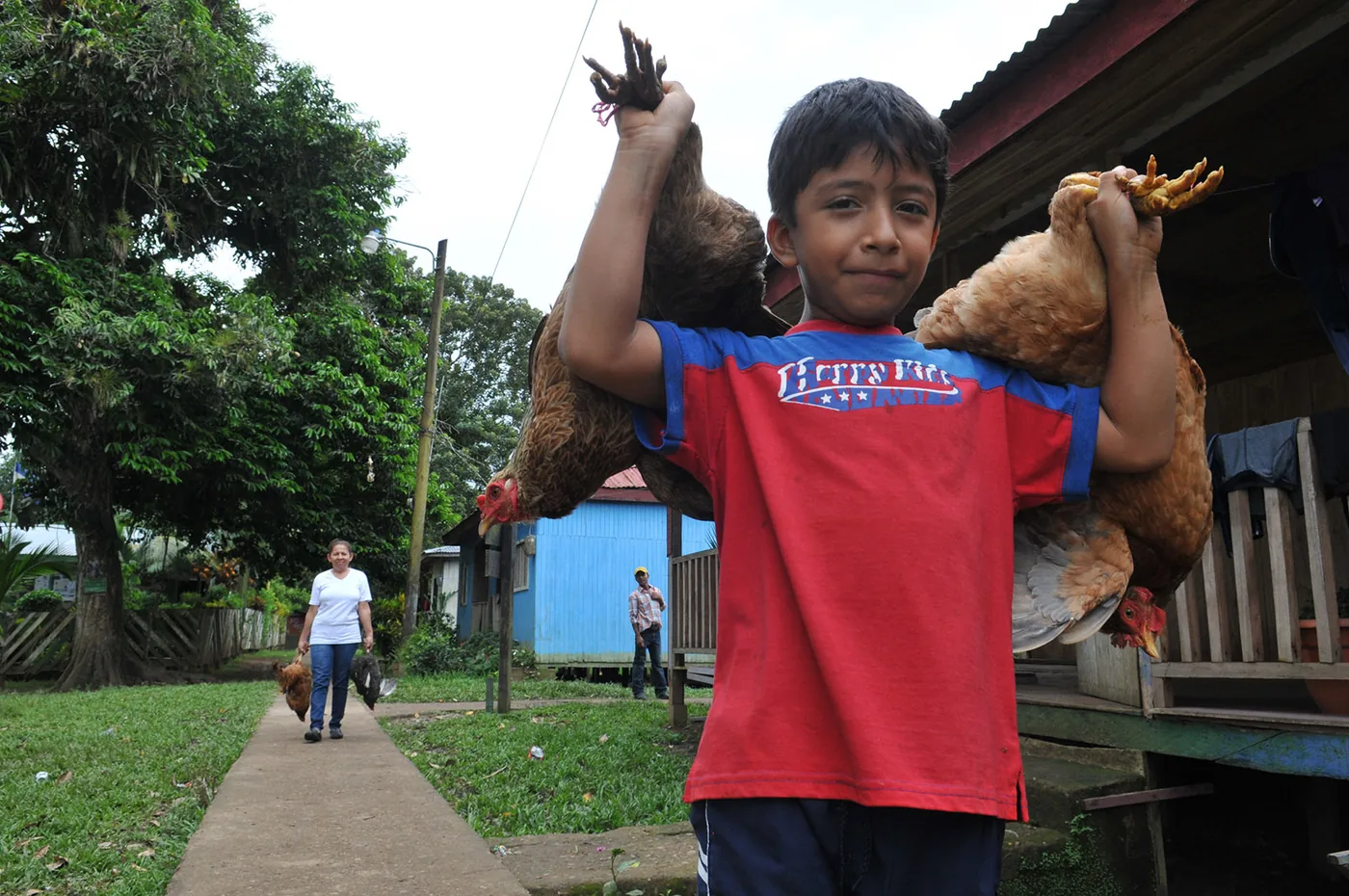
If someone else had cut in line like that, I would personally have stopped him. I told myself that in these countries, corruption is the system and simply the way things work. Bribery and favoritism are normal here, right? In principle, I do not participate in corruption—unless it works in my favor, as it did at this border crossing, when I suddenly turned out to have double standards.
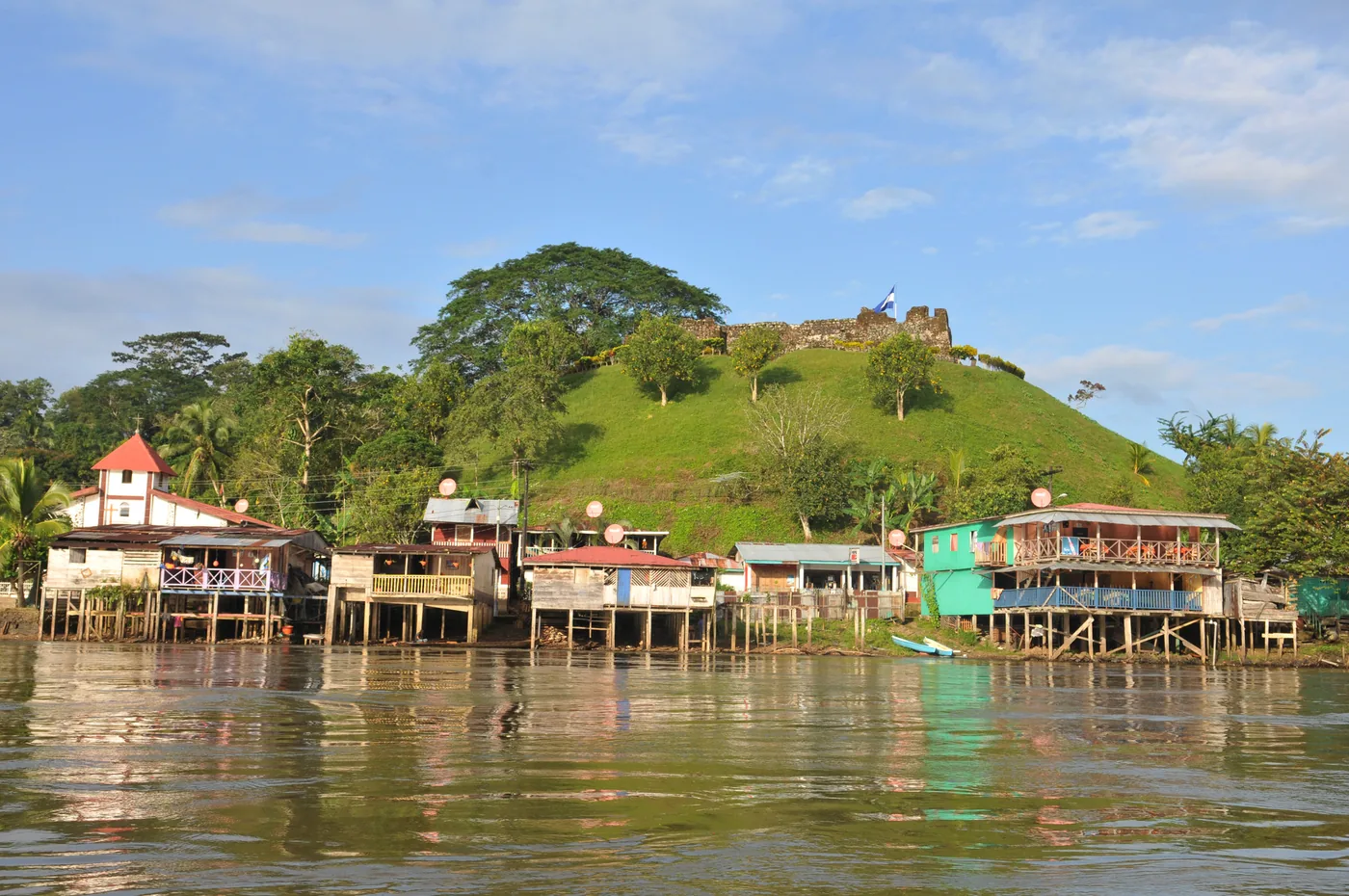
But that preferential treatment meant I could just catch my connecting—and final—boat to the wonderfully laid-back riverside village of El Castillo. Since I had booked a hotel and wanted to spend Christmas there, that was a relief.
Nicaragua had undergone a transition over the preceding decades and was highly recommended as a tourist destination
Through his company Aguatrails, Van Poppel organized trips from Costa Rica to Nicaragua, among other tours, using vans to reach the border and then elegant boats to enter Nicaragua. He had offered the entire trip, but I had stubbornly wanted to arrange the first part myself. Options ranged from day trips to El Castillo to multi-day journeys to the Solentiname Archipelago, the volcanic island of Ometepe, and colonial Granada.
Polle was truly the missing link between these two beautiful regions of Costa Rica and Nicaragua. Nicaragua had undergone a transition over the preceding decades and was highly recommended as a tourist destination. It was safe and inexpensive, and its people were extremely friendly. The country was also enormously diverse, with beautiful colonial cities such as Granada and León, a string of volcanoes, long beaches along the Pacific Ocean, the Caribbean Sea, lakes, mountains, and tropical rainforest.
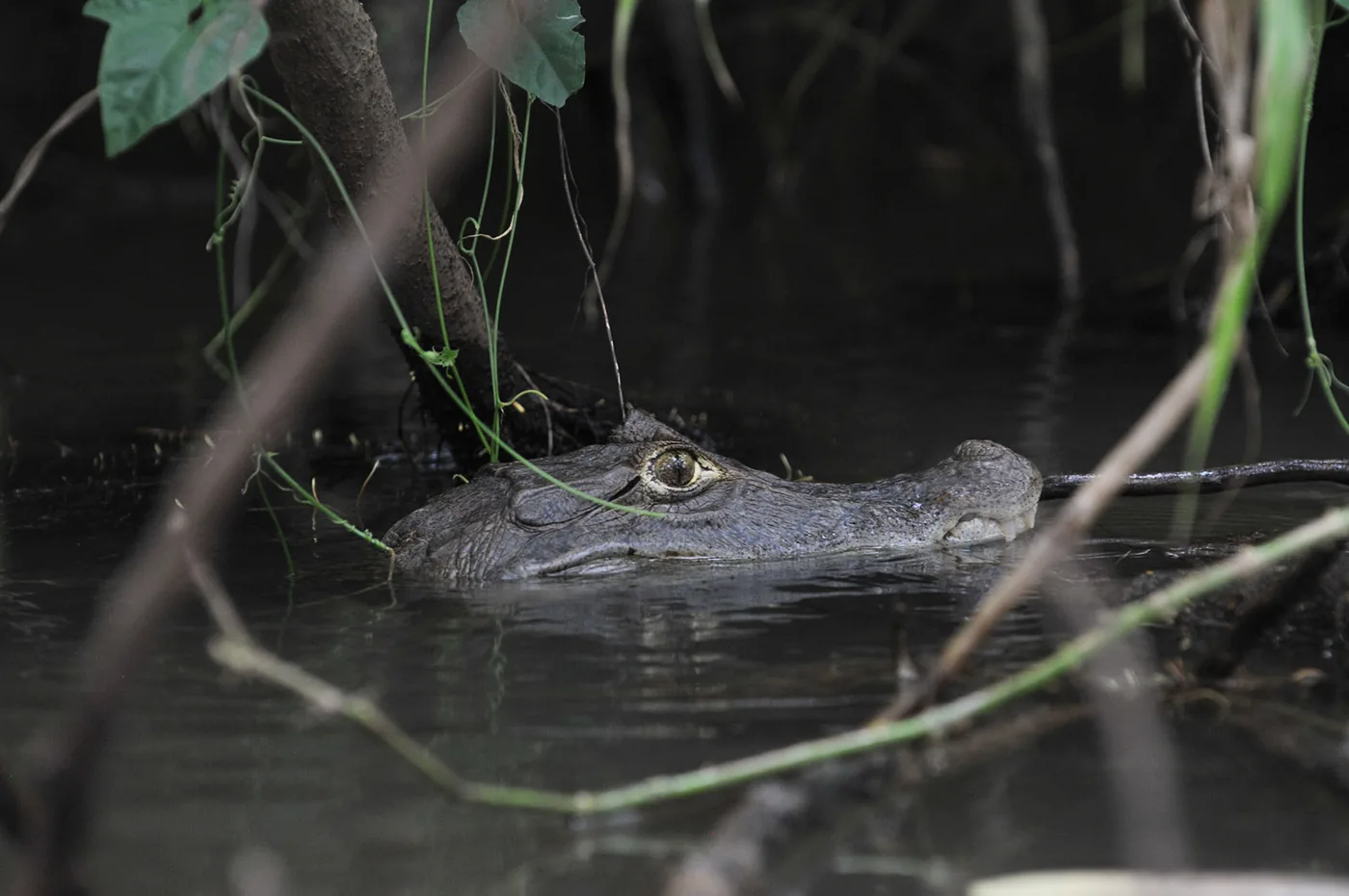
In Polle's boat, with his fixer now wearing the captain's hat, we sailed toward Nicaragua. In my experience, spotting animals in a tropical forest often depends more on luck than skill. But in this stretch of no-man's-land, one animal after another appeared before the lens: anhingas, sunbathing turtles, ospreys, various kingfishers, howler monkeys, caimans, and even a lizard known as the Jesus Christ lizard because it can run across water.
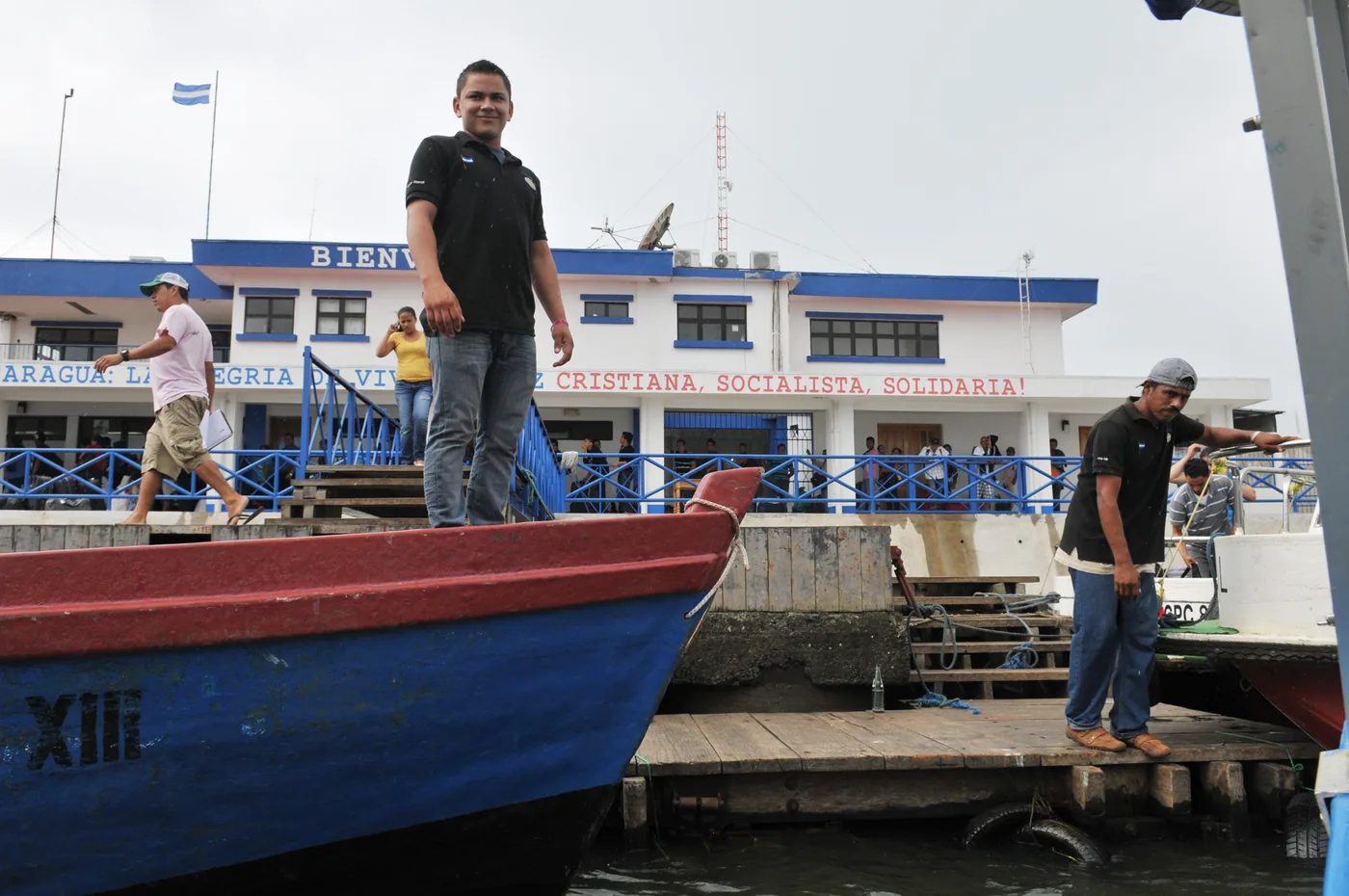
Because this was a private tour, our fixer and captain could dock the boat wherever we wanted, allowing us to photograph the animals calmly from every angle. The remarkable thing was that at the Nicaraguan border, in the pleasant town of San Carlos, our fixer also knew everyone, and we passed the customs line within a minute.
In my experience, spotting animals in a tropical forest often depends more on luck than skill
So I could return my attention to what I had come for: taking photos. The village of El Castillo was actually the perfect place for an introduction to Nicaragua. This region in southeastern Nicaragua was still relatively undiscovered.
After a wonderful Christmas night in El Castillo, I ate breakfast on the balcony of Hotel Victoria. The spot overlooked a street behind which the centuries-old Spanish fort from the colonial era loomed. Aside from the occasional motorboat, you would hear no motorized noise in El Castillo; there were no cars or motorcycles in the jungle. That created a pleasant calm, disturbed only by children's voices, a gently flowing river, whistling birds, and insects.
Several birds put on a show right in front of me. They clearly enjoyed the fruit the hotel owner had hung up. From a tiny bird with a bright red head to a bold yellow-and-black one with a curved beak, they snatched pieces of fruit from the shelf less than a meter away.
When I was about to start my tropical-rainforest excursion an hour later, two exhausted travelers wheeling suitcases came around the corner. They were the two American biologists with whom I had waited in the bus line in San José the previous day. They had wanted to arrange everything themselves and had only just arrived. That, I thought, was the difference made by Polle's VIP treatment. Occasionally letting someone else handle the arrangements does no harm.
Praise Van Poppel, and long live the fixers!
With thanks to Polle van Poppel's Aguatrails, www.aguatrails.com, and Jan Strik's Vapues, www.vapues.com.
Create your own travel feature! Starting May 1, readers were invited to experience how the author of this article makes things happen. During the Amsterdam photo tours offered by travel photographer Tom van der Leij, you could learn to photograph the city like a true travel photographer. For more information, email info@tomvanderleij.com.