In 1851, Frederic Scott Archer (1813-1857) describes in the journal The Chemist a new photographic process that uses collodion, a solution of nitrocellulose in ether. Photography is changed forever.
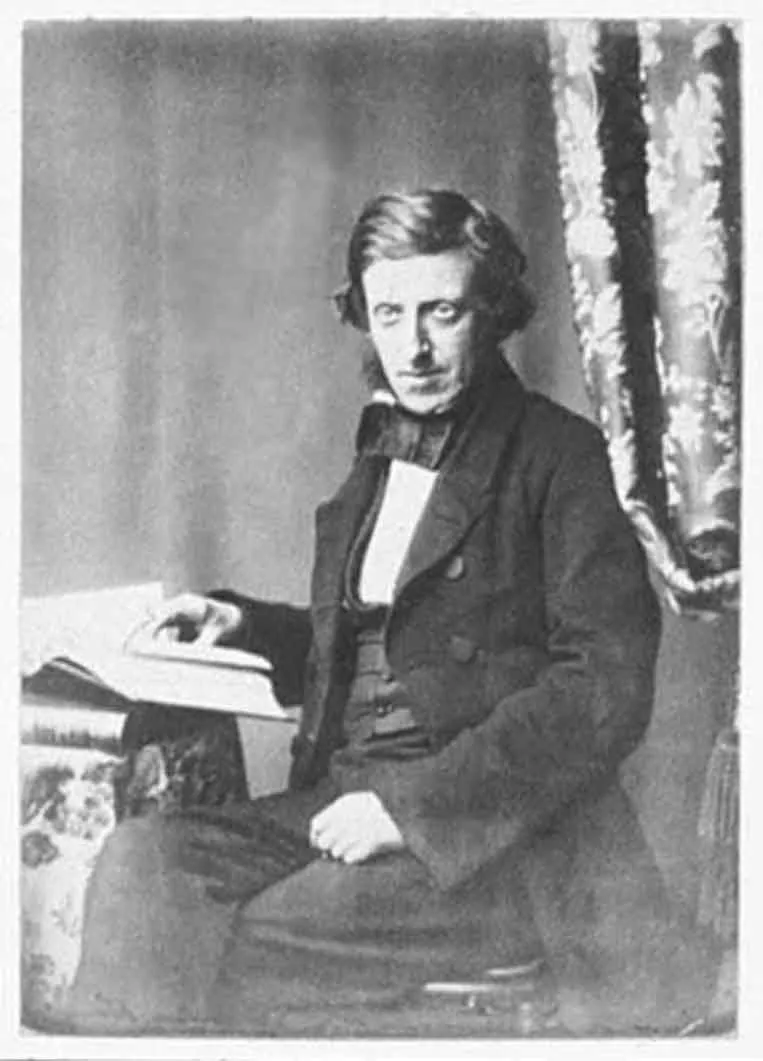
The benefit of Archer’s discovery is a shorter exposure time. Here is how it works. Dissolve potassium iodide in collodion and spread the mixture evenly over a clean glass plate. As more ether evaporates, the surface becomes stickier. Next, immerse the plate in a bath of silver nitrate solution—the plate becomes light-sensitive—and expose it in the camera while still wet, working quickly. After exposure, the plate must immediately be developed, fixed, and washed.
Archer barely lives to see any of it himself
A year later, in 1852, Archer himself introduces a variation on the collodion process. This time, he treats the glass negative with mercury chloride, mounts it on a black background, and thereby creates a positive image.
The technique later becomes known as the ambrotype and is widely used in portrait photography.
Archer barely lives to see any of it himself—he dies in poverty, never knowing that his ideas will bring about a true revolution.