“Photography and I just clicked,” Annie Leibovitz says with a smile in the documentary Life Through A Lens, which opened that week. An understatement. She may be even more famous than the countless celebrities who have posed for her camera.
A handful of celebrities—Hillary Clinton, Keith Richards, Whoopi Goldberg, Arnold Schwarzenegger—may mangle her last name, but they are unanimous about Annie Leibovitz’s qualities as a photographer.
A legend. An authority. A creative mind. An indispensable chronicler of the United States.
In the beautifully edited documentary Life Through A Lens, made by her sister Barbara, we see how the American photographer born Anna-Lou Leibovitz (Waterbury, 1949) became a widely respected artist over a period of more than thirty years, single-handedly elevating the genre of portrait photography to a new level.
That is hard to imagine when the film looks back at the day in 1970 when the perpetually insecure but no less ambitious art student accompanied an editor to take a photograph of a certain John Lennon for the music magazine Rolling Stone.
You hardly noticed she was there
Just as Leibovitz checks her light meter in preparation for the shoot and more or less accidentally presses the shutter, she captures the former Beatle’s priceless, Mona Lisa-like gaze. The photograph promptly appears on the cover and marks the beginning of a long and fruitful collaboration between the legendary magazine and the intensely serious photographer.
It is that same Lennon, incidentally, who—unwittingly—provides one of the high points of Leibovitz’s career by letting her into his New York home on the morning of December 8, 1980, and then, naked and lying on a bed, holding a fully clothed Yoko Ono in his arms.
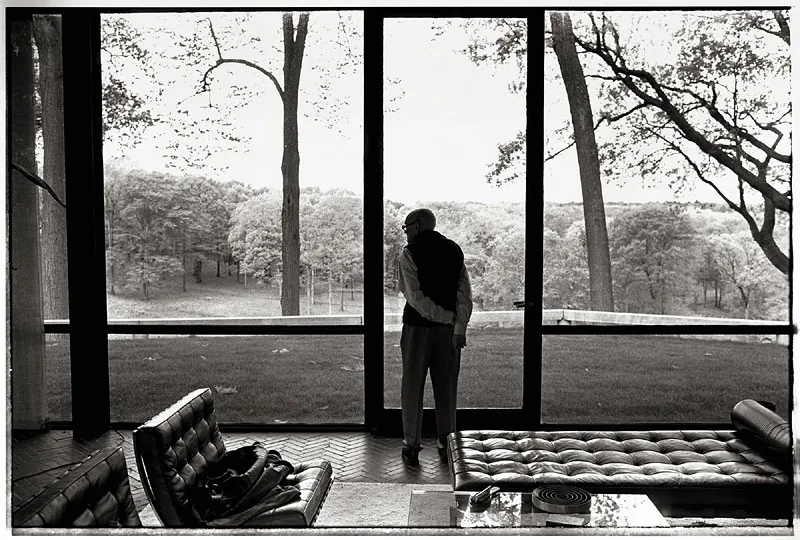
Four hours later, the peace activist is murdered. This now-iconic photograph also appears on the cover of Rolling Stone, with only the magazine’s name and no cover lines, like a modern-day Pietà.
Leibovitz’s greatest strength, many of those involved say, is that, for all her perfectionism and passion, she is willing to become completely immersed in the world of the people she photographs. Or, as Arnold Schwarzenegger puts it: “You hardly noticed she was there.”
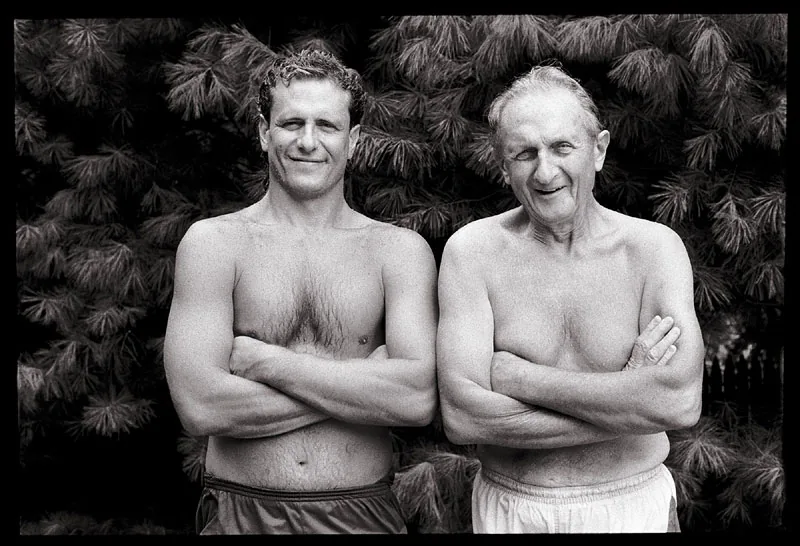
And Leibovitz seems equally at home in any world. Just look at how she captures magnificent images in a wide range of settings: from San Francisco’s hippie stronghold to the offices of Rolling Stone and the Watergate affair.
And from the circus of bodybuilding, via a drug-fueled tour by the Rolling Stones to the classical dance school where ballet virtuoso Mikhail Baryshnikov defies gravity.
As the years pass, the impact of her photographs grows. Whoopi Goldberg experiences this firsthand: she says she led a fairly anonymous life until, as a comedian on the verge of her breakthrough, she lay in a bathtub filled with milk for Leibovitz (1984) and, by the very next day, could no longer walk down the street in peace.
Those were the days, especially after Leibovitz adopted a more conceptual approach, when everyone eagerly awaited (‘What will she come up with next?’) each new issue of Rolling Stone, and later Vogue and Vanity Fair as well, where she achieved major successes—for example, with a completely naked and heavily pregnant Demi Moore (1991).
And Leibovitz seems equally at home in any world
Barbara’s documentary succeeds on several levels. It paints a clear picture of the photographer’s life in general and her indelible significance for photography in particular, while evoking a range of emotions—at times amusement, at times poignancy—as in the moment when Leibovitz, with tears in her eyes, explains to her young daughter what writer Susan Sontag (her late partner) is doing in a particular photograph.
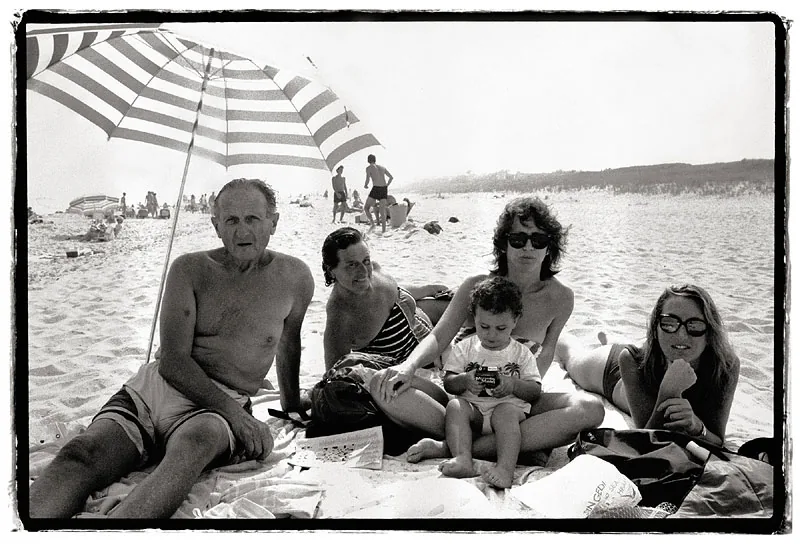
Anyone looking for a point of criticism could say that Life Through A Lens contains nothing but highlights and has hardly an unkind word to say about its subject. Perhaps Leibovitz’s life as a photographer really has consisted solely of triumphs, but it is widely known that she is exceptionally demanding and can be very tough.
Or, as Vanity Fair editor-in-chief Graydon Carter puts it: “She is Barbra Streisand with a camera.” And that may be Annie Leibovitz’s secret.