Canadian photographer Amber Bracken won this year’s World Press Photo contest for her photograph Kamloops Residential School; she receives a cash prize of five thousand euros and an award. The jury selected Saving Forests with Fire by Australian photographer Matthew Abbott as World Press Photo Story of the Year.
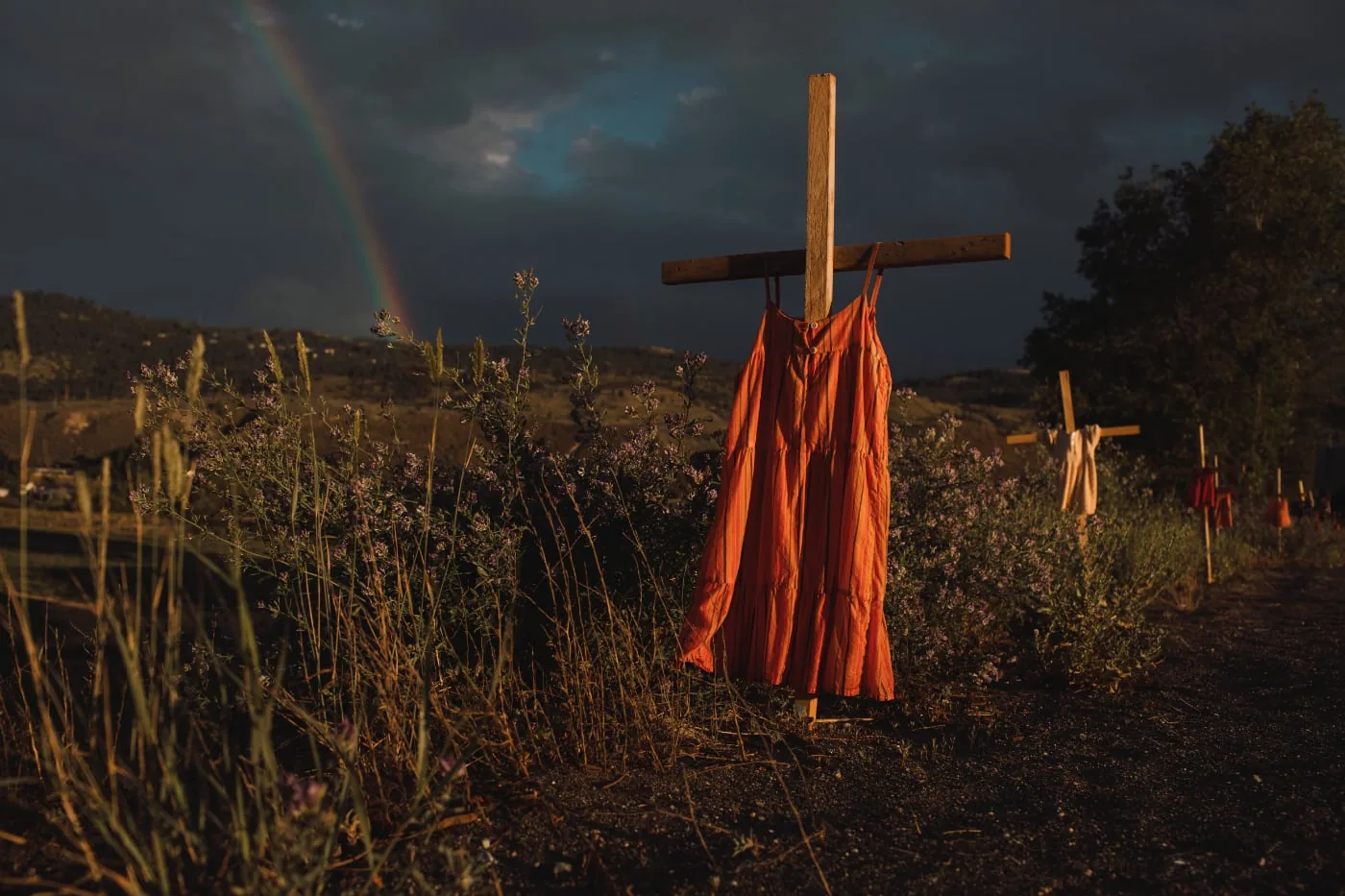
In Amber Bracken’s winning image, red dresses hang from crosses along a roadside in memory of children who died at the Kamloops Indian Residential School, an institution established to assimilate Indigenous children. The memorial followed the discovery of as many as 215 unmarked graves in Kamloops, British Columbia, on June 19, 2021.
Photo by Amber Bracken:
Hanging red dresses as a visual response to the disproportionate violence faced by Indigenous women began in Winnipeg, Manitoba, in 2011. Orange shirts are also used, particularly to acknowledge the suffering inflicted on children by Canada’s residential school system.
Residential schools began operating in the 19th century as part of a policy to assimilate people from various Indigenous communities into Western and predominantly Christian culture. Students were taken from their homes and parents—often by force—and were frequently forbidden to communicate in their own languages. Their hair was cut short, and they had to wear uniforms instead of traditional clothing. They were given Euro-Christian names in place of their own and were subjected to physical and, at times, sexual abuse. Supreme Court Chief Justice Beverley McLachlin stated that Canada had used the institutions to commit cultural genocide.
More than 150,000 children passed through residential schools before the last one closed in 1996. A Truth and Reconciliation Commission established in 2009 concluded that at least 4,100 students died from abuse, neglect, disease, or accidents.
Founded in 1890, the Kamloops School became the largest in the system and was attended by hundreds of Secwépemc and other First Nations children. It closed in 1978. In May 2021, a ground-penetrating radar survey identified as many as 215 potential burial sites of children in Kamloops, corroborating accounts from oral histories.
Jury member Rena Effendi: “It is a kind of image that sears itself into your memory; it evokes a visceral response. I could almost hear the quiet in this photograph, a silent moment of global reckoning with the history of colonization, not only in Canada but around the world.”
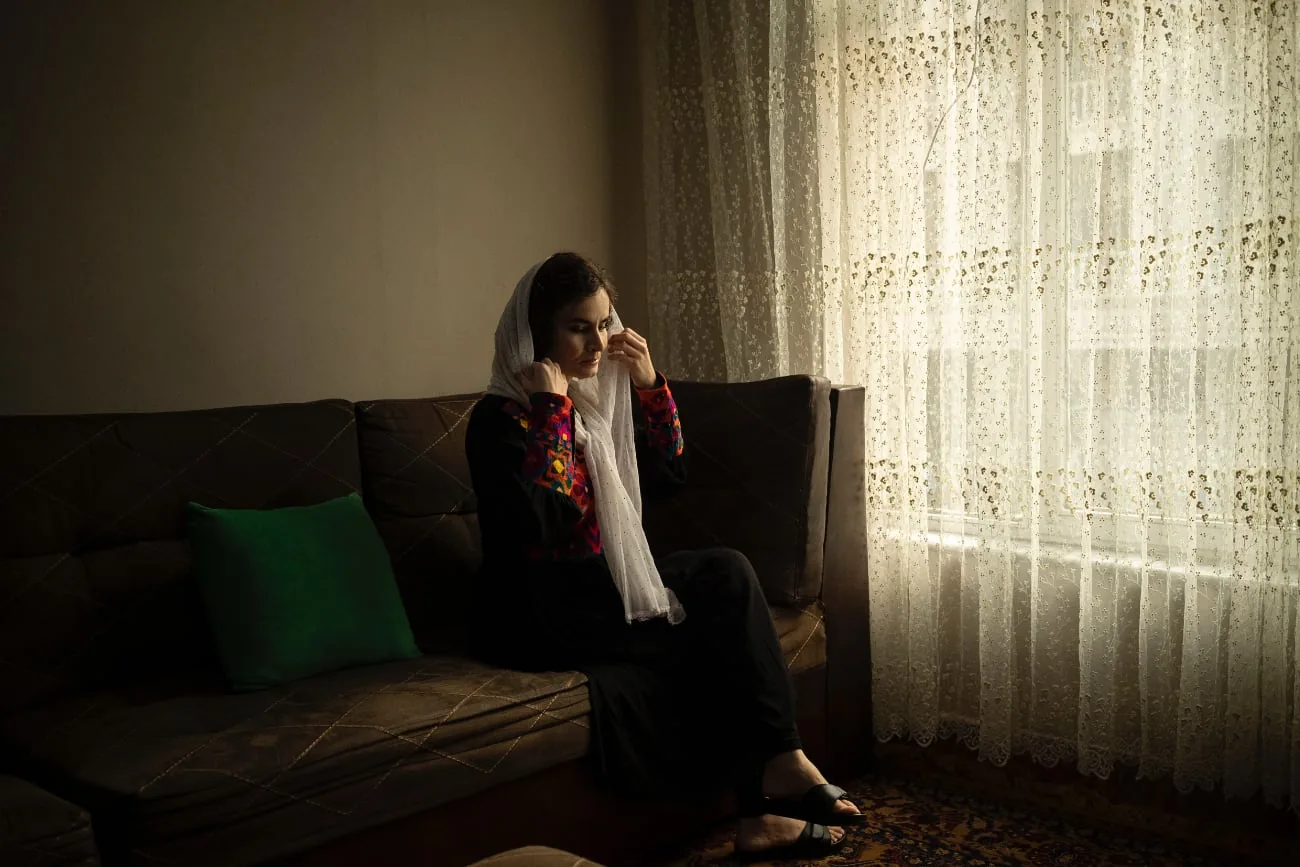
Dutch photographer Bram Janssen is the winner in the Long Term Projects category for the Asia region for The Associated Press, with his series The Cinema of Kabul.
Photo by Bram Janssen:
Asita Ferdous sits in her home in Kabul, Afghanistan, on Wednesday, November 10, 2021. She is the director of Ariana Cinema and is not allowed to enter the theater because the Taliban ordered female government employees to stay away from their workplaces.
World Press Photo, the world’s largest and most prestigious photography competition, has existed since 1955. The organization is based in Amsterdam. The World Press Photo Contest recognizes the best photojournalism and documentary photography of the previous year. This year, the winners were selected from 64,823 photographs and open-format entries submitted by 4,066 photographers from 130 countries.
The World Press Photo Exhibition 2022 opens on April 15 at De Nieuwe Kerk in Amsterdam, the Netherlands, before beginning its worldwide tour.
More information at www.worldpressphoto.org.