Digital SLR cameras offer several autofocus options. What are they, and when should you use them? And are there also reasons to switch autofocus off?
Single AF
By default, a digital SLR uses single autofocus. Focusing stops as soon as focus has been acquired and remains locked as long as you keep the shutter button pressed halfway. If you want the focused subject outside the center of the frame, keep the shutter button half-pressed to maintain focus and recompose the shot.
At the time of publication, newer SLRs had multiple AF sensors that covered different areas of the frame. By default, the camera decided which sensor to use for focusing; it would almost always select the nearest subject.

If you want to control the choice of AF sensor yourself, you have two options: always use one fixed sensor (usually the center one), or select a sensor manually. The latter may seem very useful, but in practice it is mainly worthwhile when the camera is fixed on a tripod. When shooting handheld, focusing with the center sensor and keeping the shutter button half-pressed is much faster than laboriously selecting a sensor before activating autofocus.
No matter how smart and sophisticated this technology is, success is far from guaranteed
Continuous AF
In continuous mode, the AF system remains active at all times. If the distance between the subject and camera changes, focus adjusts automatically. In principle, this function is suitable only for subjects positioned in front of one or more focus sensors—in or near the center of the frame. If desired, focus can often be locked with the AEL/AFL button. Depending on the camera, this can usually lock focus, exposure, or both.
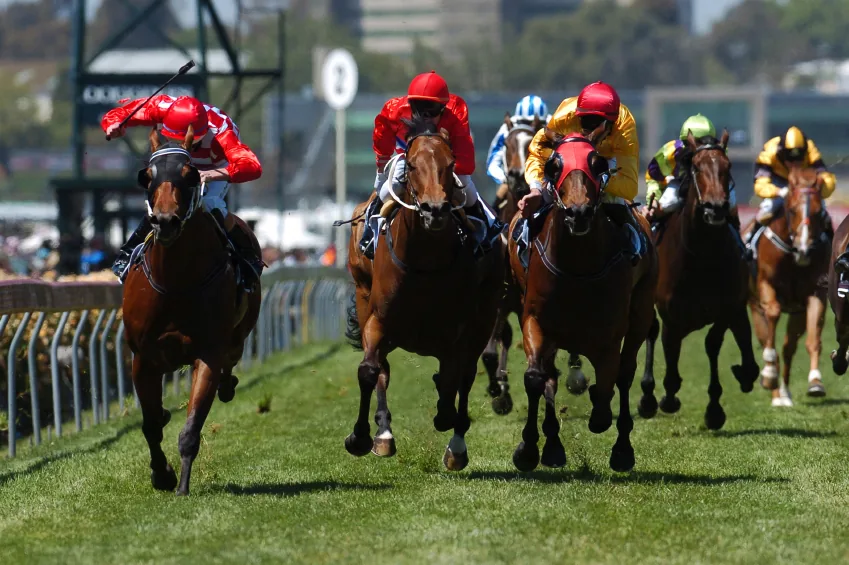
Because the subject can also move between pressing the shutter button and the start of the actual exposure, continuous autofocus is predictive; this is also known as focus tracking.
The AF system calculates where the subject will be at the moment of exposure and focuses on that position in advance.
No matter how smart and sophisticated this technology is, success is far from guaranteed. It helps if the camera is on a tripod so there is no camera shake and the subject is the only thing moving.
Many photographers still rely on the old method
As soon as your subject moves even slightly away from the center of the frame, the AF system starts searching for a new focus point, and valuable shooting opportunities can be lost before you know it. Autofocus systems with an in-camera motor and internal focusing have the best prospects because they can correct focus relatively quickly.

Many photographers still rely on the old method: manually pre-focusing on the point where the subject will be well positioned in the frame (in circuit racing, you can practice for several laps to find the right setting!) and releasing the shutter when the subject reaches that point.
AIAF (Artificial Intelligence Autofocus)
Many DSLRs have intelligent autofocus that detects whether the subject is moving and automatically switches to continuous focusing. It is a convenient setting for beginners, but if you want certainty about what the camera is doing, it is better to choose the mode yourself.
Priority
With single autofocus, the shutter cannot be released until focus has been acquired correctly. This is called focus priority. On some cameras, this lockout can be disabled: the camera focuses when you press the shutter button halfway, but if focus has not yet been acquired and you still want to take the picture, you can do so.
Continuous autofocus automatically uses release priority: the camera keeps adjusting focus as needed, and you can release the shutter whenever you want to take the picture. On some cameras, release priority and focus priority can be enabled or disabled as desired.
Some lenses offer a compromise
Manual override
Sometimes autofocus does not do what you want. It may focus on branches in the foreground, for example, when you actually want those branches out of focus and the background sharp. In that situation, it is very useful to be able to turn the focus ring immediately and take control. At the time of publication, this feature was becoming available on an increasing number of lenses. It works much faster and more directly than first moving the switch on the camera or lens from autofocus to manual. Some lenses offer a compromise: sliding the focus ring forward or backward disengages autofocus and lets you take over manually.
Switching AF off
Even when manual override is available, switching autofocus off altogether still has its uses. One example is shooting with a fixed tripod setup, where having to refocus every time would only be a nuisance.

Manual focusing is also usually preferable for subjects that require extremely precise focus on a particular part of the frame. In portrait photography, for example, you definitely want maximum sharpness on the eyes—not the nose or ears. The same applies to macro photography, where you also want focus to fall precisely on the right part of the subject.